
Science & Language Arts
2026-27 Biology: chemistry of life, cell theory, genetics, organism focus = fungi, invertebrates (Year 8 of FS)
2027-2028 Biology: Botany+ Ecology (Year 9 of FS) Organism focus: plants
2028-2029 Biology: systems within organisms. Organism focus: protists, bacteria, viruses, and chordates (animals with backbones) (Year 10 of FS)
2029-2030 Human Anatomy and Physiology (Year 11 of FS)
Repeat.
Science-Language Arts
A 4-hour hands-on life-science and English Language Arts seminar for curious middle school students.
WHAT MIDDLE SCHOOL STANDARDS ARE COVERED?
Each year I provide families with a detailed syllabus of the ELA and Science standards which we will cover for that year.
All ELA standards for 8th grade covered with the exception of grammar and spelling.
Life Science standards are covered over the course of two to three years. Each year in Sci-LA we cover different life science standards.
Families should use the 4 weeks when Sci-LA is not in session at the end of each semester to work on chemistry, physics and earth science. As part of our class students use a science textbook that includes all middle school science standards: Everything you Need to Know to Ace Science. And on biology years we use a 9th grade biology text too.

ABOUT the Science and Language Arts Seminar
In this 4-hour weekly seminar for middle school and older students, our acre of orchard and gardens is both the leaping off point for a rigorous study of biology: botany, zoology, ecology, and/or animal husbandry, depending upon the year. It is also the calming setting in which we write essays, write and deliver oral presentations, dive into challenging novels, and build our vocabularies and word analysis.
At Farm School, the majority of our learning takes place outside. We use our Annex classroom space when we need tables for writing and a document camera for note-taking.
Given the nature of an outdoor classroom spread across an acre, student need to mature enough to work in teams of students. Students must also have good self-regulation and impulse control in order to be safe and keep others safe while using tools and working with animals and plants.
What academic level is Science and Language Arts?
English Language Arts Levels
Much of our literature study will align with 6-8th grade English Language Arts CA state standards, but we also do significant 9th grade ELA work. Of course, I scaffold and support for our 6th graders! Student should be comfortable reading at a middle school level and be fluent paragraph writers. Students should be learning to read cursive as well.
In the past we have:
read memoirs, autobiographies, diaries,
read non-fiction
read historical fiction, fantasy, science fiction, and mystery
analyzed great speeches and written arguments in US history as part of our persuasive essay analysis
studied world literature novels
The only English Language Arts work that we do not cover is spelling and grammar given the mixed age nature of the class. Families need to supplement to cover those areas.
Life Science Levels
Our human anatomy, zoology, ecology, botany, and cellular biology ranges from 7-9th grade level. Students have the option of doing homework out of either a high school textbook or out of middle school textbook. My teaching motto is to teach to the GATE/oldest students with strong support for every learner. This means that our youngest or struggling students have ample support and opportunities while our oldest/most advanced students have their intellectual needs met too. Note: we cover far more zoology and botany than is typically taught in middle school.
YEAR 2025-26 - HUMAN ANATOMY in FALL by way of studying our pigs (we look at their various systems - nervous, endocrine, cardiovascular, respiratory, skin, lymph & immune, digestive/excretory which are very similar to ours - as well as the obvious differences and similarities in our skeletal and muscular systems. BOTANY in SPRING.
CURRENT YEAR 2026-27 Is a BIOLOGY year. We will touch on a lot of 9th grade biology then; both a middle school and 9th grade biology text are options for science homework (which is primarily reading and simple review activities)
Some years we cover some basic organic chemistry (2024-25). We do not delve into physics or Earth Science (yes we did that one year but that’s probably not returning).
Science this is a life science class so students will want to use the last 4 weeks of the semester after Sci-LA ends to tackle their integrated science work (physics, chemistry, earth science) as appropriate for their grade level.

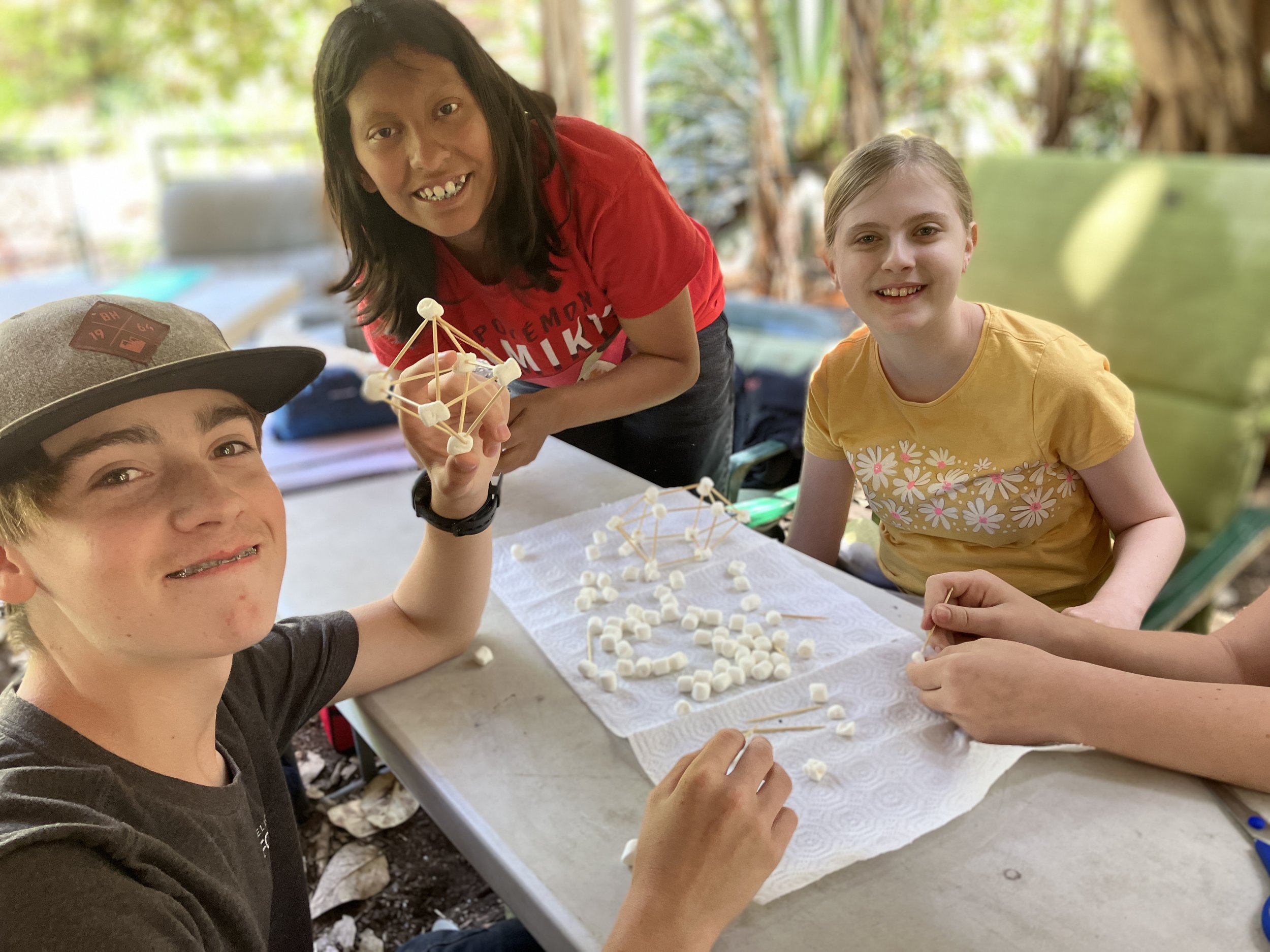
Each class is a blend of challenging investigation, project-based learning, direct instruction as well as unstructured exploration and quiet reflection.
We learn by doing, investigating, writing, reading, listening, observing, building, measuring and recording, drawing, singing, reflecting and playing.
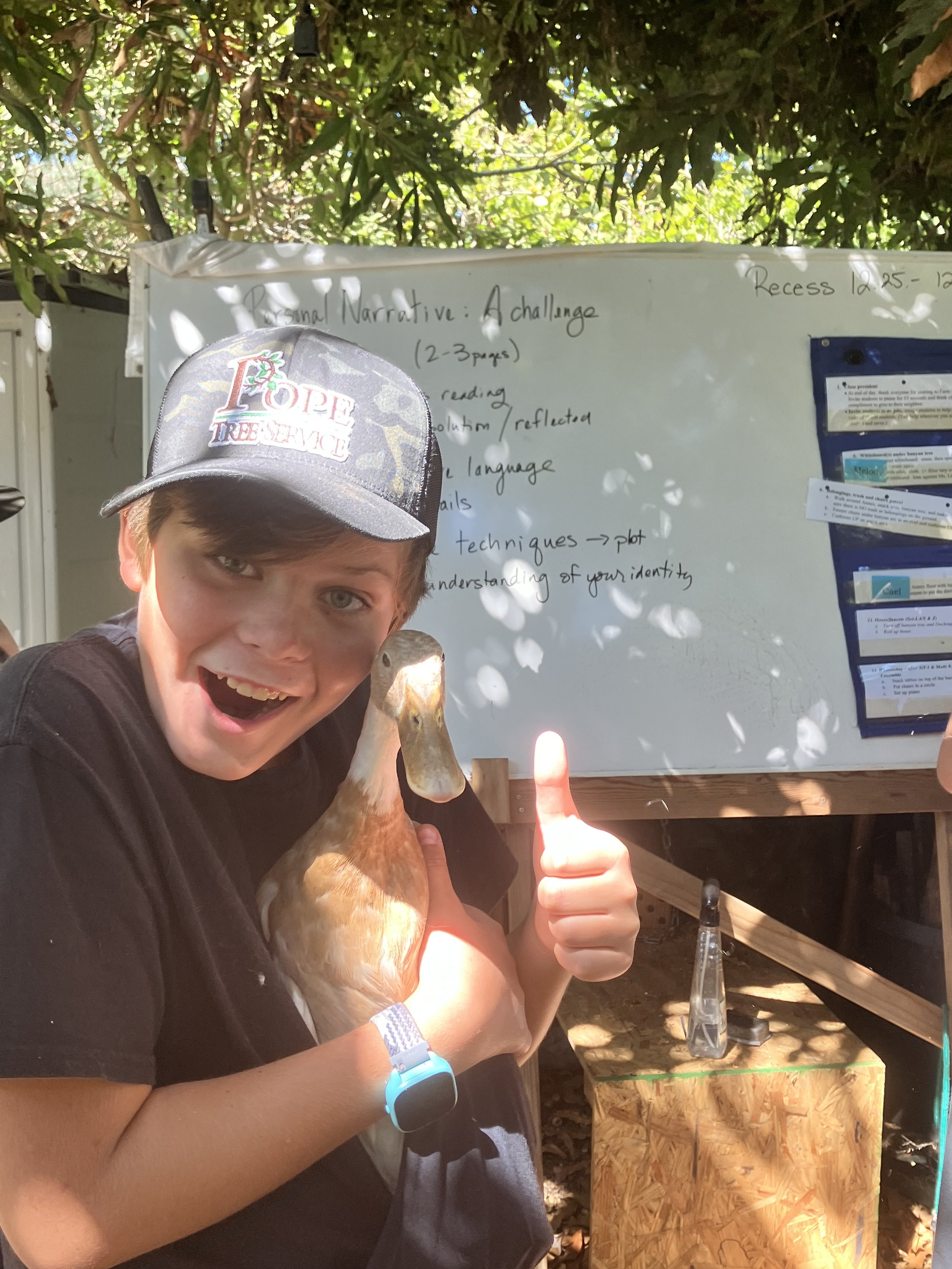
Thus, when Luna the mama chicken went broody, we let her hatch fertile ducks eggs and learned about waterfowl embryo development and dig into bird anatomy and adaptations.
What’s happening with the flora and fauna on the micro-farm coupled with students’ interests drive our study of biology

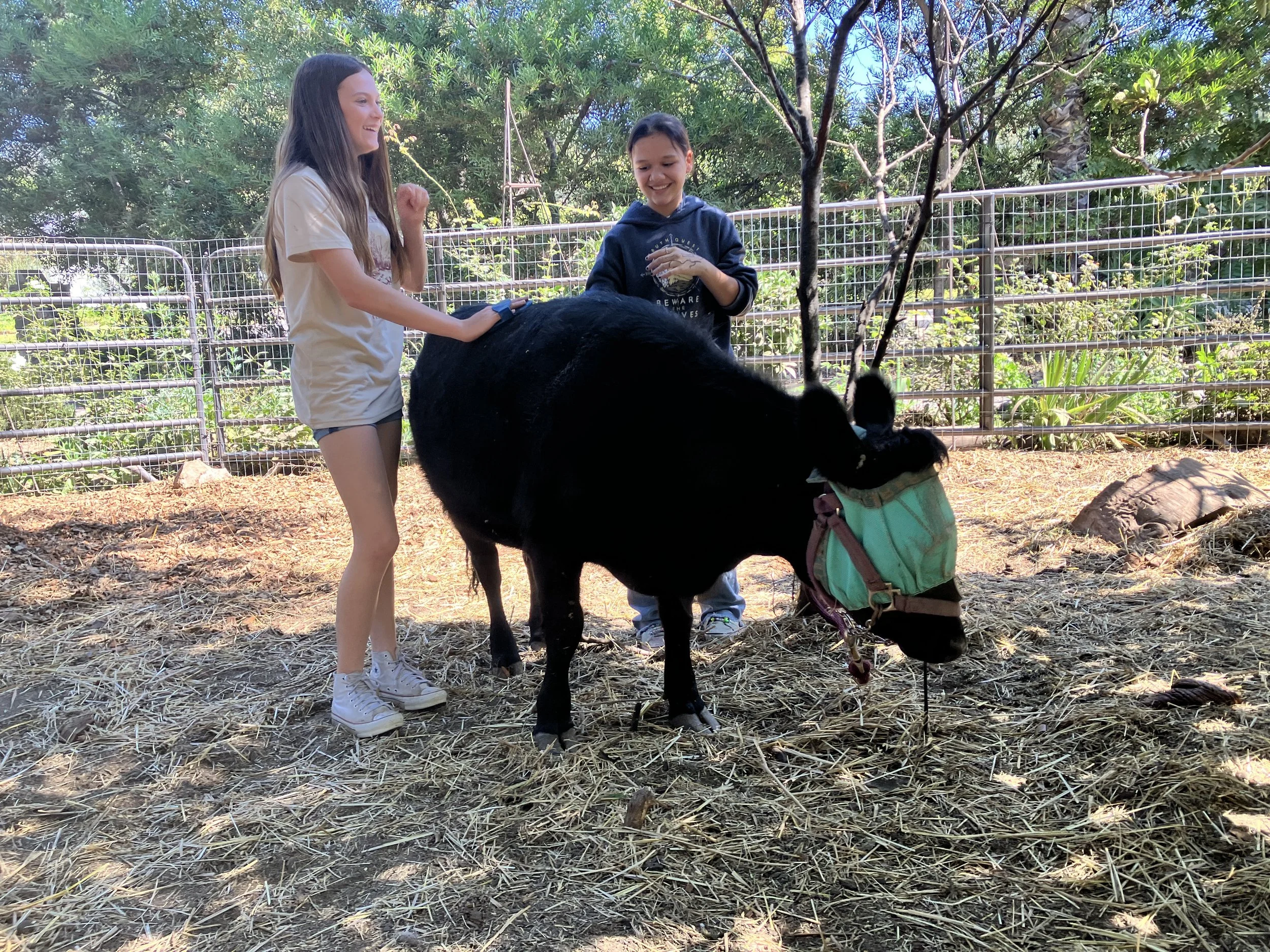
When Ursula gives birth to her calf, we learn about bovine reproduction, birth, digestion, and the science of milk!


If the natural springs in are flowing after winter rains, then we put on our rain boots, study watersheds, and bust out the microscope to study fresh water ecosystems.
Each year’s academic content is different both depending upon what’s happening in the yard and what the students are interested in. See the header for what we’re covering in coming years.

Students delivering their science presentations.
Morning Activities
DAILY OBSERVATION
LUNCH RECESS
HANDS-ON LIFE SCIENCE

Daily Observation of flora and fauna: students find a quiet spot to focus exquisitely on the here and now, recording observations as a scientist, poet or artist.
Hands-on life science: botany, zoology, ecology, human anatomy and physiology, gardening, and animal husbandry
Studying the physiology and anatomy of various classes of creatures from the molecular level up to full systems (endocrine, digestive, circulatory, nervous, skeletal reproductive) via lecture, songs, drawing, and review games.
Exploring botany from cellular level to structures for growth, metabolic activity, and reproduction.
Tending their plants and animals.
Integrated unit studies such as dyeing silk and spinning it into yarn from the silk worms students raise from egg to moth.
Microscope studies of plants, invertebrates, pond organisms— whatever will fit on a slide.
Singing & playing advanced science songs & playing review games


Afternoon Activities
MORE SCIENCE
BOOK CLUB
REPONSE TO LITERATURE WRITING
WORD STUDY/ ANALOGIES


Book Club: We study two books a semester in great depth with students helping to select the novels we read. Since 2019 we have read:
Classic dystopian or satirical works such Animal Farm, The Giver, Ender’s Game, Fahrenheit 451
Realistic fiction such as The Pearl, The Wanderer, Holes, Hatchet, My Side of the Mountain, The Adventures of Tom Sawyer, Flipped, Outsiders
Historical fiction such as Roll of Thunder Hear My Cry, Green Glass Sea, A Long Walk to Water, Esperanza Rising, Book Thief, Code Name Verity, The White Camel of Fez, Johnny Tremain
Mysteries such as The Hound of the Baskervilles
Fantasy and sci-fi such as Alcatraz and the Evil Librarians, Wizard of Earthsea, The Martian (classroom edition), Journey to the Center of the Earth, The Rithmatist, Girl Who Drank the Moon, Artemis Fowl, and Anya and the Dragon, The Graveyard Book, Steelheart
Non-fiction such as How We Got To Now, Irresistible: The Rise of Addictive Technology, They Called Us Enemy and Boys in the Boat (HS edition), The Elephant Whisperer, Fearless… Navy Seal, The Hiding Place, Anne Frank: Diary of a Young Girl, The Woman Who Smashed Codes, Quiet: the Power of Introverts in a World that Can’t Stop Talking, The Sea Captain’s Wife: the True Story of Mutiny, Love and Adventure at the Bottom of the World, The Anxious Generation
Students study and evaluate the author’s use of literary devices and characterization. We tease out explicit and implicit themes. Students also annotate their copy of the novel to help them cite textual evidence in both our literature study circles and to support their thesis in their essays.
Writers’ Workshop: The writing focus of the Science and Language Arts seminar is the essay, particularly response to literature and persuasive essays.
We also fine tune students’ ability to write summaries, as summaries are often embedded in any well-written academic paper, descriptive and narrative paragraphs, and expository articles. Ms. Lisa uses step by step modeling throughout the writing process, templates, and one-on-one writing conferences to help students grow where ever they are in their progression as a writer.
Word Study: We alternate studying Latin & Greek roots and prefixes to unlock the hidden meaning of English words through mini-lectures, games and competitions OR WordMaster analogies.
NationalWord Master analogy competitions develop attention to subtle connotation and context usage and relationships between words thus are a delight for gifted kids who like puzzles. (As a plus, this is excellent GRE practice.)

Ages, homework supplies, and other details
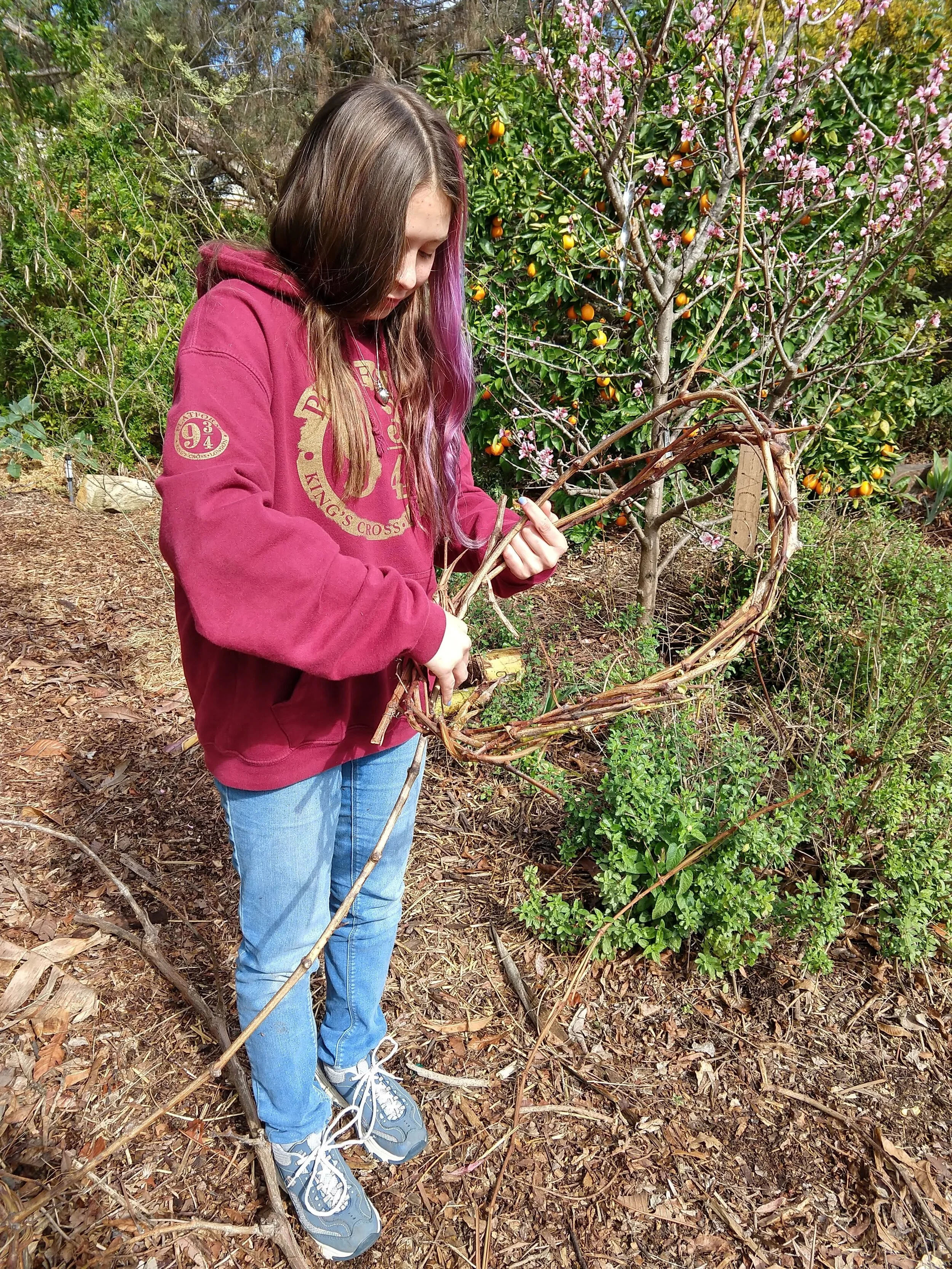
Making wreaths after learning how to prune grapevines

Writers’ Workshop one-on-one teacher conference

For a detailed supply list visit our supplies and learning outdoors tips page

Ages
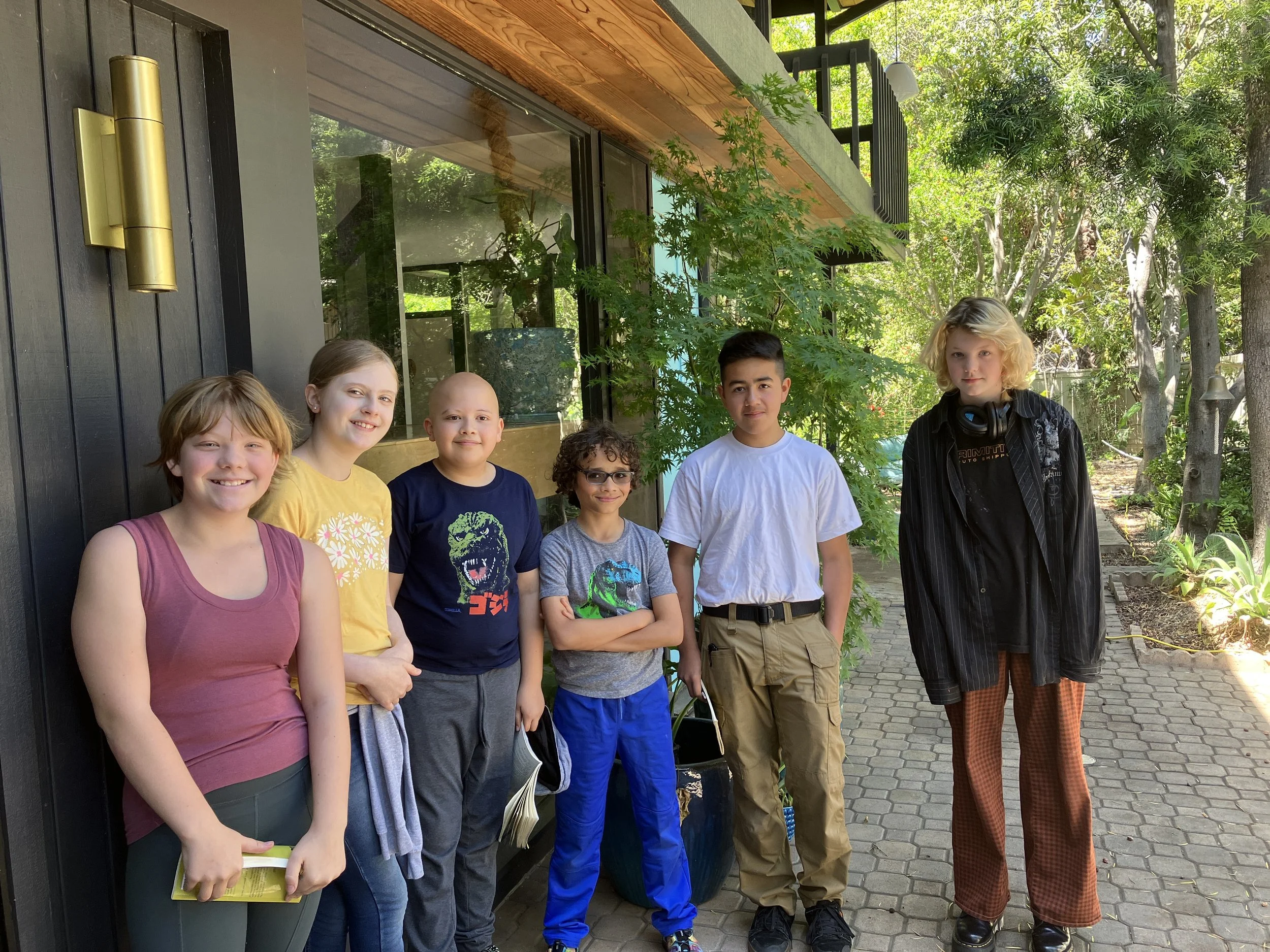
11+ Middle school and up. This class is best for 7th graders and older BUT precocious 6th graders who are emotionally mature, have good self-regulation, and are reading and writing well above grade level are admitted on a case by case basis.
Weekly Homework
Students read about 50-90 pages of our book club novel,
Annotate as they read or respond to literary discussion questions,
Make flash cards for science vocabulary
Study our Latin & Greek stems or work on our challenging analogy vocabulary words
Type up drafts of writing done in class (finish drafts if they didn’t finish at home)
Gather resource materials for presentations
Prerequisites
Middle school reading level, able to write a paragraph without run-on sentences.
Semester Length
12-week semester
ABOUT MS. LISA CLARK-BURNELL

Relevant Education and Experience
I have a BA in English and Political from UC Santa Barabara. While an undergraduate, I was a university writing tutor for disadvantaged graduate and undergraduate students, assisting them with writing assignments in all disciplines. Upon graduating with highest honors and multiple awards, I then earned a CLAD multiple subject teaching credential with supplementary authorization in Social Studies and Language Arts from San Jose State University. In 1996 I began teaching middle school language arts, social studies, and math, first in the Bay area and then in Carmel Valley. While at these middles schools I concentrated on designing language arts and history curriculum.
In 2005 I took a hiatus from teaching middle school to stay home with my children. During that period I co-founded and directed Salem Harvest, a non-profit that connects farmers and backyard growers with volunteer pickers to harvest fruits and vegetables that would otherwise go to waste in an effort to end hunger. I also began honing my organic gardening expertise and animal husbandry skills, diving deep into permaculture and restorative agriculture. In 2012 I returned to teaching but this time as a homeschooling parent.
In 2019, at the request of my own kids and other parents, I started teaching classes in my areas of expertise for homeschool students.
For more information about Farm School and why I offer the classes I do, see the About page.
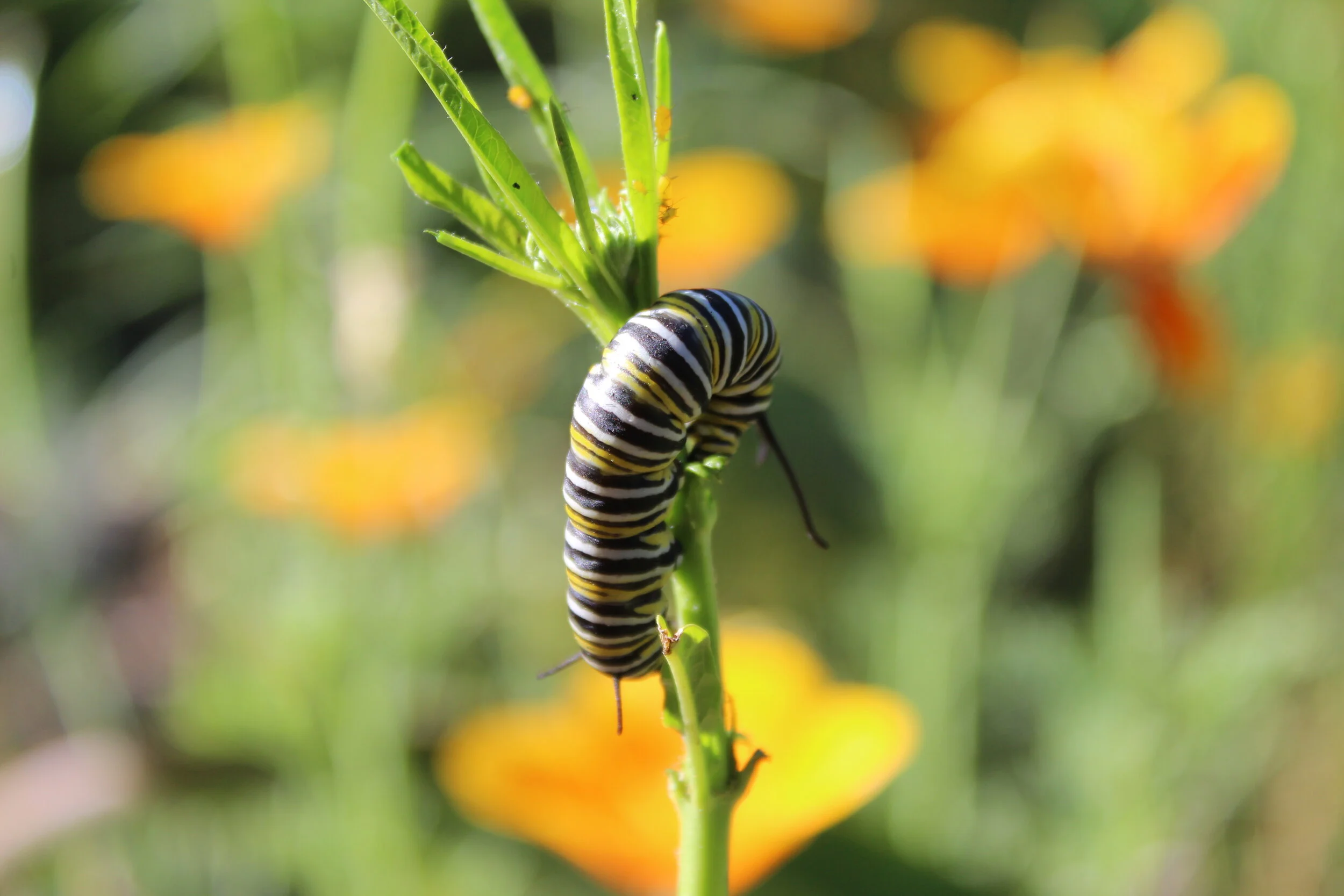
Monarch caterpillar in our native plants habitat
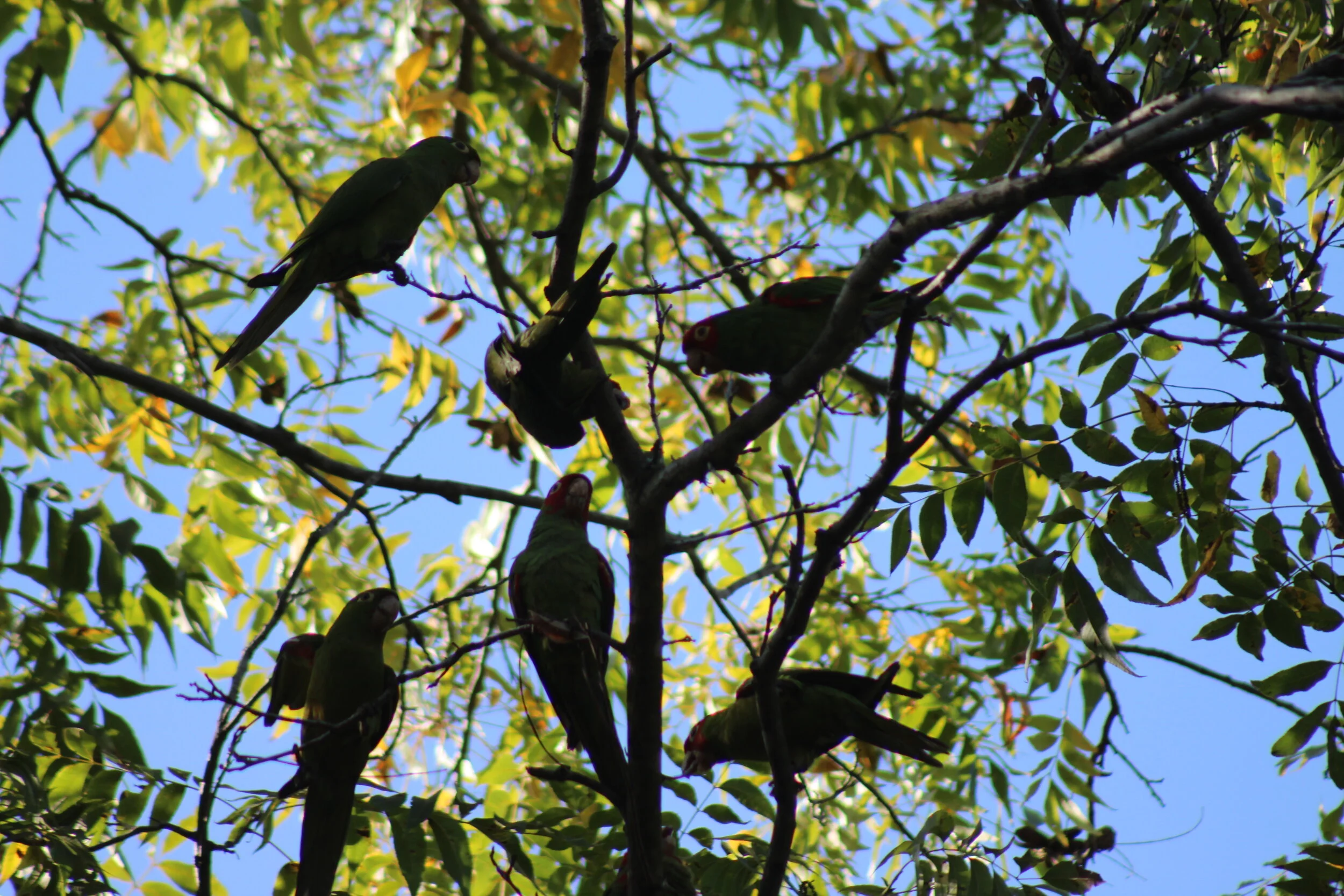
Red-headed parrots eating pecans
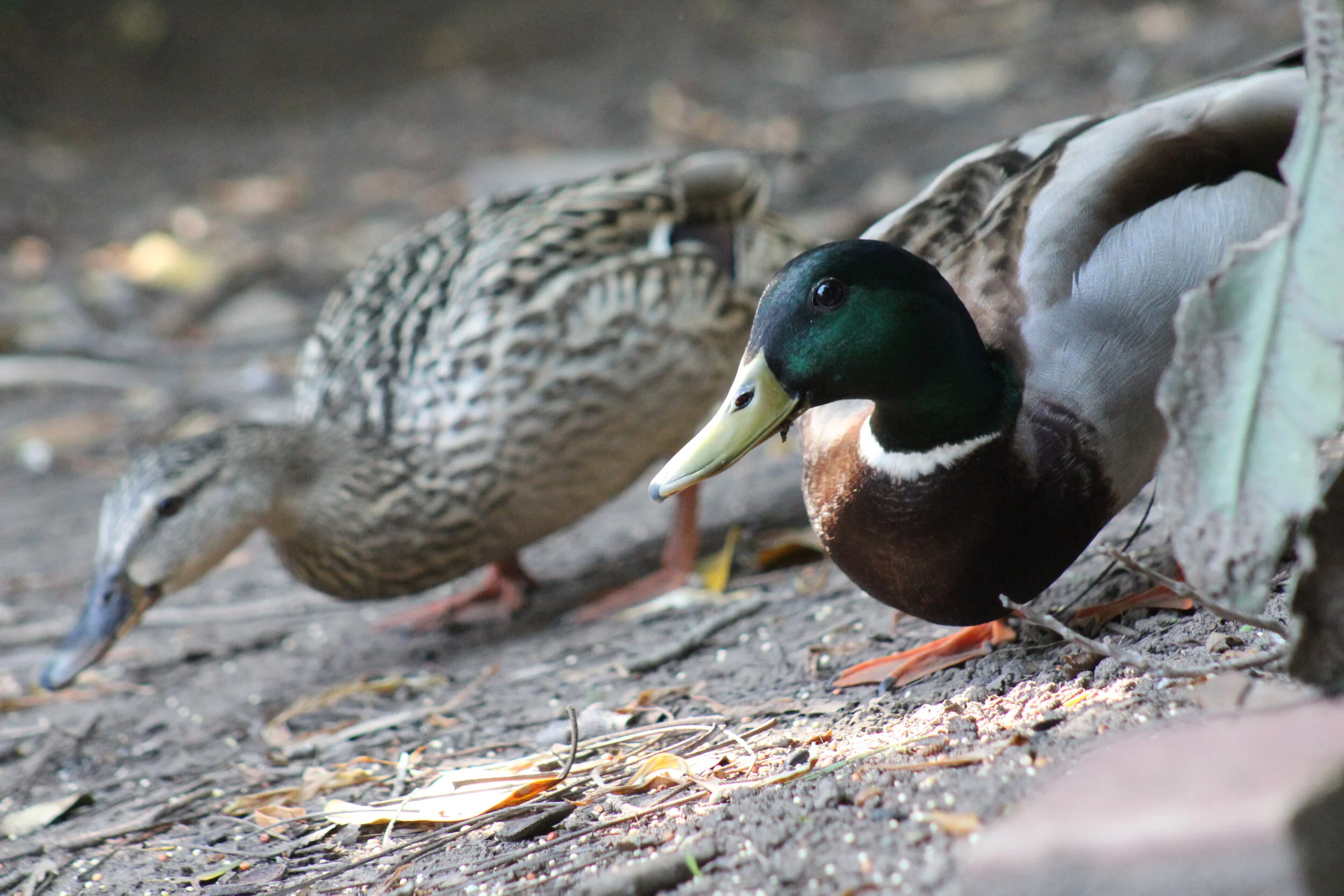
Mallard ducks foraging for food below pecan tree

Resident but elusive barn owl made an appearance for the first day of Farm School

Artichokes

Grevillea in pollinator garden

CA Bumblebee dusted in peanut senna pollen

Red-eared slider turtle that wandered into the neighborhood

Farm School's miniature Dexter cattle for milk and meat