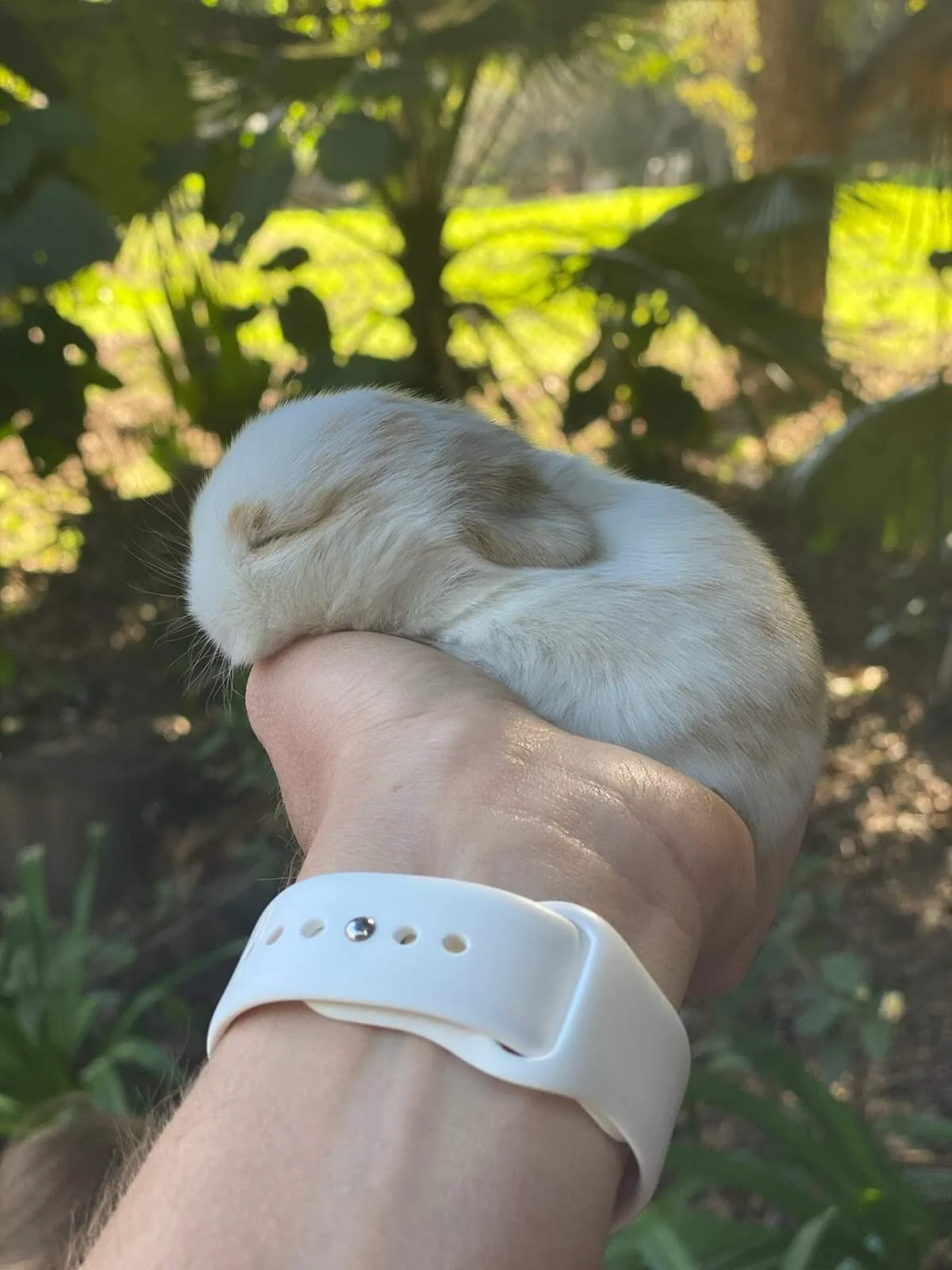
Real Life Farm Science 2025-26
September 25-December 11 + January 8
Section 1 is 12:30 to 2:30. Section 2: 2:30 to 4:30
Combined Sci-LA & Shakespeare and Zoology Extension
Sci-LA/S&Z combined extension is Wednesdays 10:30 to 1:45 (after Math 7 and before Math 8+ HPA) 5/7, 5/14, 5/21.
ALL FARM SCHOOL STAYLATE party is 5/21 after the extension form 1:45 to 3:15.
How to find your California state representatives in the Assembly and state senate: https://findyourrep.legislature.ca.gov/
Here's what I have planned for the next three weeks based upon my conversations with students about what they enjoy most. No homework, but they may choose to type up their letter/essay and send it off into the world!
Reading and Rhetoric: We will be examining yesterday's article in the San Diego Union Tribune about charter school education and AB 84. The sponsors of this assembly bill argue that it will strengthen oversight to prevent fraud, reduce funding for non-classroom-based charters like PCA & So-Cal Scholars Academy, and eliminate "controversial" enrichment funds offered to homeschool students and classes taught by instructors who are not credentialed teachers (I am a credentialed teacher.) As we analyze this writing we will ask: What are the rhetorical moves the writer makes? How do they appeal to kairos, ethos, logos, pathos? (In our class we call this KELP). What arguments are valid? Which lack context? What are possible counter-arguments?
Writing Lab: letter to the editor or persuasive letter. Students can choose to write a letter to the editor about their homeschooling experience as it pertains to the UT article or write a letter to their CA state representative or simply reflect in writing on their homeschool journey thus far. Of course they can write in support of the bill or against it or a more nuanced this-is-helpful-but-that-is-misguided essay or letter. As always, I never teach students what to think-but how to think critically and how to express THEIR ideas persuasively.
Literature: "Song of the Trees" by Mildred D. Taylor. I will read aloud to them this lovely novella and we will have small group discussions about it and the literary devices this employs and do small group projects (students asked for more of both of those!)
Science: We will dive into the science of milk and dairy animals and... learn to milk the cow! Week one, I will demonstrate. Weeks two and three, any student who wants to work as a team to milk will get to do those. Those who want to continue to observe can do that. Or help set up the machine, bottles. We will also make yogurt and ice cream. (I asked if we should invite parents to that part in case you want to learn, but they said no. Sorry. They like having this space be theirs alone, I think, which is part of being a pre-teen and teen who wants more independence. BUT, I will offer times this summer when moms can come learn how to milk with me if you are interested.)
Farm work & Daily observation - how to plant trees, roses, grapes and more animal husbandry (why do we feed the ducks, cows, rabbits, fish what we do? etc)
Supplies needed:
Bring a clean pint jar with a tight lid every week to take home fresh milk/yogurt/ice cream and an insulated bag with an ice pack in which to take home their dairy delights.
Laptops are encouraged on May 14 & 21 for finishing their homeschooling essay/letter to editor/reflection.
A light-weight, long sleeve shirt to wear while milking to remove when bottling.
Hair tie if students have long hair -- must be tied up when handling milk
Gardening gloves & shoes that can get dirty
I'm so fired up about the next three weeks with your kids! It's going to be great. No homework for this session.
Class summary Week 27, April 30 (12th of 12 classes)
Romeo and Juliet: terrific performances!
Zoology presentation: informative presentations. Students are blossoming into excellent public speakers.
Book club: discussion about similar themes in both The Outsiders and Romeo and Juliet.
Send off for students graduating from Farm School
The combined S&Z/Sci-LA extension is Wednesdays 10:30-1:45 May 7, 14, 21 and will have part of the Dairy Delights class folded into it: we’ll learn how to milk the cow, make yogurt and ice cream and learn the science behind milk.
All Farm School Stay Late will be Wednesday May 21 from 1:45-3:15
Homework for Week 26, April 23 (11th of 12 classes)
Romeo and Juliet: Bring your name tag and props again for R&J performance. You as a class decided to postpone the performance until until your classmates were there.
Zoology presentation: Make sure you have your zoology presentation ready. Send me a link to your presentation or bring your poster. Practice delivering your presentation to your family. DO NOT READ TO THEM. You know this. Look at them!
Book club: Themes- thinking about similar themes in both The Outsiders and Romeo and Juliet
Make sure you have finished reading The Outsiders and Romeo and Juliet
Answer these questions about BOTH The Outsiders and Romeo and Juliet
Make a Venn diagram comparing and contrasting how these works (the novel and the play) portray feuds between two groups.
Think about the topic of using violence to solve problems. Write a paragraph answering this question: What does each work say about using violence to settle disagreements? Consider
is there a “valid” reason for the feuds between groups?
Does fighting and death solve the problem/make things better? Or does it make things worse?
Does Juliet’s suicide bring Romeo back to life? Who else is hurt, in addition to her by her suicide? In other words, what is the collateral damage?
Does Dally also commit suicide in a way by pointed an unloaded weapon at the police? (There’s a thing called suicide by cop— in which a person purposely provokes police into shooting them. This is different than an innocent person who does NOT want to die being shot by police.)
Who else is hurt by Dally’s death, besides himself? In other words, what is the collateral damage?
Does fighting make things better/ resolve the dispute?
Do the people who are left alive try to learn something from the senseless loss of life afterwards?
We will have a make-up class on Week 27 - April 30 (12th class since I cancelled the class before spring break)
Then the combined S&Z/Sci-LA extension is Wednesdays 10:30-1:45 May 7, 14, 21
All Farm School Stay Late will be Wednesday May 21 from 1:45-3:15
I had to cancel class on Wednesday of Week 25, April 1st. Bring your homework from week 24.
We will have regular class on
WEEK 26 - April 23 (11th class)
Week 27 - April 30 (12th class - this is a make up day)
Then the combined S&Z/Sci-LA extension is Wednesdays 10:30-1:45 May 7, 14, 21
All Farm School Stay Late will be Wednesday May 21 from 1:45-3:15
We have two more classes. This was the 10th week of our 12-week semester.
March 26, 2025 - Week 24 HOMEWORK
A) Book Club The Outsider’s — see the Outsider’s webpage for this HW
B) Drama: Romeo and Juliet - performing Act 2 & 3 next week!
Bring a PROP for your character. Make a plan for your costume to share with your acting company. If you are in a puppet scene. Bring your puppet. We will have a lot of rehearsal time next week. We will perform on April 2.
Bring your NAME CARD/CREST/PLACARD. With family, name, and some art revealing something about your character.
C) Zoology Presentation - due next week or right after Spring Break 4/23. You need to email me a copy of it if it’s a slide presentation so we can use my computer to show it on our monitor/TV Or you can bring your computer IF you have an HDMI port (Chrome books do not.)
Format: poster? PPT or Google Slide show? Comic Strip? Puppet Show? A song? A poem?
Drop your works cited page into the last slide — simply copy and paste.
You may use the notes function to add notes that only you will see. Or you can have note cards.
C) Drama: Romeo and Juliet - performing Act 2 & 3 next week!
Bring a PROP for your character. Make a plan for your costume to share with your acting company. If you are in a puppet scene. Bring your puppet. We will have a lot of rehearsal time next week. We will perform on April 2.
Bring your NAME CARD/CREST/PLACARD. With family, name, and some art revealing something about your character.
Classwork summary 3/26 - Week 24 of 26
Science/FARM LAB: Science behind silvo-pasture -why we’re planting bare root mulberry trees next week where the vegetable beds used to be. What makes leaves palatable and nutritious. How to inoculate the new vermiculture bed (worm bed).
BOOK CLUB - The Outsiders
Discussion of Cherry’s courage: courage to stand up to Dally when he was harassing her. Courage to tell the Greasers what the Soc’ were planning. Discussion of HW questions.
Finished and presented in teams evidence of outside/inside character traits for a character, then creating a poster to show their inner and outer traits. Teams presented these to the class.
WRITING LAB - Self-assessment of zoology articles. How to turn your essay into a presentation.
VOCABULARY— Roots & Shoots game with our new words.
DRAMA/ROMEO & JULIET - rehearsal: blocking, using props/puppets, costumes, speaking lines to convey meaning
FAST FARM WORK - skipped
We have three more classes. This was the 9th week of the semester.
March 19, 2025 - Week 23 HOMEWORK
A) Book Club The Outsider’s — see the Outsider’s webpage for this HW (there is reading, vocab, and two responses to reading activities.)
B) Zoology Article -Final Draft! & Continue working on a presentation
Final Draft due 3/26:
Use my feedback AND the Essay Editing Checklist that I gave you in class to refine your essay.
Bring a printed copy of your final draft of the zoology expository article. It should be double spaced. Staple it to the top of your rough draft that I gave you feedback on. (I’m looking to see that you incorporated my feedback). Include:
Print a new self-assessment (that’s here: Rubric and writing prompt)
include a Works Cited page. You may use https://www.mybib.com - version MLA9 to generate the works cited page.
Also email me a copy of your final draft so I can publish it on my website. I will use initials only.
Begin/Continue turning your article into a presentation.
Format: poster? PPT or Google Slide show? Comic Strip? Puppet Show? A song? A poem? Presentations due April 2.
Beware the time vortex of PPT/Google slides. Messing with slide layout, colors, fonts, transitions can siphon away hours. Do words first THEN images, then font, transitions last. Think content over format first.
C) Drama: Romeo and Juliet
FINISH reading the play
Bring a PROP for your character. Make a plan for your costume to share with your acting company. If you are in a puppet scene. Bring your puppet. We will have a lot of rehearsal time next week. We will perform on April 2.
Bring a plan for making a NAME CARD/CREST/PLACARD. With family, name, and some art revealing something about your character. We’ll work on these in class.
Next week one of our Farm Chores will be to build a temporary dam and aqueduct to harvest/store our spring water by pumping it into the orchard AND channelizing it from the edge of the property through Mango’s corral to the orchard. Rainboots and spare socks recommended!
Classwork summary 3/17 -
Science/FARM LAB: What is a spring? Visited natural springs along our street and on our property. The geology of natural springs. Impact of septic systems on spring water and well water here on Mt. Helix. How we use spring water here. Water storage - surface vs in the underground aquifer.
BOOK CLUB - The Outsiders
Discussion of our outside presentation of self to the world and our true self. What shapes how and what we choose reveal to others about who we are and what we value. Venn diagram of our own inner and outer traits. Then teams worked on finding evidence of outside/inside character traits for a character, then creating a poster to show their inner and outer traits. Teams presented these to the class.
Poetry analysis - Robert Frost’s poem “Nature’s First Green is Gold” meaning, allusions, alliteration, rhyme scheme, iambs. We found new leaves that are gold-red hued. Discussed how this poem is a microcosm of the book - from gold/innocence to green/loss of innocence.
WRITING LAB - How to use in-text citations, works cited resources (mybib.com). Common problems in rough drafts of zoology articles. Review of writing prompt instructions.
FAST FARM WORK - skipped
VOCABULARY— skipped - next week we’ll play a game with our new words.
DRAMA/ROMEO & JULIET - skipped
HW - Week 22 is March 12, 2025
A) Book club: Read Chp 3-5 of The Outsiders. Vocabulary and respond to reading assignments are posted on The Outsiders page DON’T FORGET TO DO THE VOCAB AND RESPONSE TO READING!
B) Writing: Zoology Expository Article FINAL DRAFTS DUE in two weeks on March 24/26
Start turning your article into a presentation (poster? PPT or Google Slide show? Comic Strip? Puppet Show? A song? A poem?) Presentations due March 31/April 2
I’ll return your article drafts to you next week. rubric and writing prompt/self-assessment is here. Works cited page: visit https://www.mybib.com
C) Drama: Romeo and Juliet
FINISH reading Act IV (Scenes 4-5.) (Next week we will finish reading the play)
Memorize 10 or your lines from Act 1, 2 or 3. Review all your lines (you highlighted them in your copy of the play or if you are the announcer, wrote them down.)
Bring a PROP for your character.
Bring a plan for making a NAME CARD/CREST/PLACARD. With family, name, and some art revealing something about your character. We’ll work on these in class.
Classwork Summary 3-12-25
SCIENCE Q & A about how cow lactation works: cows control their let down (what hormones trigger that); selective breeding for milk traits - volume vs. more milk fat vs. more protein or calcium vs. beta carotene.
BOOK CLUB
Romeo and Juliet rehearsals and parts for Acts 2 & 3
The Outsiders -discussion of how “gang” is used then vs. now. What do you like about this book? Realistic fiction attributes? Tone? Why does it feel more relevant even though it’s nearly 60 years old? Ways teens set themselves apart from adults (slang, dress), and other groups of kids. Why Johnny is brittle vs. hard/rebellious. Ways people react to emotional and physical abuse. Why is parents fighting, like Johnny’s unsettling. Foreshadowing.
Vocabulary flashcards - game for those who did their HW.
WRITING LAB: Time to self-assess zoology rough draft
HW - Week 21 is March 5, 2025
A) Book club: Read Chp 1 & 2 of The Outsiders. Vocabulary and respond to reading assignments are posted on The Outsiders page
B) Writing: Zoology Expository Article - Finish writing a rough draft of your expository article about your animal. We worked on this in class.
Include a works cited page: visit https://www.mybib.com and paste all of the URL’s for your online sources into the MLA works cited page and in-text citation generator. I will help students individually if you are confused about this in class over the two weeks.
Make sure you have your rubric and writing prompt for this assignment in your binder.
C) Drama: Romeo and Juliet
READ Act IV Scene 2-3.
Review your lines from Act 1, 2 or 3. Memorize 4 lines.
Classwork Summary 3-5-25
SCIENCE Genetic Testing of milk proteins (Beta Casein - A1/A1, A1/A2, A2/A2) — how we do the test, why
BOOK CLUB - Romeo and Juliet rehearsals and parts for Acts 2 & 3; introduction to The Outsiders - setting, author biography; how to make vocabulary flashcards
FARM WORK - new worm bin set up (layers of greens, old bedding and manure + worms and worm bedding from small worm bin.)
WRITING LAB:
Time to work on zoology rough draft
Parenthetical citation review (in-text citations of sources.) MLA source format is (Last Name Page number). (Smith 45). If online and no page number omit page number. We worked on samples with corporate or government authors and unknown authors too. See the Purdue Online Writing Lab for details. Students will use the website: mybib.com to create their works cited page.
Works Cited
HW - Week 20 is February 26, 2025
A) Prepare for next class: Get the next book club book: The Outsiders by S.E. Hinton. Always have your gardening gloves with you. Next week you may want to bring a lap top computer with you. Not required but we are writing rough drafts.
B) WRITING: EXPOSITORY ARTICLE - Outline your expository article about your animal. Email your outline to Ms. Lisa by Monday so I can give you feedback before Wednesday. We will write rough drafts in class next week. NOTE: if you want to bring a laptop computer you may do so.
Decide how you want to organize your web article/essay: order of importance? compare and contrast? relationships/cause and effect (habitat -> adaptations …)
List out the main points you want to make in the order you think they should appear in your article.
Now take your notes and arrange them underneath each of your main points. You can do that physically by cutting them up and placing them in piles, or numbering them, or type them into a word document and moving them around in the document. Within those piles figure out the order of ideas in each section. Once you have an order that makes sense, that order is your outline. Preserve that order/outline somehow (numbered? stapled? typed in a document?) Bring it to class Monday. We will work on rough drafts in class.
Visit https://www.mybib.com and paste all of the URL’s for your online sources into the MLA works cited page and in-text citation generator.
For example, say I’m writing an essay about the tiaga coniferous forest biome and want to cite a youtube video. I can drop the URL (web address) from video #2 above into the Purdue Online Writing Lab citation generator and this is what I get for a works cited citation: GeoDiode. “Taiga - Biomes Episode 7.” YouTube, YouTube Video, 5 May 2020, www.youtube.com/watch?v=OUmHWrF8MnY. To shorten that for a parenthetical citation, I use the author (GeoDiode). On mybib.com there’s an option to copy it for an in-text citation and the program will automatically shorten it to the correct citation.
Then type in your print sources into mybib.com to generate citations for those to add to your MLA works cited page too. Save this document and copy and paste it into a word document so you have it as part of your essay/web article.
C) Romeo and Juliet READ Act III Scene 4-5, Act IV Scene 1
Respond to these scenes in one of the following three ways (choose 1)
As you read look for examples of purposeful miscommunication (lies or hiding the truth ) as well as accidental miscommunication. List a few examples.
Examine Juliet’s choices in these scenes. What are we learning about her character? She is only 13 and lives in a culture that says parents especially fathers are in charge. What is she doing that surprises you given what her culture expects of her?
Find a metaphor or simile or image or opposites. Write it down and explain it.
BONUS: SCIENCE - Watch one coniferous forest videos (video 1, or video 2 on the tiaga, a part of the coniferous biome) and add notes to your handout which we worked on in class. Excellent Learning Habits Tickets for this.
Classwork Summary - 2/26/25
SCIENCE & NON-FICTION READING STRATEGIES: Ecology - Coniferous forests— applying our strategies for reading non-fiction texts: SQ3R (Survey/skim, question, read, recite, respond) Talked about a new mnemonic device SQRSD (survey, question, read, summarize, draw or diagram) to a textbook article on coniferous forests biomes.
SCIENCE Read aloud An Immense World by Ed Yong. Chp 2 Smell…. (AKA leaking sacks of chemicals)
BOOK CLUB - sharing quotations and illustrations or themes and evidence. We’ll use these in an in-class essay. Book groups discussed their books together.
WRITING LAB:
Parenthetical citation = in-text citations of sources. MLA source format is (Last Name Page number). (Smith 45). If online and no page number omit page number. We worked on samples with corporate or government authors and unknown authors too. See the Purdue Online Writing Lab for details. Students will use the website: mybib.com to create their works cited page.
Organizational strategies for expository writing about an organism: order of importance, compare and contrast, cause and effect or relationships
Week 19 is February 12, 2025
Zoology Research: Expository Article for the Website then presentation to peers
Finish taking notes from at least two different sources.
Bring those notes AND the sources to class on 2/24 so you can make an outline and start your rough draft.
Get a copy of our next book club book: Outsiders by S.E. Hinton
Shakespeare: Romeo & Juliet - similar to last week.
Find two quotations (in the original text) that show word play/puns, or similes/metaphors, alliteration, or opposites such as love & hate/violence, love & infatuation, light & darkness, age & youth, sickness & health, fate and agency/free will, haste & patience, dreams & reality, friends & enemies.
Illustrate these two quotations. Include the quotation on the art work.
READ Act III Scene 2-3. You may read any combination of the modern and original text. As you read annotate the following: plot summary, funny insults and character traits of the main characters.
Make short plot summaries at the top of every 2 pages.
Look for word play as you read. Words with double meanings and puns.
Look for clues to traits the main characters have. Are they fearful? rash? brave?
Bonus - want to learn more about biomes? Watch any of these videos. ELH tickets for notes.
New Biomes overview: Biomes of Earth by Geodiode. Savanna biome by Geodiode. Grassland biomes by Geodiode.
Watch this optional video on Biomes: Rainforest, Desert Grassland, Shrub and Biomes: Deciduous Forests, Evergreen Forests, and Tundra by Prof. Dave Explains. If you take notes, you’ll get Excellent Learn Habits Tickets for each video. If you were absent this week, I highly recommend you watch these so you don’t miss out on key science information.
Watch this optional video on What is an Ecosystem? Crashcourse Geography #15 Ecosystems are based upon relationships: one way movement of energy (starting with sun’s energy) and two-way cycling of nutrients.
Classwork Summary - 2/12/25
We sat around the fire while we did most of our learning activities today and roasted marshmallows under the student-built rainy day shelter.
Literary analysis:
Students presented their illustrated R&J quotations focusing on word play
Close reading of Act 1. Students rehearsed their lines together for the entire act. We talked about how Juliet is surprisingly independent and bold for 16th century thirteen-year-old girl. She tells her parents that she’ll look at Count Paris with an optimistic eye but won’t commit to an arranged marriage if she doesn’t like him.
Research Non-fiction time to read our sources and take notes.
Life Science: Ecology - Savanna Biomes — applying our SQ3R non-fiction reading strategy. Ms. Lisa modeled good questions to ask after surveying/skimming the text, paying attention to headings, subheadings, bold words, figures. What will I have learned about ______? Question, We then together read, recited (summarized and answered our questions), and responded/recorded what we learned. This takes much more time than just reading and so it really studying and learning!
Animal husbandry & zoology: Farm work - broadcasting grasslands (pasture) seeds. We are seeding our own miniature grasslands (aka a pasture.) Interested students broadcast: perennial ryegrass, amaranth, inoculated crimson clover, beets and peas. Discussed nitrogen-fixing legumes such as peas and clovers, often called green-manure, because they can fix nitrogen from the air into the soil with a symbiotic partnership with bacteria on their roots. Nitrogen is one of three key macro-nutrients in commercial fertilizers, the N, in NPK (nitrogen, phosphorus, potassium). We poked the peas down below the soil, but let the others rest mostly on the surface as most grasses and clovers are find with surface-germination if it stays wet. Earlier last week I broadcast oats too.
Notebook entries: #1 Science Notes: biomes, #2 HO Zoology Expository Writing Prompt, #3 caring for cattle 4) Biomes: Desert & Tundra, 5) HO bibliographical citation worksheet, 6) Biomes: grasslands., Biomes: savannas.
Spring Semester Week 18 is February 5, 2025
Shakespeare: Romeo & Juliet
Find two quotations (in the original text) that show word play/puns, or similes/metaphors, alliteration, or opposites such as love & hate/violence, love & infatuation, light & darkness, age & youth, sickness & health, fate and agency/free will, haste & patience, dreams & reality, friends & enemies.
Illustrate these two quotations. Include the quotation on the art work.
Go back to Act 1 and look at the lines your character has. Do you have a favorite? (Cael you are Romeo, Roman you are Lord Capulet). If you are an announcer, find your favorite line in all of Act 1.
READ the rest of Act II, Scene 5 and Act III Scene 1. You may read any combination of the modern and original text. As you read annotate the following: plot summary, funny insults and character traits of the main characters.
Make short plot summaries at the top of every 2 pages.
Look for word play as you read. Words with double meanings and puns.
Look for clues to traits the main characters have. Are they fearful? rash? brave?
Bonus (same as last week)
Watch this optional video on Biomes: Rainforest, Desert Grassland, Shrub and Biomes: Deciduous Forests, Evergreen Forests, and Tundra by Prof. Dave Explains. If you take notes, you’ll get Excellent Learn Habits Tickets for each video. If you were absent this week, I highly recommend you watch these so you don’t miss out on key science information.
Watch this optional video on What is an Ecosystem? Crashcourse Geography #15 Ecosystems are based upon relationships: one way movement of energy (starting with sun’s energy) and two-way cycling of nutrients.
Classwork Summary - 2/5/25
Literary analysis:
Plot summary of the rest of Romeo & Juliet.
Students presented their illustrated quotations.
Chose roles for Act 1, individually read lines, did a group cold reading.
Research Non-fiction time to read our sources and take notes.
Life Science: Ecology - Grassland Biomes — applying our SQ3R non-fiction reading strategy. Ms. Lisa modeled good questions to ask after surveying/skimming the text, paying attention to headings, subheadings, bold words, figures. What will I have learned about ______? Question, We then together read, recited (summarized and answered our questions), and responded/recorded what we learned. This takes much more time than just reading and so it really studying and learning!
Animal husbandry & zoology: Farm work
Notebook entries: #1 Science Notes: biomes, #2 HO Zoology Expository Writing Prompt, #3 caring for cattle 4) Biomes: Desert & Tundra, 5) HO bibliographical citation worksheet, 6) Biomes: grasslands.
Spring Semester, Week 17 is January 29, 2025
We need to pass out ELH tickets for homework next week!!
Shakespeare: Romeo & Juliet
READ the rest of Act II, Scenes 1-4. You may read any combination of the modern and original text. As you read annotate the following: plot summary, funny insults and opposites/pairs.
Make short plot summaries at the top of every 2 pages.
Look for word play as you read. Words with double meanings and puns.
Look for pairs and opposites: love & hate/violence, love & infatuation, light & darkness, age & youth, sickness & health, fate and agency/free will, haste & patience, dreams & reality, friends & enemies. What symbol or phrase will you use for opposites?
Choose any quotation from Act II, Scenes 1-4, that you think is important or interesting and make small piece of art about it. Include the quotation and illustrations.
2. Find a third source for your expository article about a California animal. Bring your sources to class (books, magazines or print pages from reputable web sources.) Read widely enough to make sure you are interested in this creature. (Expository writing prompt and self-assessment here.) You’ll have time to work in class on using those sources to gather information about your creature.
Bonus:
Watch this optional video on Biomes: Rainforest, Desert Grassland, Shrub and Biomes: Deciduous Forests, Evergreen Forests, and Tundra by Prof. Dave Explains. If you take notes, you’ll get Excellent Learn Habits Tickets for each video. If you were absent this week, I highly recommend you watch these so you don’t miss out on key science information.
Watch this optional video on What is an Ecosystem? Crashcourse Geography #15 Ecosystems are based upon relationships: one way movement of energy (starting with sun’s energy) and two way cycling of nutrients.
Classwork Summary - 1/29/25
Literary analysis:
Close reading of Romeo & Juliet - Act 1 Scene 1. Together we practiced close reading, a technique of looking very closely at each word within critical lines to identify then annotate the following literary devices: sonnet structure, rhyme scheme, allusions (Sampson is a biblical allusion), alliteration and impact on delivery of words and emotion behind the scene. Word play/double meaning (coal/collier/ choler, move - to anger/move - to run away. Discussion of: Why is Act 1, Scene 1 funny? Why start a play with verbal sparring then actual sword sparring?
Textual evidence: Tom Sawyer poster wrap up…. (what character traits does Tom have and what evidence from the novel supports that claim?)
Research Non-fiction Bibliography: what is plagiarism? How to avoid it—> cite your sources. Introduced a source citation form to keep track of where you get your information from and an online bibliography generator mybib.com. We will use MLA format as it is easier than APA so it’s a good introduction to citing sources. (One should use APA for social science or science topics, but it is a fussier system so we’ll use MLA. The main principles are the same.)
Life Science: Biomes - review of what a biome is then characteristics of these biomes: desert, tundra (both polar and alpine tundra biomes).
Animal husbandry & zoology: Farm work - preparing to plant a silvo-pasture (silvo pasture is pasture with an emphasis on forage trees. We have limited surface area on the ground here at Farm School but we can grow up, thus edible trees enable us to produce more forage for the cattle in less space with less water. We are preparing to plant 9-12 mulberry trees, both white and red as the leaves have the same nutritional value as alfalfa but take a fraction of the water, and the berries add easy to digest calories. Mulberries are drought tolerant, produce leaves 8-9 months a year, grow quickly, respond well to cut and carry or browsing by cattle, disease resistant, not thorny, tasty fruit for humans, and cattle love them.
Notebook entries: #1 Science Notes: biomes, #2 HO Zoology Expository Writing Prompt, #3 caring for cattle 4) Biomes: Desert & Tundra, 5) HO bibliographical citation worksheet
Spring Semester, Week 16 is January 22 2025
Shakespeare: Romeo & Juliet
READ the rest of Act 1. You may read any combination of the modern and original text. As you read annotate the following: plot summary, funny insults and opposites/pairs.
Make short plot summaries at the top of every 2 pages.
Look for and mark funny insults as you read. This is play is an odd combination of tragedy AND comedy. What short symbol will you use for funny parts? (A joker? smiling face? Haha?)
Look for and pairs and opposites: love & hate/violence, love & infatuation,light & darkness, age & youth, sickness & health, fate and agency/free will, haste & patience, dreams & reality, friends & enemies. What symbol or phrase will you use for opposites?
2. Find another source for your expository article about a California animal. Bring your sources to class (books, magazines or print pages from reputable web sources.) Read widely enough to make sure you are interested in this creature. (Expository writing prompt and self-assessment here.) You’ll have time to work in class on using those sources to gather information about your creature.
Classwork Summary - 1/22/25
Literature: Introduction to Romeo & Juliet - Act 1 summary. Textual evidence: Tom Sawyer poster wrap up…. (what character traits does Tom have and what evidence from the novel supports that claim?)
Reading Non-fiction reading strategy and practice reading a recent newspaper article about an adaptation of prairie rattlesnake to arid environment & practicing this reading strategy:- SQ3R
a. Survey/skim – headings? Subheadings? Figures? What is this about?
b. Question – pose big picture questions you expect the text to answer—can you turn a heading into a question?
c. Read
d. Recite/summarize – what it means (main ideas/claims, answer your questions)
e. Record – record your ideas and text’s main ideas
Science/writing/speaking: time to read sources for zoology article
Animal husbandry & zoology: Brie has a small eye infection- how to apply a topical antibiotic. How this is similar to putting a topical antibiotic on a cut and differing impact of topical versus oral antibiotics, especially upon a young ruminant who is just developing her gut biome. Calculating Mango’s current weight using this formula [(heart girth)(heart girth) (body length)]/300. Given this formula we estimate her weight to be almost 500 pound, up 100 pounds from September.
Notebook entries: #1 Science Notes: biomes, #2 HO Zoology Expository Writing Prompt, #3 caring for cattle
Spring Semester, Week 15 is January 15, 2025
Shakespeare: Romeo & Juliet
PREPARE TO READ: Shakespeare’s audience would have been familiar with this plot line. Shakespeare is retelling an old story, so you should get familiar with the plot too. So read this one-paragraph quick plot summary of the entire play then read the 2-minute summary of Act 1 (just below the one-paragraph summary). Now you are ready to read the play
READ Act 1, Scenes 1-2. You may read any combination of the modern and original text. As you read annotate the following: plot summary, funny insults and opposites/pairs.
Make short plot summaries at the top of every 2 pages.
Look for and mark funny insults as you read. This is play is an odd combination of tragedy AND comedy. What short symbol will you use for funny parts? (A joker? smiling face? Haha?)
Look for and pairs and opposites: love & hate/violence, love & infatuation,light & darkness, age & youth, sickness & health, fate and agency/free will, haste & patience, dreams & reality, friends & enemies. What symbol or phrase will you use for opposites?
2. Find sources for your expository article about a California animal. Bring your sources to class (books, magazines or print pages from reputable web sources.) Read widely enough to make sure you are interested in this creature. (Expository writing prompt and self-assessment here.) You’ll have time to work in class on using those sources to gather information about your creature.
3. Gratitude/Awe journal. Begin keeping a diary. You will need to write 5 days a week for one week. Your diary is private; no one else will read it. Possible journal prompts include:
What you are grateful for today.
What went well and why
Take a walk or sit some where and pay close attention - look for the wonderful in the mundane/ordinary things
BONUS - Biomes Video
If you want to learn more about biomes here’s a short video HS level on ecosystems, biomes, nutrient cycles: What Are Ecosystems? Crash Course Geography #15. Just watch or take notes for ELH tickets.
How to make yogurt with your fresh milk from Ursula (or any milk).
Supplies: A pot, food thermometer, plain yogurt or starter culture, a jar and lid to store it in, and an insulated cooler and a jar for hot water.
Heat a quart of milk to 185 degrees.
While heating milk, sterilize the jar you’ll store it in (you can pour boiling water in it).
Cool milk to 112 degrees. Easiest way to do this is put the pot in a sink of cold/icy water.
Once the milk is 110-112 degrees, put some of the milk in the jar you’ll store it in and add 1 tablespoon of plain yogurt to it and mix it thoroughly. This is your inoculated milk. You are adding specific strains of good bacteria to the milk. Then pour the rest of the milk into your inoculated milk back into the rest of the milk, stir and put the lid on.
Keep the inoculated milk at roughly 100 to 110 degrees for 4 to 7 hours. You can put the sauce pan it in your oven with the light on, or put the jars in warm water bath in a slow cooker, or in an insulated chest (a “cooler”) but put very hot water in other jars in the chest with the yogurt.
Then remove from heat source, stir and store in fridge for up to a week or two.
One can do this in an Instapot too- there is a yogurt setting which boils the milk, then you cool it as above and add culture (yogurt), then put it back in the Instapot and press “yogurt” again but this time select 4 or 5 or 6 or 7 hours, close it up and walk away.
Classwork Summary - 1/5/25
Literature: Introduction to Romeo & Juliet - quick plot overview, tragedy vs. comedy, and how to make a Shakespearean insult overview (more to come on that.)
Textual evidence: Tom Sawyer poster wrap up (what character traits does Tom have and what evidence from the novel supports that claim?)
Science: Ecology notes - what is a biome? Impact of latitude, elevation, and position on continent relative to large bodies of water on climate. Precipitation is a key factor in climate. Beginning discussion of biomes from driest to wettest.
Science/writing/speaking: overview of zoology expository article assignment including assessment criteria.
Farm Work
Daily Observation/Awe Walk
Students took home milk from Ursula in their own clean pint jars.
Notebook entries: #1 Science Notes: biomes, #2 HO Zoology Expository Writing Prompt
Week 14 - December 18
If you haven’t finished reading Julius Caesar, finish it over break.
Prepare for spring semester by getting the following book club books. Class resumes week of January 13.
Romeo and Juliet - No Fear Shakespeare Edition - we’ll read this weeks 1-6
The Outsiders by S.E. Hinton, any edition - we’ll read this weeks 6-12
Class summary
Science:
Read aloud and discussion of An Immense World - by Ed Wong, non-fiction adult book on how animals sense the world (which is often very different than how WE sense the world). Introduction to sensory organs, stimuli, receptors, and umvelt (the sensory world an organism perceives)
Genetics - Punnet squares - horned trait (recessive), polled trait (dominant) and probability of offspring having horns depending upon alleles parents carry. How Brie ended up with horns.
Animal husbandry: why remove horns on a dairy heifer (ideally one doesn’t breed to a hetero-horned bull but to a homo-polled bull. But we didn’t have control over who Ursula was bred to.)
Writing & speaking - personal narrative challenge presentations (optional)
Book Club- The Adventures of Tom Sawyer - discussion questions and character collage (literary analysis— how is Tom characterized? Textual evidence to support claims about his character traits.)
Farm work: harvesting worm castings (worm manure) from worm bin, cattle, duck, rabbit care, lime harvesting, pond preparation (leveling the new pond site, trimming bog plants)
Week 13 - December 11
Ack! Somehow the HW I thought I posted didn’t make it here. All you needed to do for this week as finish reading Julius Caesar
Week 12, December 4
Make a copy of this HW and then use it as a check list.
Writing Lab: Personal Challenge Essay — this is a great work sample for charter schools (as is the discussion question homework)
Using the feedback I gave you today (written on your draft) revise your essay. Now read it out loud to yourself or to a family member. This will help you hear it from a new perspective. Do you need to vary your sentence structure (fewer sentences starting with I + verb) to make it more engaging for the reader?
Now use the Essay Revision Checklist to proof-read and edit your essay for small errors.
Gather all your old drafts and the revision checklist which we reviewed in class.
Now print out a new personal challenge essay rubric (grading sheet). Use it to self-assess your essay (highlight the boxes or phrases that best describe your work. Now attach rubric on top, then revision checklist, then the final draft.
Make sure your final draft has:
Formatting: double space, indent each paragraph, no extra space between paragraphs, boring font, 1 inch margins.
Heading: In upper right or left corner include: Your first & last name, Date, Class title, Assignment title
Center your title (bold okay, no underline, no italic
Book Club The Adventures of Tom Sawyer, by Mark Twain. Read Chp 26 - 31 (4 TICKETS) As you read, think about
What the message (or theme) of this novel is. Books can have multiple themes. We will discuss themes in class next week.
Tom’s character - does he do anything that reveals something different about his character? Is he maturing or changing over time?
Then do DISCUSION QUESTIONS for chp 26-31. Answer as many questions as the grade you are in (If you are in 8th grade, answer 8 questions. 6th grade, answer 6.) Bold questions are required. Copy the questions you choose to answer into a document then respond to them in complete sentences. (4 ELH Tickets - If you need to earn more Excellent Learning Habits Questions, answer more questions. Each additional question thoughtfully answered earns you one additional ticket.)
OPTIONAL Make two more 8x11 posters of two vocabulary words from either the chapters 1- 6 & chapters 7-13 lists or the new Chp 26-31 list.
Poster should include the word, definition, some art to reflect the word’s meaning, and the word used in a sentence from Tom Sawyer. The way to find the word used in a sentence from the novel is to type into a search engine this: The Adventures of Tom Sawyer “insert vocabulary word in quotations marks”
Text and illustrations should be big enough to be read from far away — these will be posted on the wall for your classmates to refer to.
Bring index cards to class (at least 20) next week so you can start working on flash cards for your words so we can play vocabulary games with your flash cars.
Shakespeare - Julius Caesar Read Act 4.1 to 5.1
Read a summary first of Act 4 & 5: Julius Caesar Scene-by-Scene Plot Synopsis | Shakespeare Learning Zone Act 3.2 includes two speeches at Caesar’s funeral (called funeral orations)
OPTIONAL: choose an important quotation from the text and make a comic strip of it then write a paragraph in the final frame of the comic strip explaining why this quotation is important.
OPTIONAL Bonus- extend your science learning by watching any of these videos. Earn ELH tickets by taking notes on any of these videos.
Watch the Amoeba Sisters “Auto-trophs & Heterotrophs” ecology video.
Watch Amoeba Sisters “Food Webs & Chains: Producers, Consumers, Decomposers”
Watch Amoeba Sisters “Ecological Relationships” mutual, commensalism, parasitic etc.
Carbon & Water Cycle Crash Course Ecology #8: Water & Carbon Cycles
Current Table of Contents Entries
Writing: Brainstorm about a personal challenge that your are working to overcome or have overcome. How do you feel about it? How did you overcome it? Did you learn anything/grow from it?
H.O. Julius Caesar Journal Prompts #1 & 2
RBOSS form for Personal Challenge Narrative
Organizational form - Personal Challenge Narrative
Rhetoric: Worst Marriage proposal ever
Ecology notes - intro
Tom Sawyer intro
Ecology notes - symbiotic relationships
HO Persuasive Essay Graphic Organizer
How to vary sentence structure in an essay to engage reader
More ecology notes: water cycle
COMING SOON
Class Summary for Week 12, December 4
Book Club: Tom Sawyer - character traits chart. Finding evidence from the text to prove that he has certain traits (called textual evidence).
Writing Lab Part 1L Personal Challenge Essay - we are almost finished with this!
How to vary sentence structure from I + verb format. Combining sentences using conjunctions, starting with predicate, and other strategies.
Editing and proofreading checklist “Dirty Dozen” - reviewed 12 common errors (plus another dozen or more students frequently make in essays.)
Time for one-on-one writing conferences. Graphic organizer for next writing assignment: persuasive topics. Discussed kairos- establishing credibility and logos - use of logic to persuade. Considering your audience - what are their objections/counter-arguments and how to you respond to those?
Writing Lab Part 2: Persuasive Writing -Continuing work on graphic organizer for next writing assignment— 3 possible persuasive topics (one serious issue, one silly issue, one privilege you want or a suggested family policy/practice change. Worked with teams to discuss audience counter-arguments and how to respond to those.
Shakespeare: scene rehearsals!
Science: Ecology - review of food webs (producers = autotrophs, consumers = heterotrophs etc). New cycle: water cycle
No HW over Thanksgiving break
Make up week, November 13, 2024
Make a copy of this HW and then use it as a check list.
Writing Lab: Type up your revised draft of your personal challenge essay. Remember: double space, boring font, 1 inch margins.
Book Club The Adventures of Tom Sawyer, by Mark Twain. Read Chp 20-25 - I highly recommend listening to this book or partner reading with a parent if you are finding it difficult. This is a HARD book; Twain’s orginal intended audience was adults. He removed most of the swearing but left in the tough vocabulary!
Discussion Questions FOR CHP 20-25 - answer as many questions as the grade you are in (If you are in 8th grade, answer 8 questions. 6th grade, answer 6.) Bold questions are required. Copy the questions you choose to answer into a document then respond to them in complete sentences.
Make two more 8x11 posters of two vocabulary words from the chapters 1- 6 & chapters 7-13 lists.
Poster should include the word, definition, some art to reflect the word’s meaning, and the word used in a sentence from Tom Sawyer. The way to find the word used in a sentence from the novel is to type into a search engine this: The Adventures of Tom Sawyer “insert vocabulary word in quotations marks”
Text and illustrations should be big enough to be read from far away — these will be posted on the wall for your classmates to refer to.
Bring index cards to class (at least 20) next week so you can start working on flash cards for your words so we can play vocabulary games with your flash cars.
Shakespeare - Julius Caesar Read Act 3 Scene 2 & 3 (3.2-3) Note: if you want to get ahead so you have no HW over Thanksgiving, also read Act 4.1
Read a summary first of Act 3.2-3: Julius Caesar Scene-by-Scene Plot Synopsis | Shakespeare Learning Zone Act 3.2 includes two speeches at Caesar’s funeral (called funeral orations)
Choose one of these two ways to respond to the text
#1 Annotate as you read, especially marking interesting rhetorical devices in these formal speeches. Can you find: parallelism, repetition (anaphora), irony (to say one thing but mean the opposite)
#2 Make a three-paneled drawing illustrating these quotations from Mark Anthony and the crowd. What do these words reveal about the speakers, including their character and motives? The speakers are Brutus and the crowd; think of the crowd of Romans as another character in the play. Use color and detailed illustrations to demonstrate the emotion and meaning of these words.
“Brutus is an honorable man.”
“Burn! Fire! Kill!”
“Now let it work. Mischief, thou art afoot.”
Class Summary for Make-up Week, November 13
Book Club: Tom Sawyer
small group and large group discussion of the novel topics included: satire and race.
Vocabulary - teams worked on teaching each other vocabulary words and choosing new words for next week from chp 1-13 lists.
Writing Lab:
Time to revise rough draft of personal challenge essay using feedback I gave students. Self-assessment using rubric. Priorities for revision include: sensory details, figurative language, conclusions that are reflective and show us what one has learned from the experience or how one has grown/changed.
Time for one-on-one writing conferences. Graphic organizer for next writing assignment: persuasive topics. Discussed kairos- establishing credibility and logos - use of logic to persuade. Considering your audience - what are their objections/counter-arguments and how to you respond to those?
Shakespeare: scene rehearsals!
Rhetoric: Artistotle’s rhetorical triangle: speaker, audience, subject. Brief introduction to KELP: Kairos, Ethos, Logos, Pathos.
Week 10, seventh class held November 6, 2024
Make a copy of this HW and then use it as a check list.
Book Club The Adventures of Tom Sawyer, by Mark Twain.
Read Chp 14-19 - I highly recommend listening to this book or partner reading with a parent if you are finding it difficult!
Annotate your book: mark the parts that are funny, puzzling, and that you want to discuss next week. Use post-it notes to mark these parts so you can find them. Come up with a short-hand (a way of marking them) that means funny, question, talk about it, etc.
Make two 8x11 posters of two vocabulary words from the chapters 1- 6 & chapters 7-13 lists. Poster should include the word, definition, some art to reflect the word’s meaning, and the word used in a sentence from Tom Sawyer. The way to find the word used in a sentence from the novel is to type into a search engine this: The Adventures of Tom Sawyer “insert vocabulary word in quotations marks”
Shakespeare - Julius Caesar Read Act 2 Scene 4 and Act 3 Scene 1
Read this summary of Act 2.4 and 3.1 Summary: Julius Caesar Scene-by-Scene Plot Synopsis | Shakespeare Learning Zone
BONUS: Answer these three questions:
What reasons do the conspirators give for killing Caesar?
Do you think these ends (their goals and reasons) justify what they have done (the means)?
In general, do the ends justify the means? Discuss this last question with your family after you have pondered it. This is a central philosophical question of the play.
Current Table of Contents Entries
Writing: Brainstorm about a personal challenge that your are working to overcome or have overcome. How do you feel about it? How did you overcome it? Did you learn anything/grow from it?
H.O. Julius Caesar Journal Prompts #1 & 2
RBOSS form for Personal Challenge Narrative
Organizational form - Personal Challenge Narrative
Rhetoric: Worst Marriage proposal ever
Ecology notes - intro
Tom Sawyer intro
Ecology notes - symbiotic relationships
COMING SOON
Class Summary for Wk 10, November 6
Book Club: Tom Sawyer - students who had their discussion questions done (HW from week 9) got to discuss the book together (though who did not have their homework worked on it but didn’t get to participate in the discussion because they were not prepared.) Teams worked on vocabulary - choosing new words for next week from chp 1-13 lists.
Writing Lab: Time to work on write rough draft of personal challenge essay. Brainstorming ideas for next writing assignment: persuasive topics.
Intro to Ecology Part Two: Types of symbiotic relationships: mutual, commensal, parasitic.
Farm Work: harvest time - pecans (anatomy of a pecan nut), pineapple guavas. Role these play in the ecosystem; crows harvest the pecans then drop them on the road from a great height to try to bust them open!
Week 9, sixth class held October 30, 2024
Make a copy of this HW and then use it as a check list.
Book Club The Adventures of Tom Sawyer, by Mark Twain.
Read Chp 7-13
Discussion Questions - answer as many questions as the grade you are in. If you are in 8th grade, answer 8 questions. 6th grade, answer 6. Copy the questions you choose to answer into a document then respond to them in complete sentences. You may chose from these questions from chapters 1- 6 & chapters 7-13
Make two 8x11 posters of a vocabulary word from the lists on the discussion questions. Poster should include the word, definition, some art to reflect the word’s meaning, and the word used in a sentence from Tom Sawyer. The way to find the word used in a sentence from the novel is to type into a search engine this: The Adventures of Tom Sawyer “insert vocabulary word in quotations marks”
Last name a-c, choose from Chp 1-6 lists a-d,
Last names d-p choose from Chp 1-6 lists e-j
Last names q-z choose from Chp 7-13 any list
Writing - Type up your rough draft of your personal challenge. Double spaced, 1 inch margins, boring font (Times Roman, Palantino, Garamond, Aptos, Arial, etc.)
Shakespeare - Julius Caesar Read Act 2 Scene 3s & 4.
Scene summaries to help you before you read
Act 2 Scene 3 Artemidorus reads the petition he plans to give to Caesar, warning him against the conspirators.
Act 2 Scene 4 Portia has been told by Brutus about the plot. She struggles between her fears for her husband and her promise to Brutus to ‘keep counsel’ and not speak out. The Soothsayer enters on his way to warn Caesar ‘to befriend himself’ and Portia betrays her nerves as she questions him.
Current Table of Contents Entries
Writing: Brainstorm about a personal challenge that your are working to overcome or have overcome. How do you feel about it? How did you overcome it? Did you learn anything/grow from it?
H.O. Julius Caesar Journal Prompts #1 & 2
RBOSS form for Personal Challenge Narrative
Organizational form - Personal Challenge Narrative
Rhetoric: Worst Marriage proposal ever
Ecology notes - intro
Tom Sawyer intro
COMING SOON
Class Summary for Wk 9, October 30
Book Club: Tom Sawyer - what is satire? What are some of the things Twain satirizes? Mark Twain’s writing process, how his intended audience changed over time.
Writing Lab: Finished listening to a professional writer’s personal challenge essay published in Backpacker in 2013. Looking for literary devices and what makes it effective. Them time write rough draft, adding literary devices, such as sensory details, vivid verbs, figurative language
Intro to Ecology: What is ecology? abiotic, biotic factors, habitats, interaction and interdependence, populations, population density
Week 8, fifth class held October 23, 2024
Make a copy of this HW and then use it as a check list.
Book Club: Read Chp 1-6 of The Adventures of Tom Sawyer. As you read ANNOTATE evidence of
Characterization: Evidence of what Tom’s character is like, (you can write “CHAR” next to parts which reveal Tom’s personality.
Evidence of how Aunt Polly feels about Tom
Funny parts (I draw a smiling face on these parts)
Questions you have (are there phrase or allusions that don’t make sense to you? (I write a question mark on these parts)
Satire: what is the author, Mark Twain, poking fun at in these chapters? I write: satire _______ and fill in the blank about what Twain is making fun of. For example, “Satire: parenting” “Satire: what makes a ‘good’ boy.”
Writing - Finish your handout from class Personal Challenge Organization and sensory details, vivid verbs, figurative language if you didn’t finish it in class. Next week we will write rough drafts.
Shakespeare - Julius Caesar Read Act 2 Scene 2.
Class Summary for Wk 8, October 23
Shakespeare: Close reading of Act 2 Scene 1. Brutus trying to persuade himself. Literary devices: alliteration, extended metaphor, soliloquy. Prose vs. poetry.
Writing Lab: Time to work on steps R-BOSS steps of O for organization and adding sensory details, vivid verbs, figurative language
Rhetoric: Rhetoric is the art of persuasion. Deducing Aristotle’s rhetorical triangle (relationship between speaker, audience, and subject) by reading an an epic failure of persuasion: Mr. Collins’ marriage proposal from Jane Austen’s Pride and Prejudice. He misunderstands what his audience would want in a proposal (wrong tone, wrong arguments) and he misunderstands the subject (proposal is not a business contract negotiation). Next week we’ll learn more about Aristotle’s triangle and kairos, logos, ethos, and pathos.
Zoology: Ursula’s delivery and calf Question and answer session. How did we know she would deliver sooner than December? Signs of getting ready to have the baby and imminent labor signs. What was labor like? What is a placenta? What is colostrum and why does a calf need it sooner rather than later. How do antibodies work? How much milk will she make and for how long?
Week 6 (fourth class) October 9, 2024
Prepare for Week 8— Get your copy of The Adventures of Tom Sawyer, by Mark Twain. Any edition is fine as long as it is not abridged.
Farm Lab = Special projects we are working on
Calf preparations - setting up calving and milking areas, and vaccination area.
New pond building - wetland for bio-filtration and the pond for the fish.
Make a copy of this HW and then use it as a check list.
Writing - Add to your brainstorming about your personal narrative challenge. You should finish the brainstorming, and then organize it. In what order to you want to write about your experience? If you have completed the brainstorming and organization steps, you are done until next week.
Shakespeare - Julius Caesar Read Act 2 Scene 1. Choose ONE of the following options
Make a puppet: Create a puppet for one of the characters in this scene.
Discussion Question: Write two of your own discussion questions and answer them. We’ll meet in groups next week to discuss your questions and the questions Ms. Lisa wrote from last week.)
OPTIONAL EXTEND YOUR LEARNING OPPORTUNITIES
Next week we will learn more about the nitrogen cycle in ponds and lakes. Extend your understanding of the nitrogen cycle and how we use these principles to create a working bio-filter for our pond so that the fish excretions and decaying leaves don’t poison the fish. Take notes for EXCELLENT LEARNING HABITS TICKETS
The Nitrogen Cycle Videos
Carbon and Nitrogen Cycle” on Amoeba Sisters
Summary of the nitrogen cycle by Crash Course Ecology #9: Nitrogen & Phosphorus Cycles
How humans influence the nitrogen cycle on our planet: created by USC science students
Aquaponics system expert Dr. Nate Stone explains nitrogen cycle and how to create a habit for nitrification bacteria in your pond/aquaculture system to live— this is a complicated explanation
Are you interested in seeing what looking for a good bull for Mango (our very small Dexter heifer) entails or one for Ursula when it is time to re-bred her in the spring after her baby is born? Here are some of the prospects we are considering as bulls. They should be polled (no horns) and have A2/A2 milk genetics. (I’ll explain that when we do our science of cattle work!) We’re looking for straight backs, bulls that look masculine (thick and male), docile temperment and whose mom’s have well attached tight and elastic udders and good milk production.
Mini-Jersey but not too small. This would yield a special Dexter Crossbreed known as a “Belfair” - small baby, likely more milk than just a Dexter would produce. Slightly larger mid-size jersey bull for Ursula (her baby needs to be taller so it can reach her higher udder to nurse.)
White Mini-Jersey (not purebred) for Mango
Biology Fundamentals:
Characteristics of Living Things and Basic Needs - Moo Moo Math and Science
Characteristics of Living Things: Amoeba Sisters
Cell Theory vs. Modern Cell Theory - Moo Moo Math and Science
Introduction to Cells - The Amoeba Sisters
Intro to Biology - What is Life with Prof. Dave
Class Summary for Wk 6, October 9
Shakespeare: Close reading of Act 1 Scene 2. Ideas discussed - when out public self and private self are in conflict (acting one way but feeling another). Superstition. Flattery. What is important to Brutus (honor and freedom). What arguments Cassius makes to persuade Brutus to join the conspiracy to kill Caesar.
Writing Lab: Time to work on steps R-BOSS steps of B, O, S (brainstorm, organization, start writing rough draft) How to approach any writing prompt: R-BOSS
Read and underline key directions and clues for how your writing will be assessed,
Brainstorm - topics, ideas, evidence, sensory or other details, metaphors, hook
Organize - chose an organizational structure and number your ideas 1-5 etc
Start writing- follow your organization, not scatter shot
See through new eyes or RE-VISION. Revising first for content, then format and finesse, then grammatical correctness
Time to further brainstorm and organize our personal challenge essay. Next week we’ll write rough drafts.
Biology Fundamentals - sang “All Living Things” - what makes something alive song. Thanks to Lumen for accompanying us on her recorder!
Animal Husbandry:
BOVINE PREGNANCY CHECK - how did the vet estimate when Ursuala is due to calve? Brief overview of female bovine reproductive organs. Why this estimation without an ultra-sound is tricky (breed of cow x breed of bull affects size of calf at every week. She’s estimating how big the calf’s leg is thus how far along in it’s development it is to guess when the calf is due!) Our updated thoughts about Ursula’s breed: she’s very big for a Jersey so she may be a cross breed. Possibly mostly Jersey and part Brown Swiss (another dairy breed that is very tall and docile with similar markings).
POND ECOLOGY - INTRODUCTION TO NITROGEN CYCLE Why do we build a bog for a wetlands? This is the home for the denitrification bacteria which break down the fish waste (and other organic matter waste) so that the water isn’t toxic to the fish.
Farm Lab Projects: building pond, preparing for calf delivery, and regular farm work (grooming cattle.) Students worked really hard to day and had fun working together!
Week 5 (third class) October 2, 2024
Special projects coming up
Calf preparations - setting up calving and milking areas, and vaccination area.
New pond building - wetland for bio-filtration and the pond for the fish.
Students who want to work on special projects during regular farm work/animal husbandry time are welcome to join one of these teams.
Students voted to extend our study of Julius Caesar through second semester so we can dig deeper yet read slower.
COPY AND PASTE OR TAKE A SCREENSHOT OF THE HOMEWORK AND PASTE IT INTO A WORD DOCUMENT, THEN USE THAT AS A CHECK LIST TO GET EVERYTHING DONE
Shakespeare - Julius Caesar Read Act 1 Scene 3. Choose ONE of the following options
Comic Strip: Find a few lines that you think are interesting or important. Make a comic strip with those lines. Include a heading at the top that tells us which lines these are like this “Act 1, Scene 2, Lines 56-66”
Discussion Question: Write answers to 3 or 5 of these discussion questions for Act 1. (click on the underlined link to print out the discussion questions. We’ll meet in groups next week to discuss.)
Prepare for next week - same as last week. We will make time to sing this on week 6.
Print a copy of the sheet music for next week, “All Living Things” by Doug Eldon. If you play a portable instrument like the ukulele, flute, recorder, guitar, or violin and you want to bring your instrument, do that! (You can store your instrument in the Annex during class.) We’ll sing this together as we finish our study what makes something alive.
OPTIONAL EXTEND YOUR LEARNING OPPORTUNITIES
Are you interested in seeing what looking for a good bull for Mango (our very small Dexter heifer) entails or one for Ursula when it is time to re-bred her in the spring after her baby is born? Here are some of the prospects we are considering as bulls. They should be polled (no horns) and have A2/A2 milk genetics. (I’ll explain that when we do our science of cattle work!) We’re looking for straight backs, bulls that look masculine (thick and male), docile temperment and whose mom’s have well attached tight and elastic udders and good milk production.
Mini-Jersey but not too small. This would yield a special Dexter Crossbreed known as a “Belfair” - small baby, likely more milk than just a Dexter would produce. Slightly larger mid-size jersey bull for Ursula (her baby needs to be taller so it can reach her higher udder to nurse.)
White Mini-Jersey (not purebred) for Mango
Biology Fundamentals:
Characteristics of Living Things and Basic Needs - Moo Moo Math and Science
Characteristics of Living Things: Amoeba Sisters
Cell Theory vs. Modern Cell Theory - Moo Moo Math and Science
Introduction to Cells - The Amoeba Sisters
Intro to Biology - What is Life with Prof. Dave
Class Summary for Wk 5, October 2
Shakespeare: Shared comic strip or memorized lines or history.
Writing Lab: How to approach any writing prompt: R-BOSS
Read and underline key directions and clues for how your writing will be assessed,
Brainstorm - topics, ideas, evidence, sensory or other details, metaphors, hook
Organize - chose an organizational structure and number your ideas 1-5 etc
Start writing- follow your organization, not scatter shot
See through new eyes or RE-VISION. Revising first for content, then format and finesse, then grammatical correctness
Time to further brainstorm and organize our personal challenge essay. Next week we’ll write rough drafts.
Biology Fundamentals - finished notes of 7 metabolic processes of living things and one thing that the species must do to be alive. Discussed how these apply to us as humans, animals and plants. Long conversation about ruminants!
Animal Husbandry: Students want to know what roles Mango, Willoughby and Ursula have so that led to a discussion of bovine reproduction (Mango and Usula either are pregnant or will be bred whereas Williough will be harvested for humanely raised mostly grass fed beef.) That led to a discussion of artificial insemination vs using a live bull - advantages for farmers for each approach as well as disadvantages, how bull semen is shipped and what characteristics one might look for in a bull.
Get to know you activities & recess. These are a vital part of class. They build community, friendships as a group. Individually, recess, free play and get to know you activities provide opportunities for exercise and social and emotional development. Studies show that free play is a critical to emotionally healthy teens including building resilience.
Week 4 September 25, 2024
Students voted to extend our study of Julius Caesar through second semester so we can dig deeper yet read slower.
COPY AND PASTE OR TAKE A SCREENSHOT OF THE HOMEWORK AND PASTE IT INTO A WORD DOCUMENT, THEN USE THAT AS A CHECK LIST TO GET EVERYTHING DONE
Shakespeare - Julius Caesar Re-Read Act 1 Scene 1 or 2. This time read some (or more of) the original text on the left side of the page which are Shakespeare’s actual words.
Comic Strip: Find a few lines that you think are interesting or important. Make a comic strip with those lines. Include a heading at the top that tells us which lines these are like this “Act 1, Scene 2, Lines 56-66”
Memorize: Choose two - five lines to memorize from either scene 1 or scene 2.
Historical Context: Review the actual history of Rome during the time of Julius Caesar using this National Geographic resource. National Geographic : Rome’s Transition from Republic to Empire.
Writing: Personal Narrative or Biographical Narrative
If you would rather write about someone else’s personal challenge than your own, do the following:
Create 5 questions to interview an older relative about a challenge they overcame as youth. Include questions about why it was a challenge, how they overcame it, what role others played in helping them, how that experience affected them.
Interview them. Take notes. You may want to record your interview so you can go back to the recording to take notes. It’s hard to take notes and really listen at the same time. It’s easier to listen to the recording and take notes later.
Prepare for next week
Print a copy of the sheet music for next week, “All Living Things” by Doug Eldon. If you play a portable instrument like the ukulele, flute, recorder, guitar, or violin and you want to bring your instrument, do that! (You can store your instrument in the Annex during class.) We’ll sing this together as we finish our study what makes something alive.
OPTIONAL EXTEND YOUR LEARNING OPPORTUNITIES
Awe- If you want to learn more about the science of awe, there’s a cool podcast called “Hidden Brain” that delves into this question. https://hiddenbrain.org/podcast/happiness-2-0-the-reset-button/
Biology Fundamentals: Preview or review any of the following videos on basic chemistry, cell theory, and how we identify if something is alive. These are 9th grade biology topics. (You can get Excellent Learning Habits tickets for taking notes on these topics. We will review these over two -three weeks and then move on.)
Characteristics of Living Things and Basic Needs - Moo Moo Math and Science
Characteristics of Living Things: Amoeba Sisters
Cell Theory vs. Modern Cell Theory - Moo Moo Math and Science
Introduction to Cells - The Amoeba Sisters
Intro to Biology - What is Life with Prof. Dave
Week 3 (first class together but week 3 of the FS semester), September 18, 2024
Shakespeare - Julius Caesar
Read Act 1 Scenes 1 & 2 and as you read do one of the two things below
Do one of the following:
Write down at line numbers that are insults, or address these three topics: concentration of power, ambition, violence. We made a box chart for recording this in class. (Minimum one line number per box.)
You are the costume designer for a production of Julius Caesar. Draw Marullus giving his angry speech to the crowd (is it a mob?). Pay particular attention to Marullus’ costume— what do his clothes convey about his character? What will the crowd wear?
Discuss with your family this issues that are central to Shakespeare’s play, Julius Caesar:
Leadership in a democracy or republic: What are the attributes of a good leader? (Not policy positions, but character traits.) Do you think the traits of a good leader in Roman times 2,000 years ago would be different than traits you’d look for in a leader today?
Political violence: Is it okay to assassinate a political leader if they are a danger to the republic/country? Explain.
While we will not be discussing contemporary American politics in our class, timeless literature raises issues that reoccur throughout history. This play is an example of that. These discussion questions are central to the moral and political issues Shakespeare wants his audience to grapple with. You can’t read Julius Caesar and NOT talk about these questions.
Prepare for next week
Print out our Poems for Memorizing collection and add it to your binder for next week.
If you struggled to think of a personal challenge you have overcome, you may interview a grandparent about this question. Ask LOTS of questions and record your interview.
Optional Ways to Extend Your Learning
Learn more about the plot of Julius Caesar and the kind of poetry Shakespeare uses by visiting our Shakespeare page and checking out the links there.
Class Summary for Wk 3, September 18
Get to know you and class culture: Played games to help students learn each other’s names and get to know one another. Discussed what we want our class culture to be like and how to achieve that. Students decided upon an environment with these attributes: safe to ask questions or not know something, fun, we communicate clearly, learn and grow, creative, respect each other, we feel like we belong. To craft this culture we will: listen respectfully, take each other seriously (no laughing at questions etc), be willing to learn, do our homework, help each other learn, try hard things and believe in our own capacity to learn, play games, have an engaged and ready to learn attitude, be willing to think differently, compromise, be supportive, speak up.
Shakespeare: Plot summary of Julius Caesar. How to use our No Fear Shakespeare editions to read
Farm Chores: This year we will work in teams of 3-5 students on the duck, cattle, orchard, pond, rabbit, or seasonal projects teams for a month until all team members master those husbandry tasks and then we’ll switch. Today we divided into teams to do seasonal projects (pond repair in preparation for new fish arriving), animal husbandry begin caring for cattle, rabbits, and orchard work (caring for the soil by mulching paths).
Writing Lab: Students began brainstorming about a personal challenge they have overcome. (This is a PCA Unit 2 9th grade writing sample. They’ll write a narrative essay.)
Biology Fundamentals — coming next week

Quick Resources
-
FALL SEMESTER
Math starts September 4, Wednesday. Ms. Lisa’s other fall classes start the week of September 16th. Semester ends December 18, 2024 for all classes.
Make-up class week is November 11 & 13. If no make-up classes are needed, this is a holiday week (it corresponds with Veteran’s Day)
Thanksgiving Break is one week 11/25-29
Winter Break is four weeks 12/19-1/12
SPRING SEMESTER
Starts January 13 for all of Ms. Lisa’s classes. End dates: Math ends May 14th while other classes end week of April 21-25
Make-up week if needed over President’s Day February 17-23, otherwise one week for February Break.
Spring Break- two weeks April 7-April 18
Last week of non-math classes is April 21-25. If we need a make up class it will be held 4/28-5/1.
-
Overcast weather = cold weather because damp air feels colder. To stay warm on overcast days bring: layers - hoodie, beanie, scarf, gloves, thicker socks and pants, thermos with warm liquid, a beach blanket (I’ll store that here for you!)
Hot weather: Bring bug spray. Bring a hat and a water bottle, bandana for dipping in cool water and placing it around your neck. Loose fitting breathable clothes.
Rain in the forecast: on any day with rain in the La Mesa forecast, Sci-LA & S& Z students must have rain boots, a rain coat or rain poncho, and spare set of socks.
Sci-LA/S & Z Students without this essential gear will not be allowed to be dropped off because we will be doing farm work and projects in the rain, playing in the rain. Wet kids are cold kids who are not learning and certainly aren't having fun. Tips on rain gear are here on the supplies page.
Rain gear is not as essential for math classes as you'll just get wet at recess IF you choose to play in the rain.
-
This is our typical schedule, however it is fluid depending upon weather, special activities and student needs.
DO/DEW: Daily Observation & Drop Everything and Write
Shakespeare & Book Club
LUNCH RECESS
Science Activities
Afternoon Brain Break
Writers Workshop
Clean up
Farm Work/ Read Aloud
Helpful Forms & Handouts
GENERAL FORMS: Table of Contents
POETRY & LITERARY ANALYSIS: Poems for Memorizing, Literary Terms Definitions, Above and Below Ground Quotation response form, Textual evidence chart: PDF version here
WRITING: Theme Paragraph Template/Outline, HAMBURGER PARAGRAPH (Theme) REVISION CHECKLIST. Essay Editing Checklist, Theme paragraph revision checklist
Week 0 - Before class starts on September 18th, 2024
Read the SYLLABUS. A syllabus is the document describing what a class will cover and class policies. Pay particular attention to the clothing section. There are some changes there to keep students safe.
Order our first two books. (Yes, you may start reading or listening to them now. That’s an especially good idea if you think you’ll have a busy fall semester.)
Book club novel: Tom Sawyer, by Mark Twain. Any edition will do. You need this book on the first day of class. We will be annotating it so if you are using a library copy, get sticky-notes. You are welcome to start reading now or even listen to this book on audio.
Play: Julius Caesar, by William Shakespeare. You must have a No Fear Shakespeare Edition: either the regular or deluxe student edition. These editions have the original text on the left page and an easy-to-read novelized version on the right.
Visit the all-in-one-supplies page as well as the detailed supplies page for Shakespeare & Zoology/Sci-LA. Print that out and check off each item so you have those things ready to go on the first day. It may be hot the first weeks of class so in particular make sure you have a bandana to wet down and a water bottle.
Prepare your three-ring binder. Make sure the following are in it:
Lined paper
Two tabs (one for work, one for lined paper)
Print out the “Table of Contents” form using the buttons above listed under “Resources” and put it at the front of the binder.
Put your name on the binder
OPTIONAL: If you love learning new words, you’re invited to visit our Vocabulary page and use the join button or this link https://vocab.com/join/4RCP5G0 to create a new account at our Vocabulary.com Farm School classroom. THIS IS NOT REQUIRED. (If you don’t think you want to work on 40 new challenging words every two weeks, then don’t sign up. I have limited spots in this program so it’s okay if you aren’t interested.) If you are interested, you can start mastering vocabulary words from Julius Caesar and Tom Sawyer. Students who work on mastering words via that website BEFORE the first day of class will get extra Excellent Learning Habits Tickets. Yes, returning students who want to participate need to make a new account this year.
Science and Language Arts Students in Action


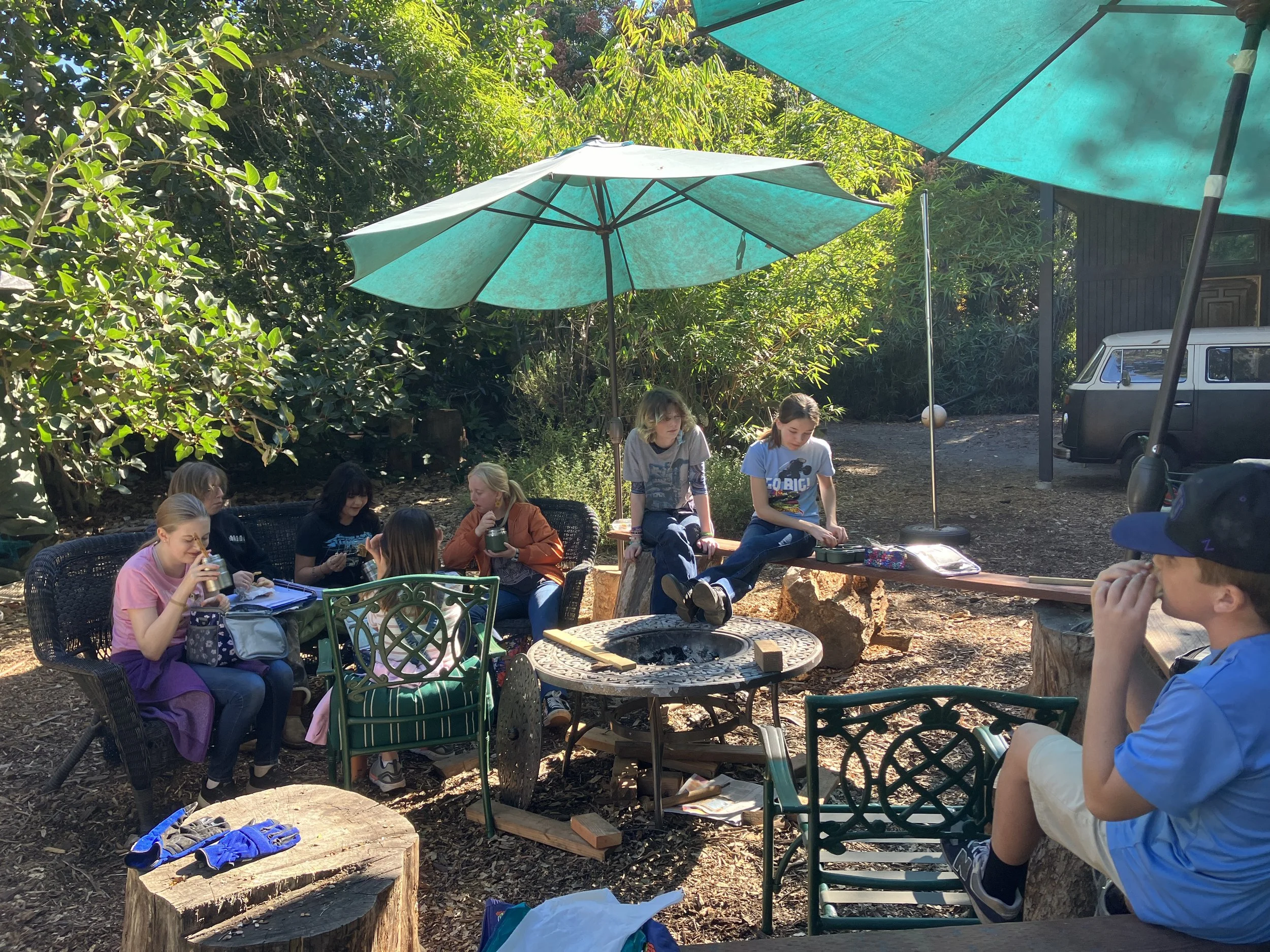
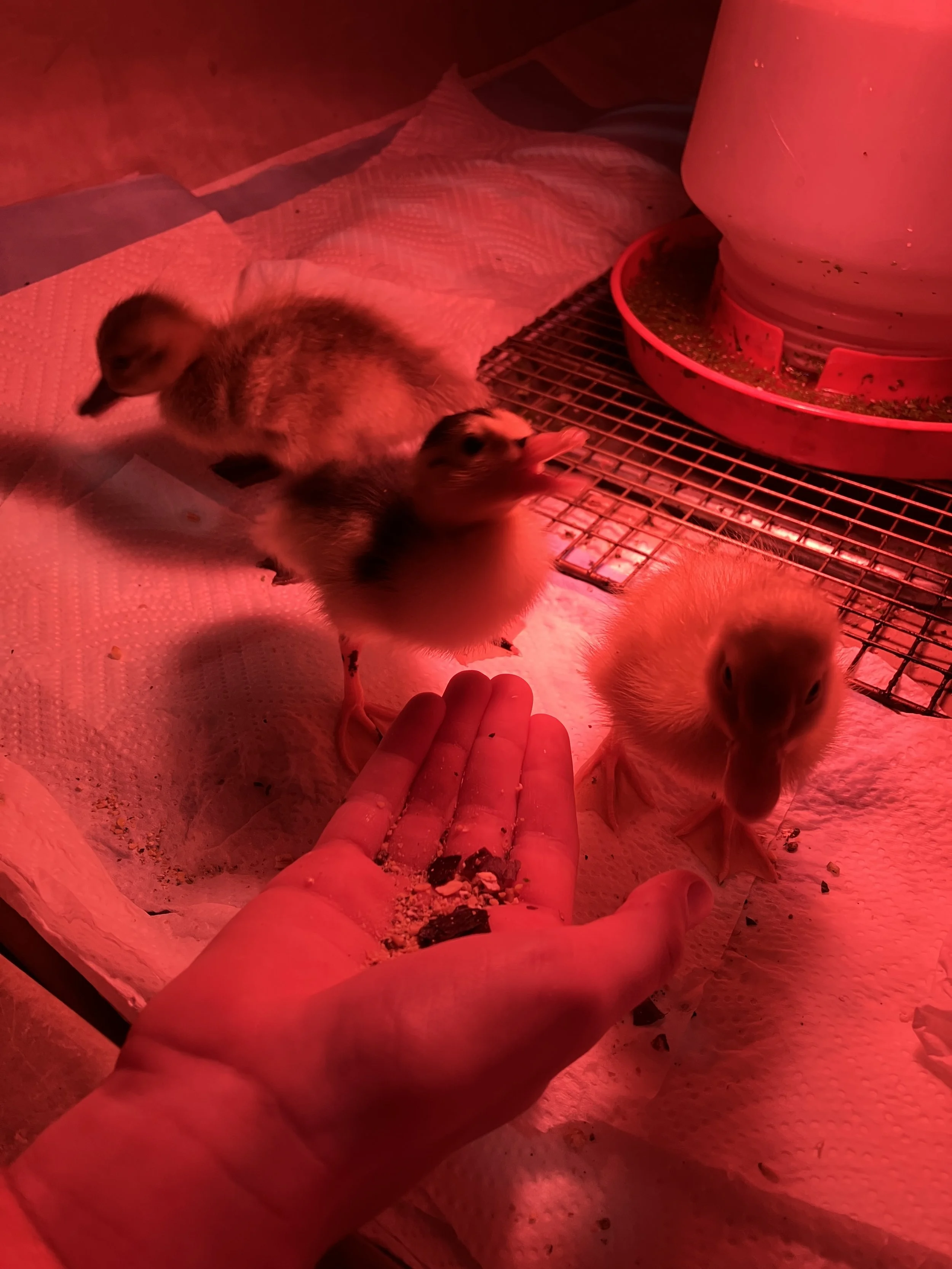


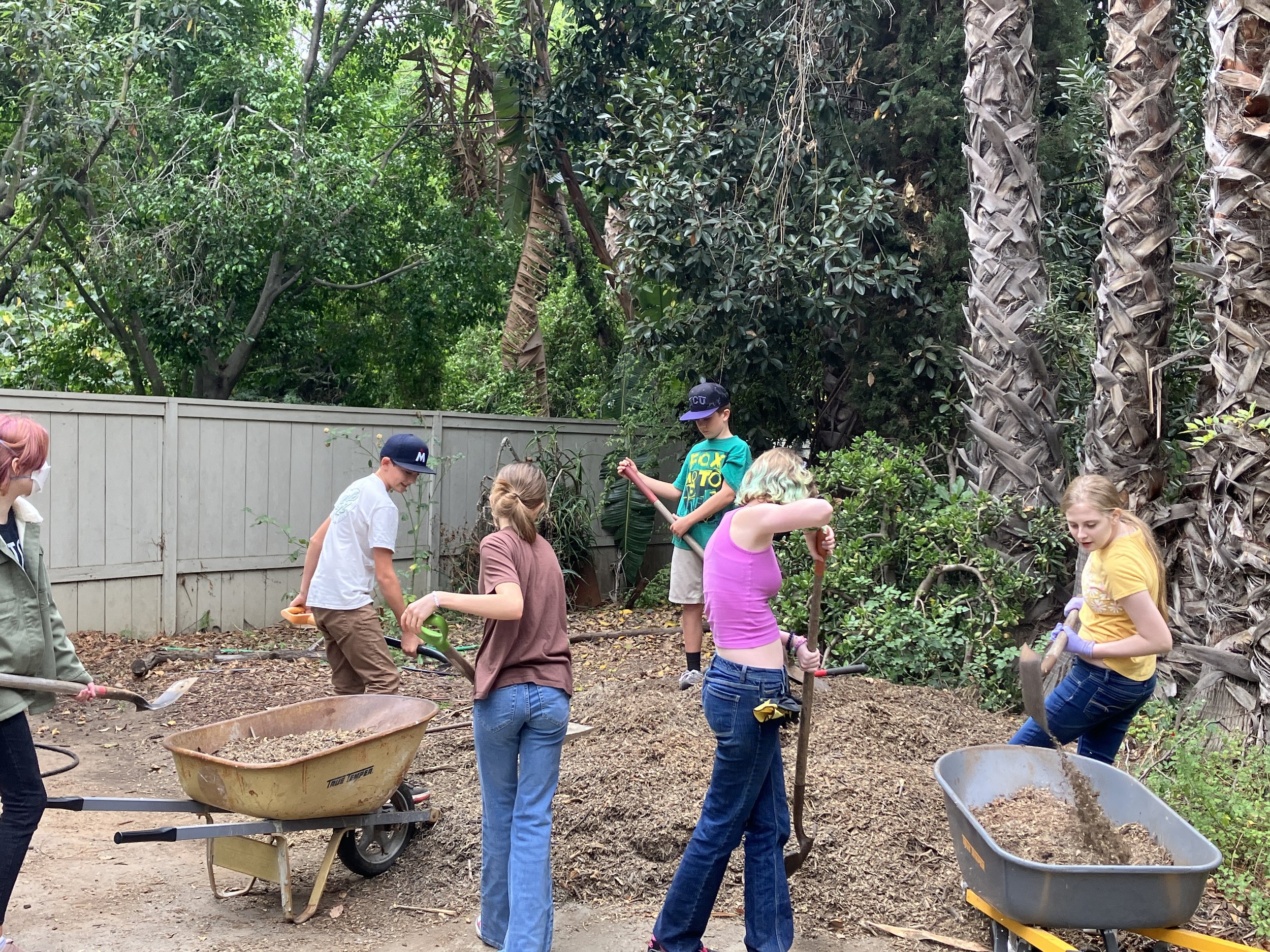


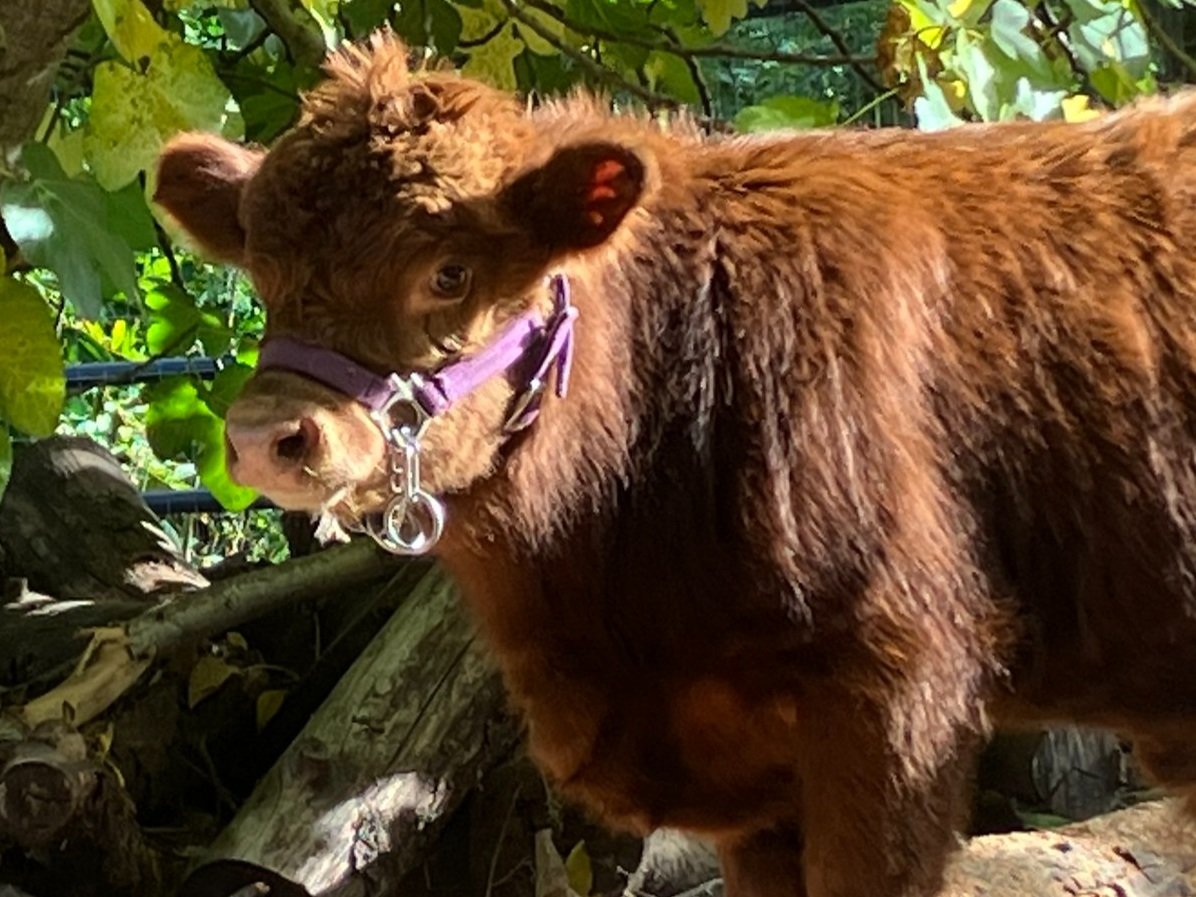

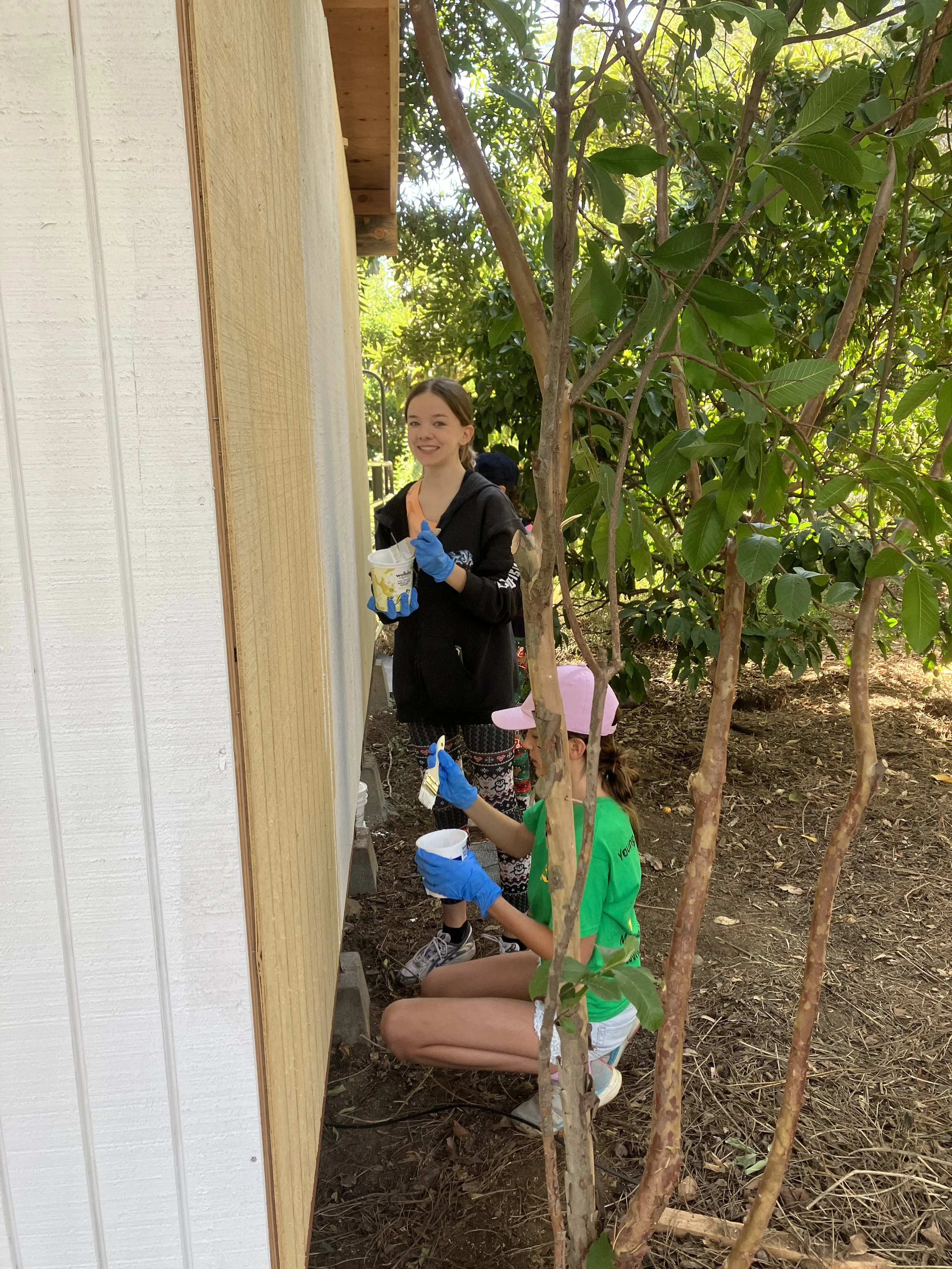
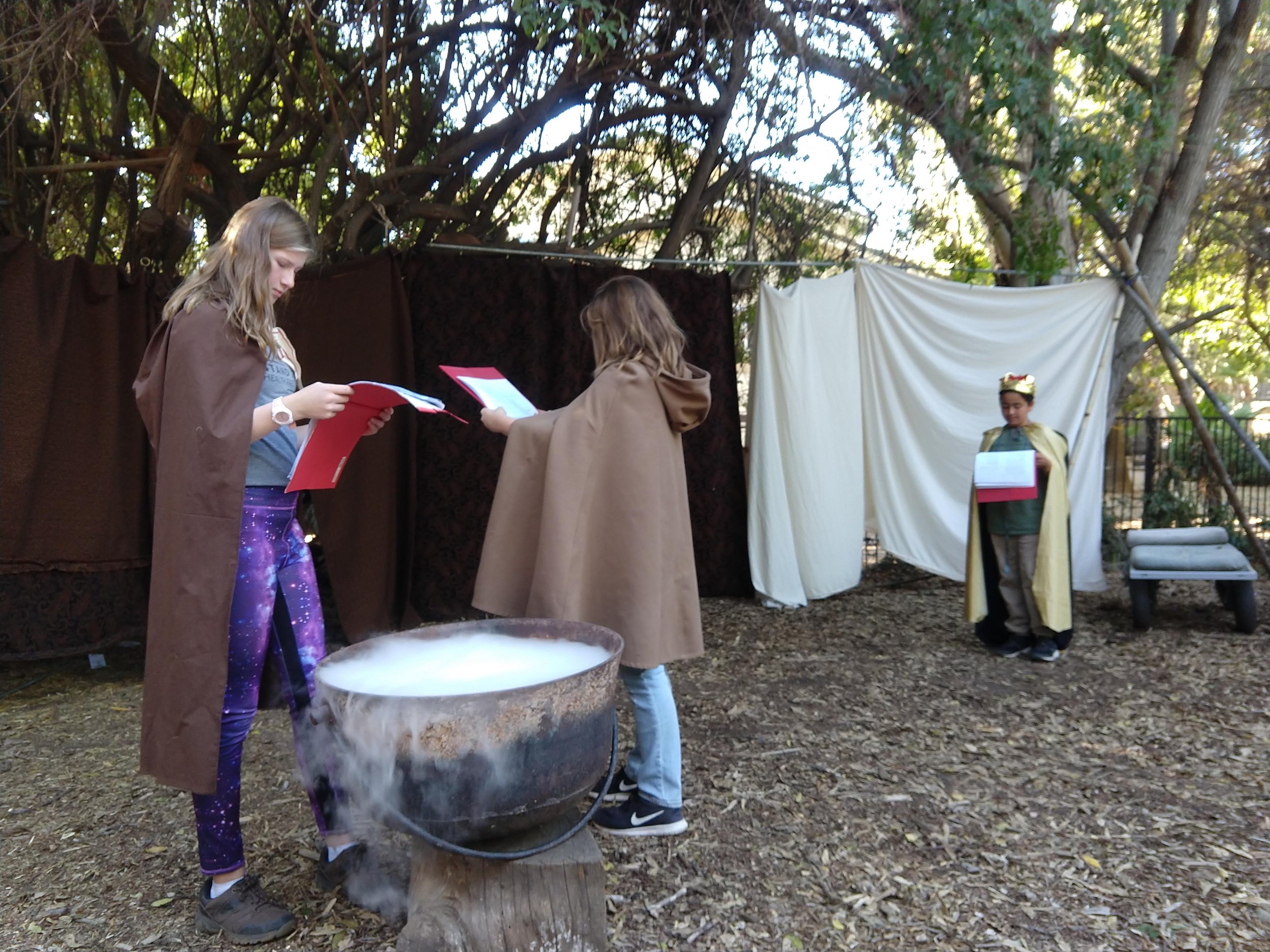


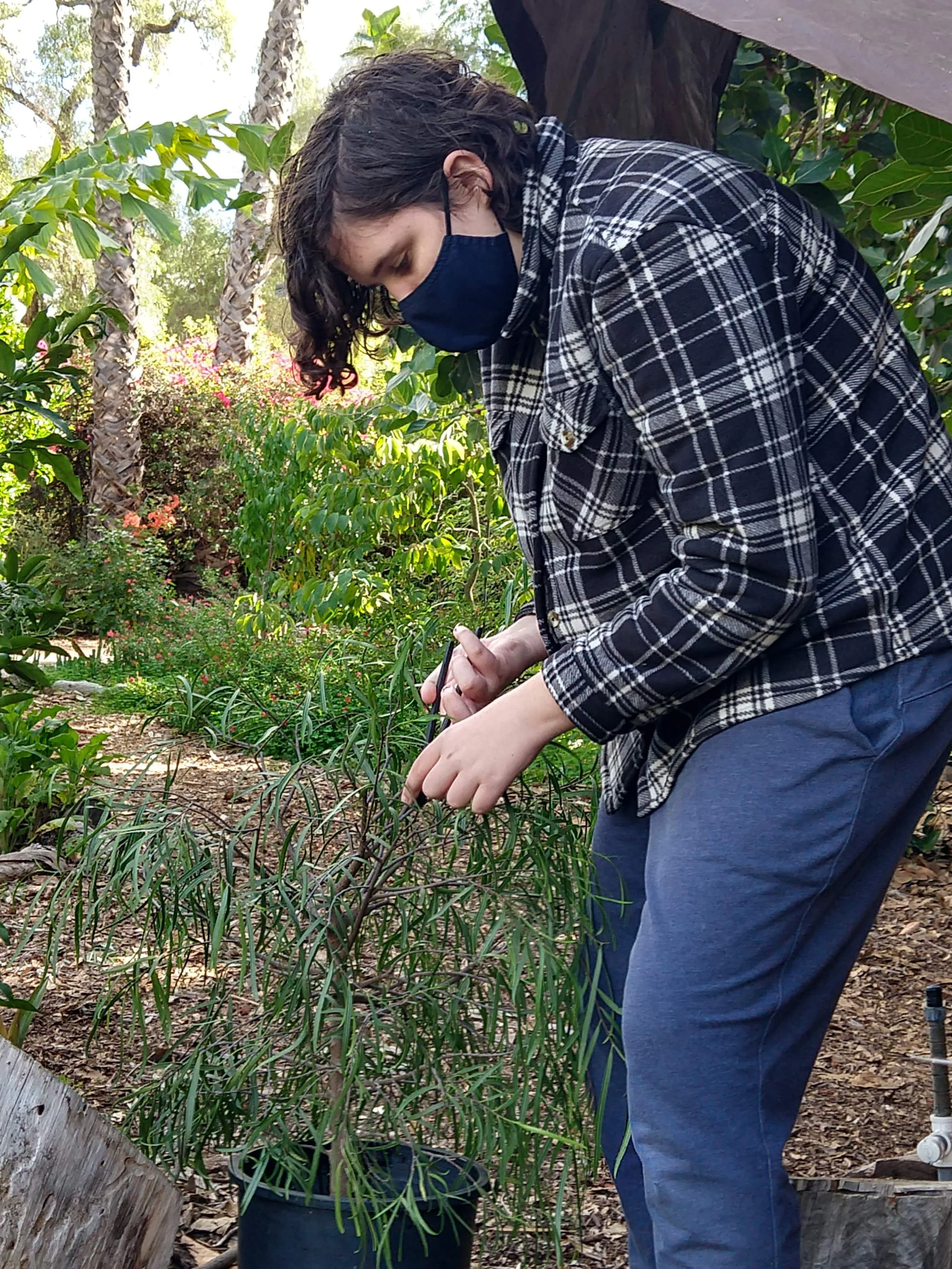
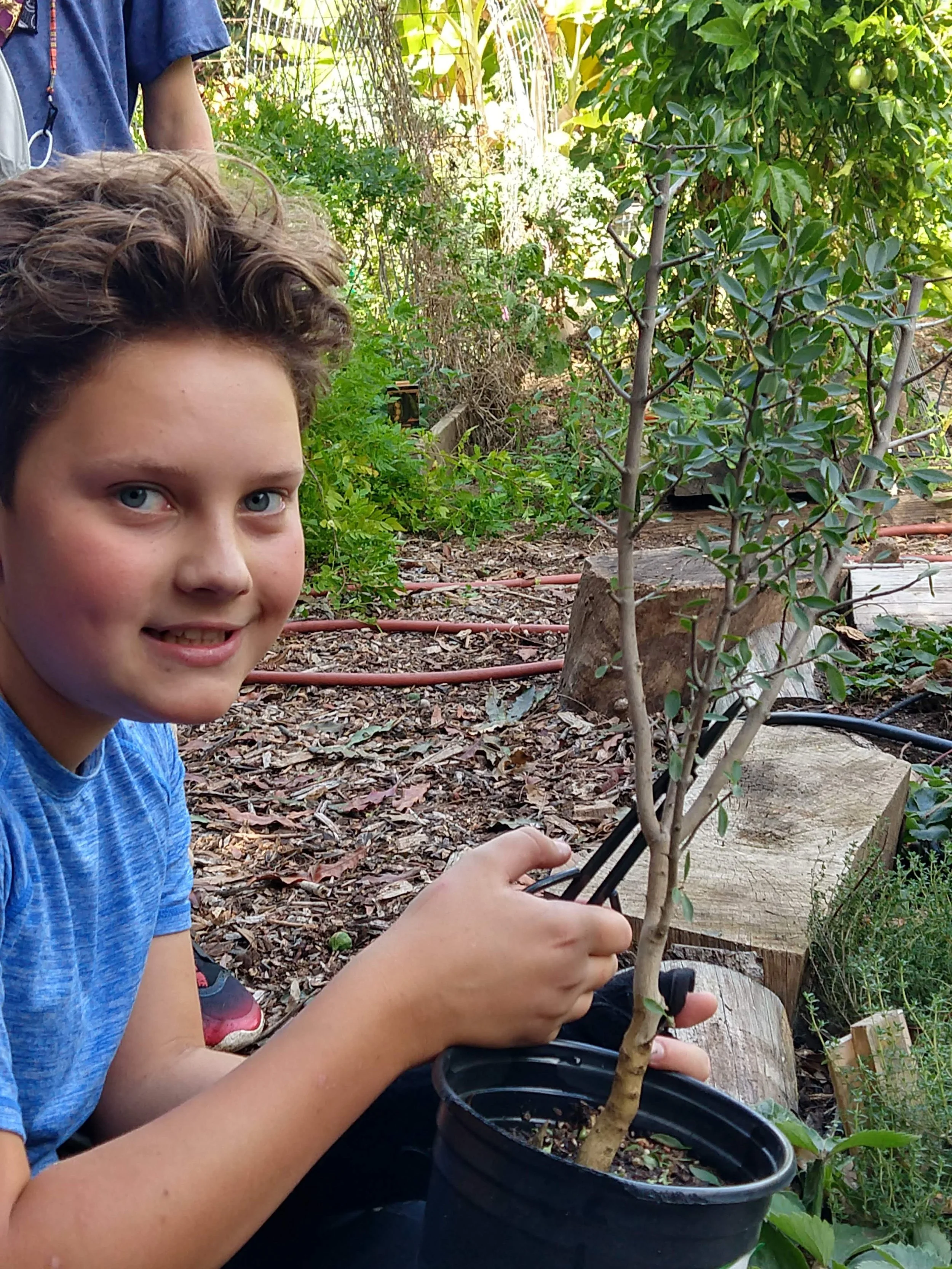


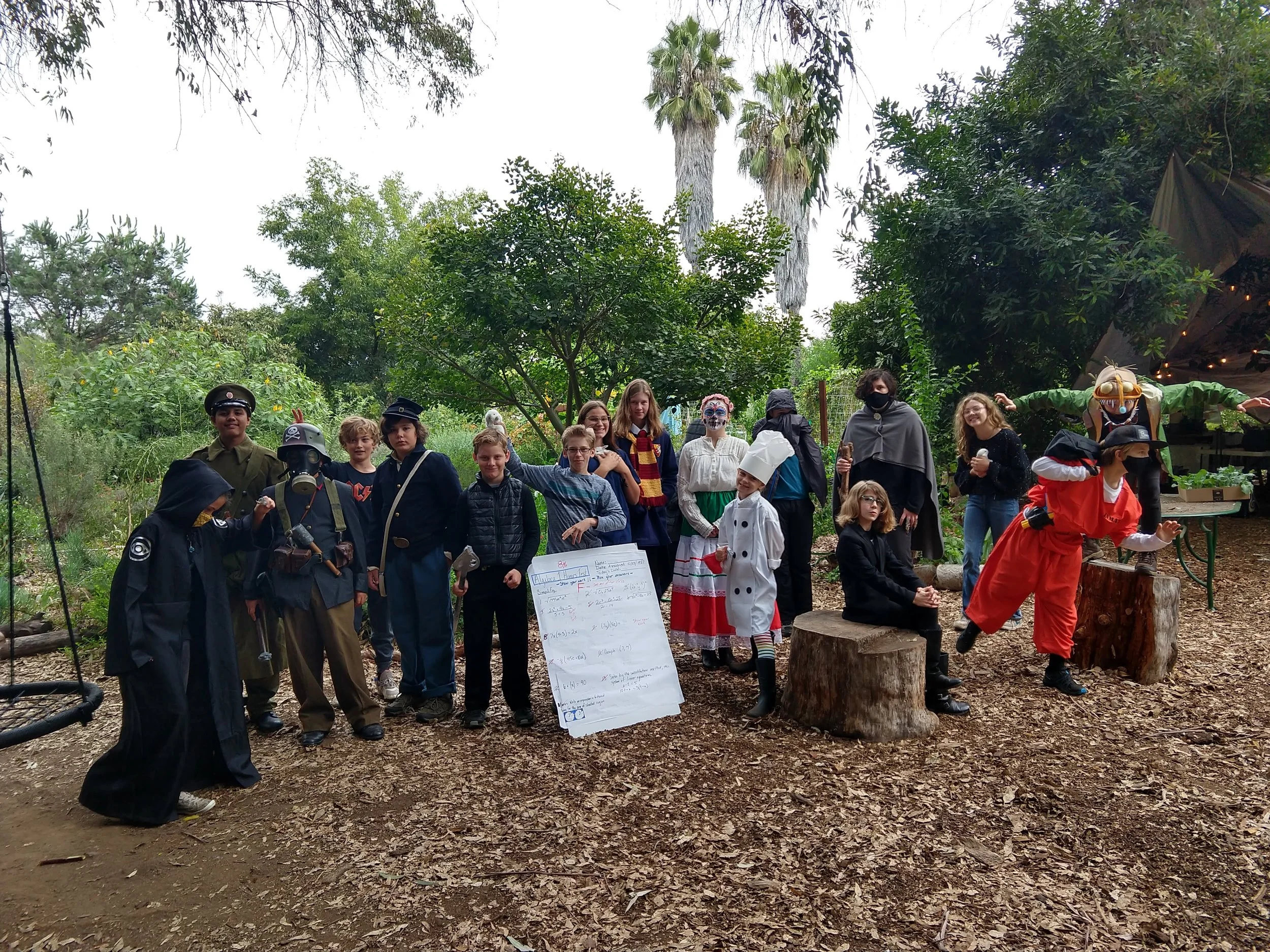
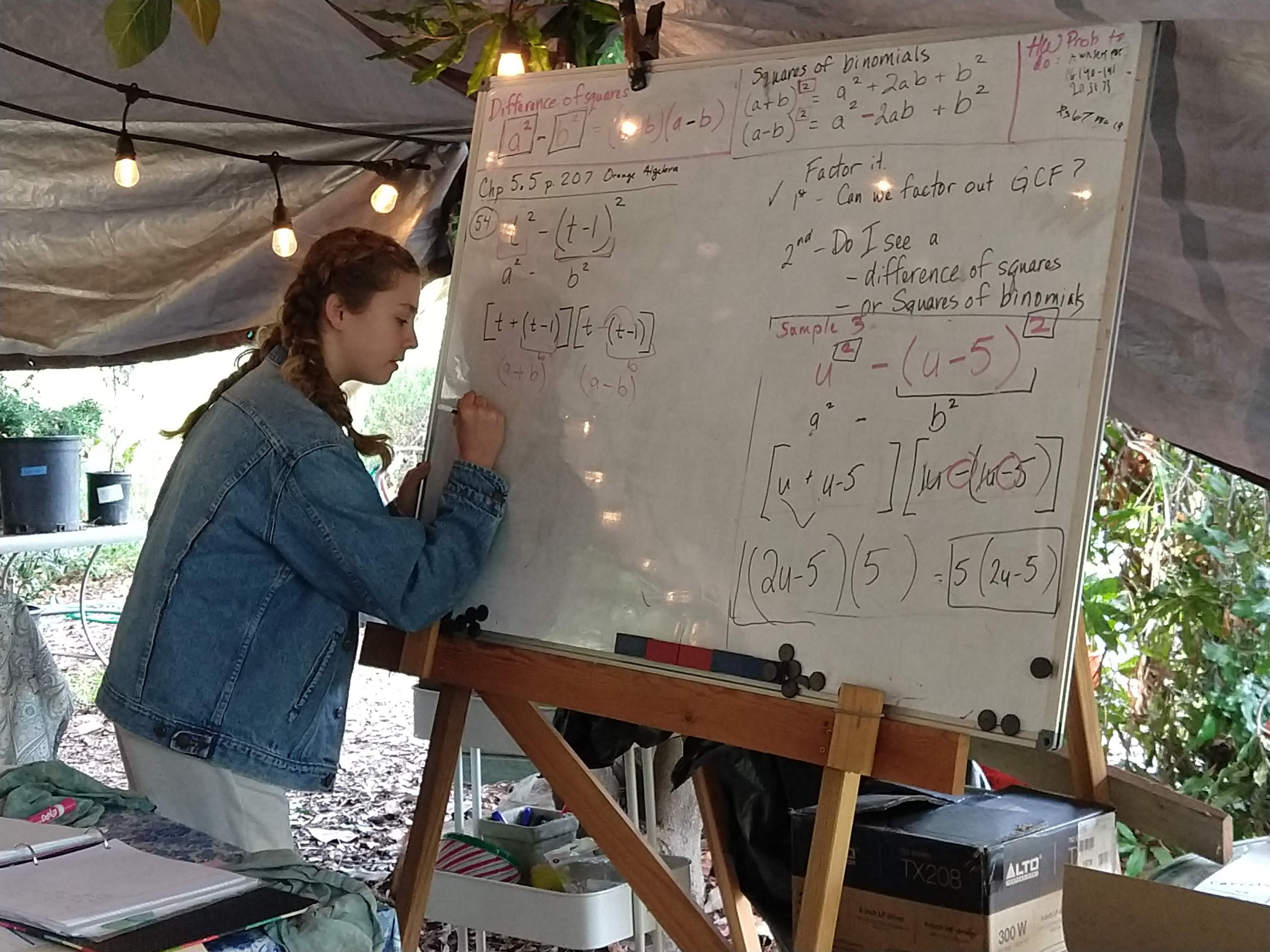
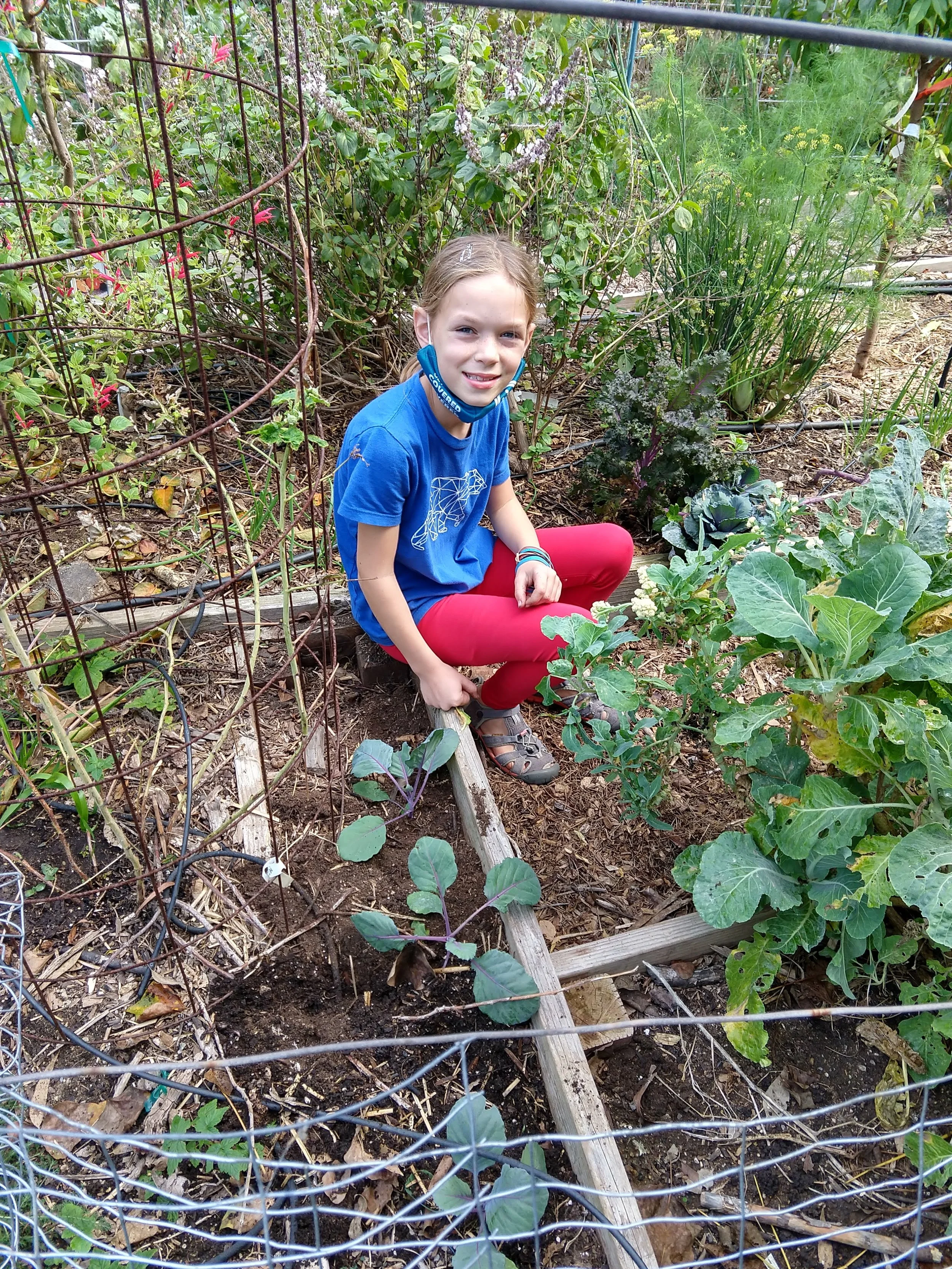

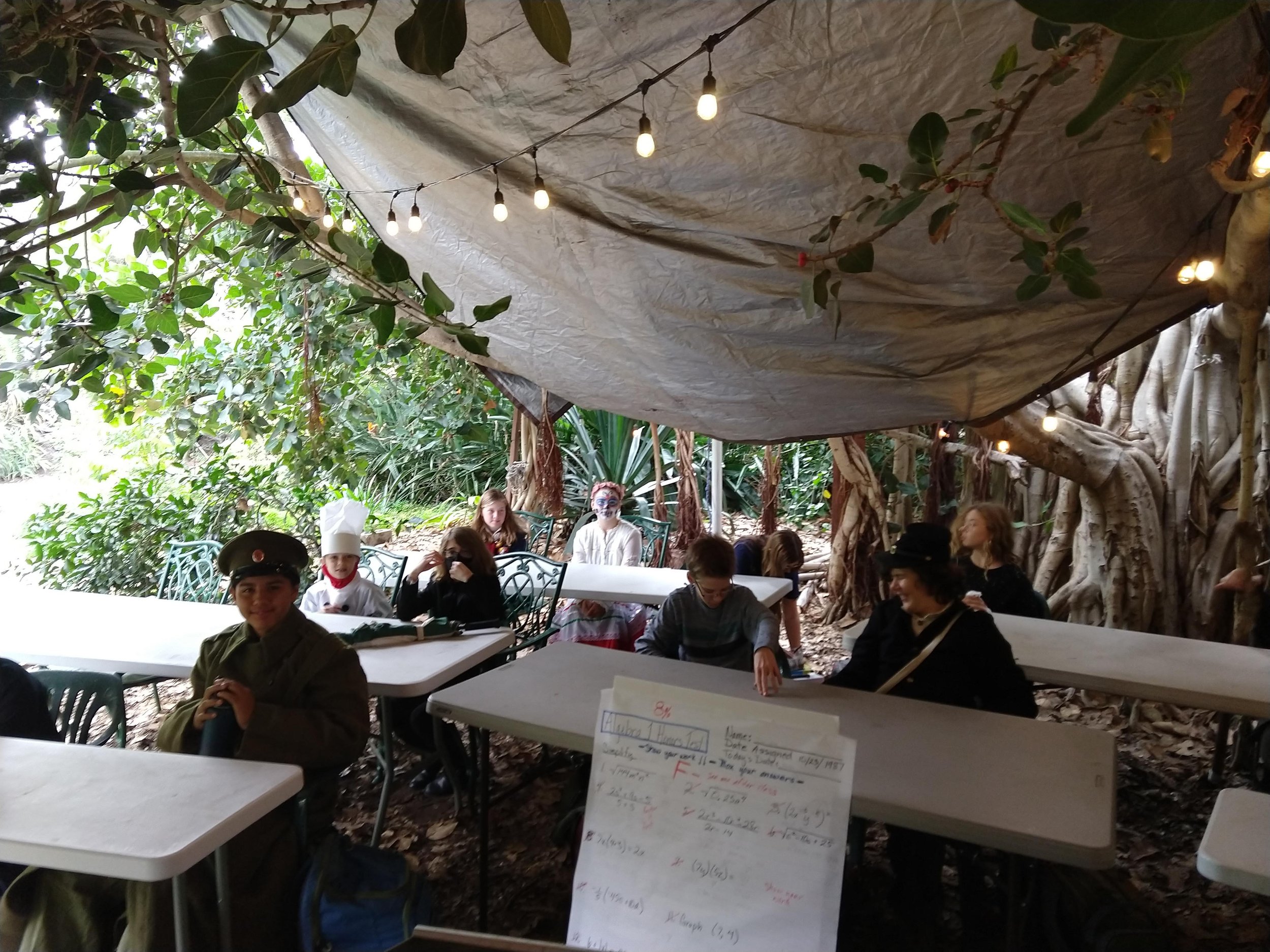
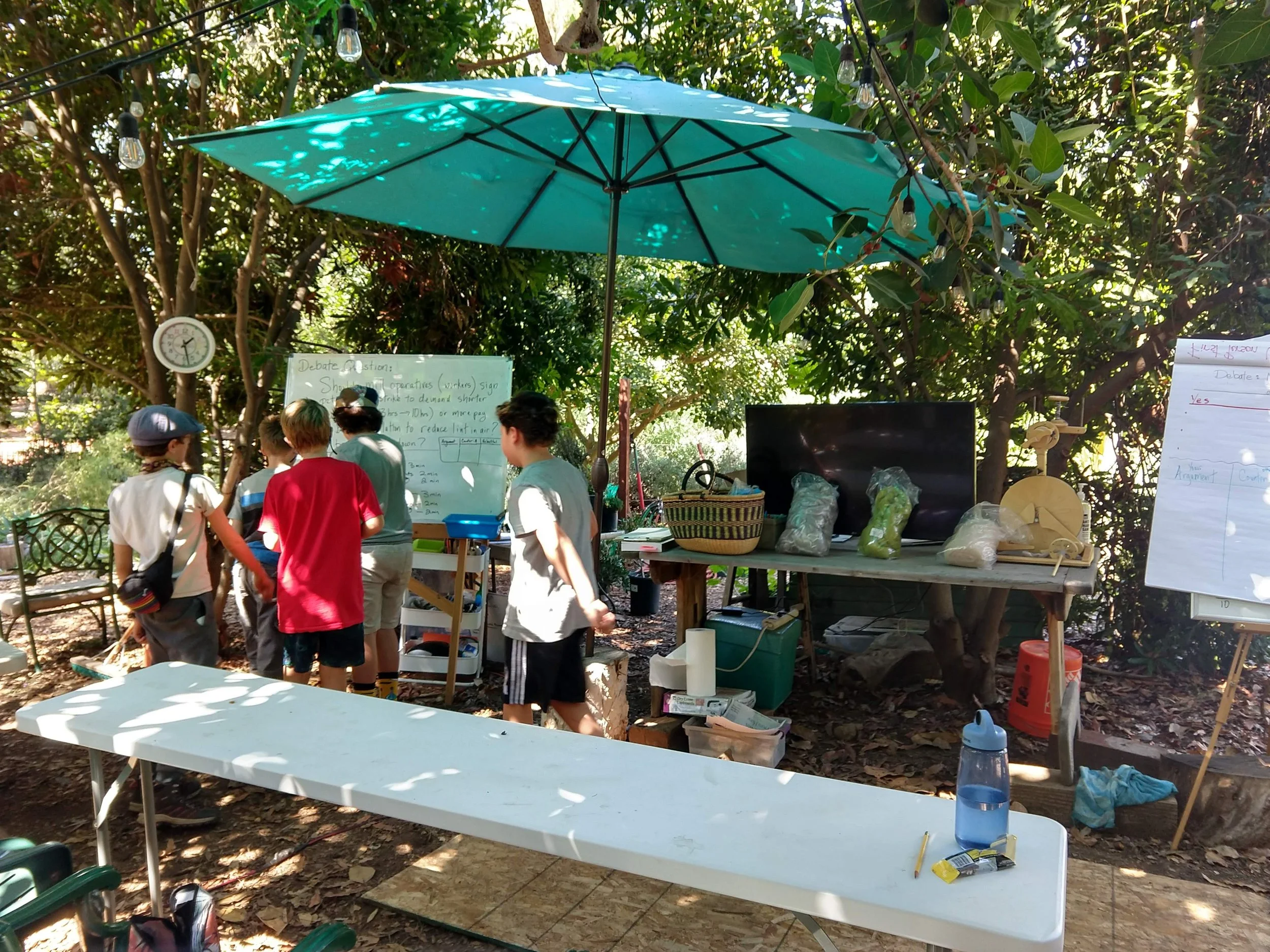
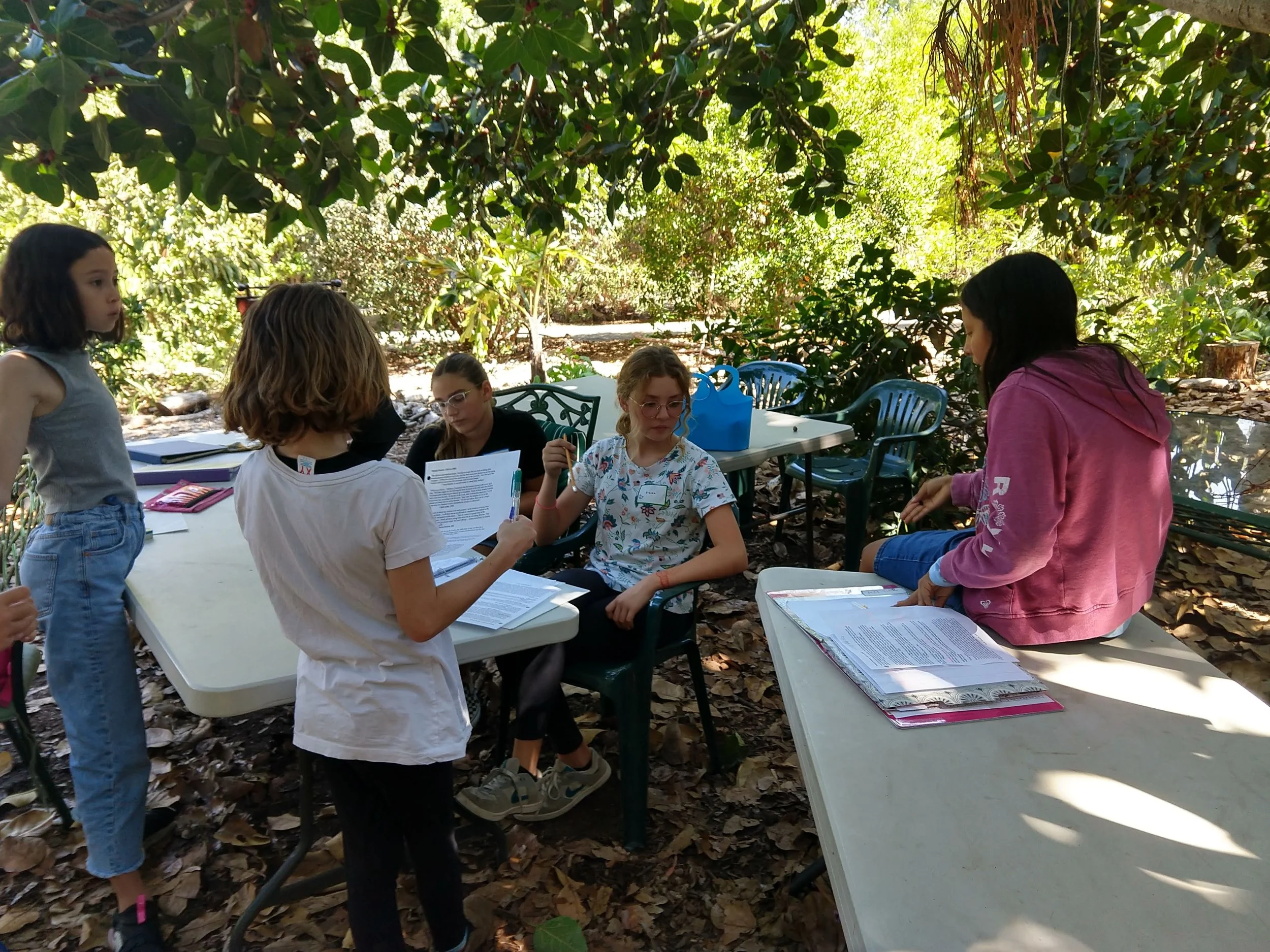
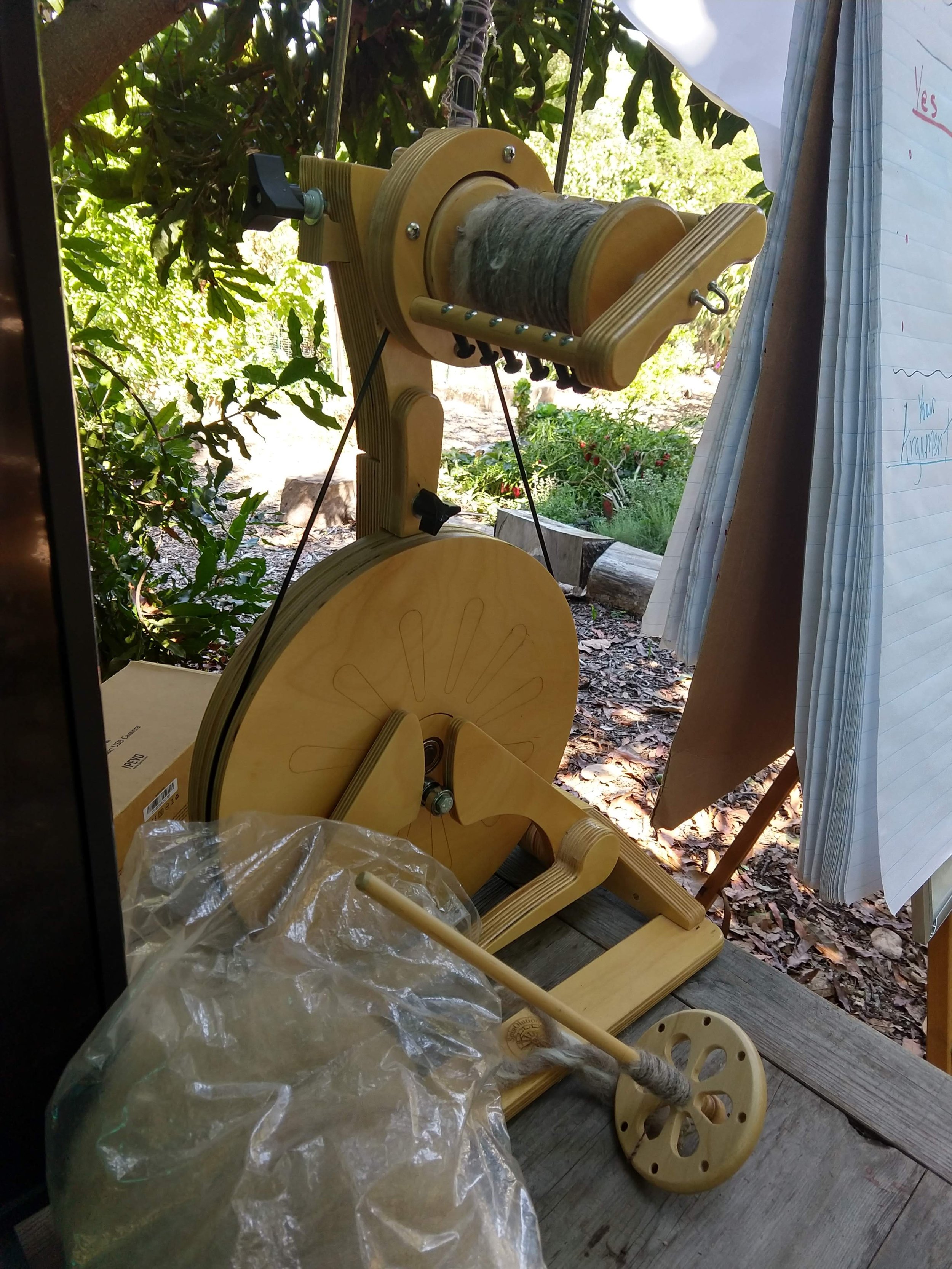
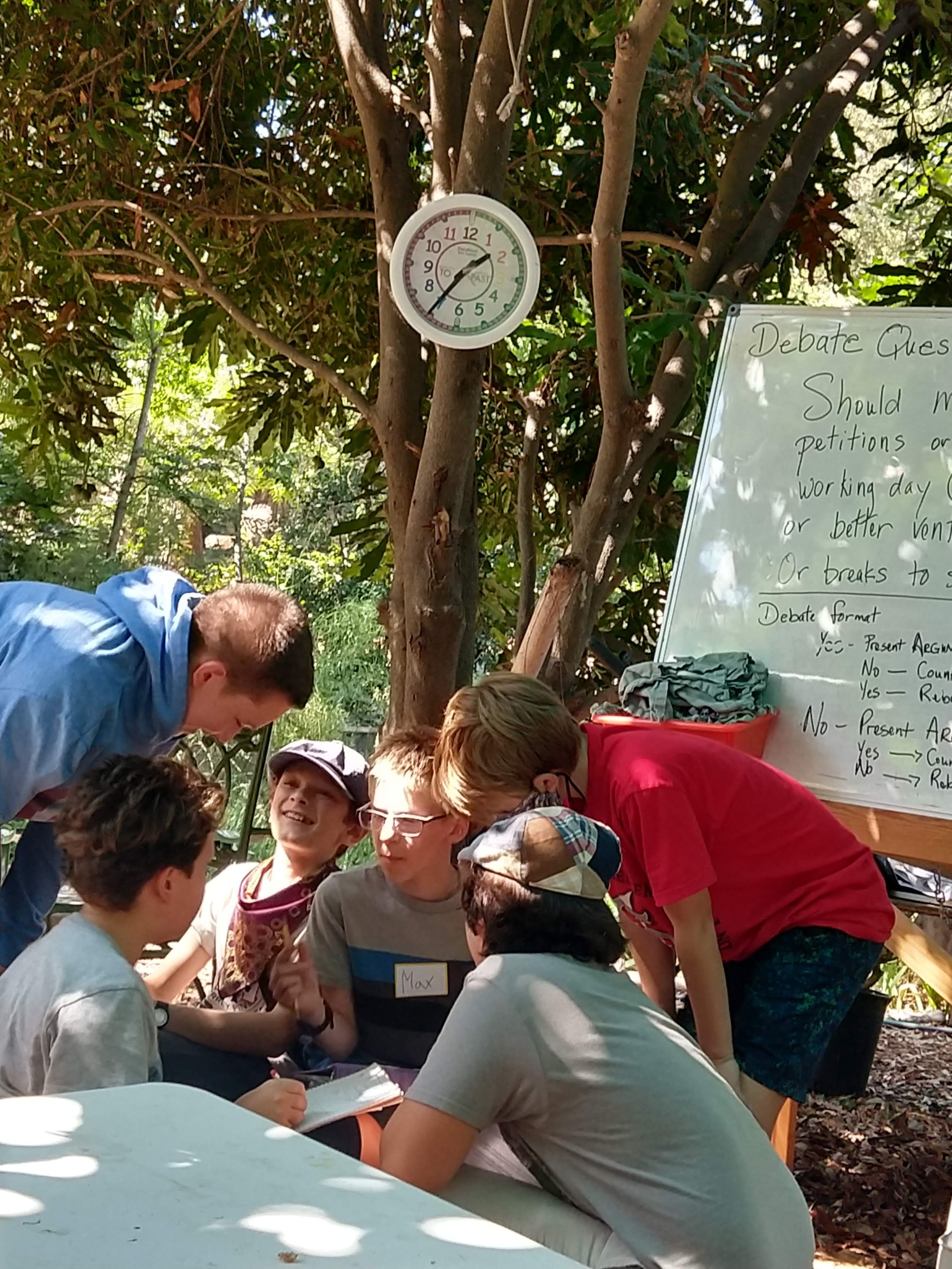

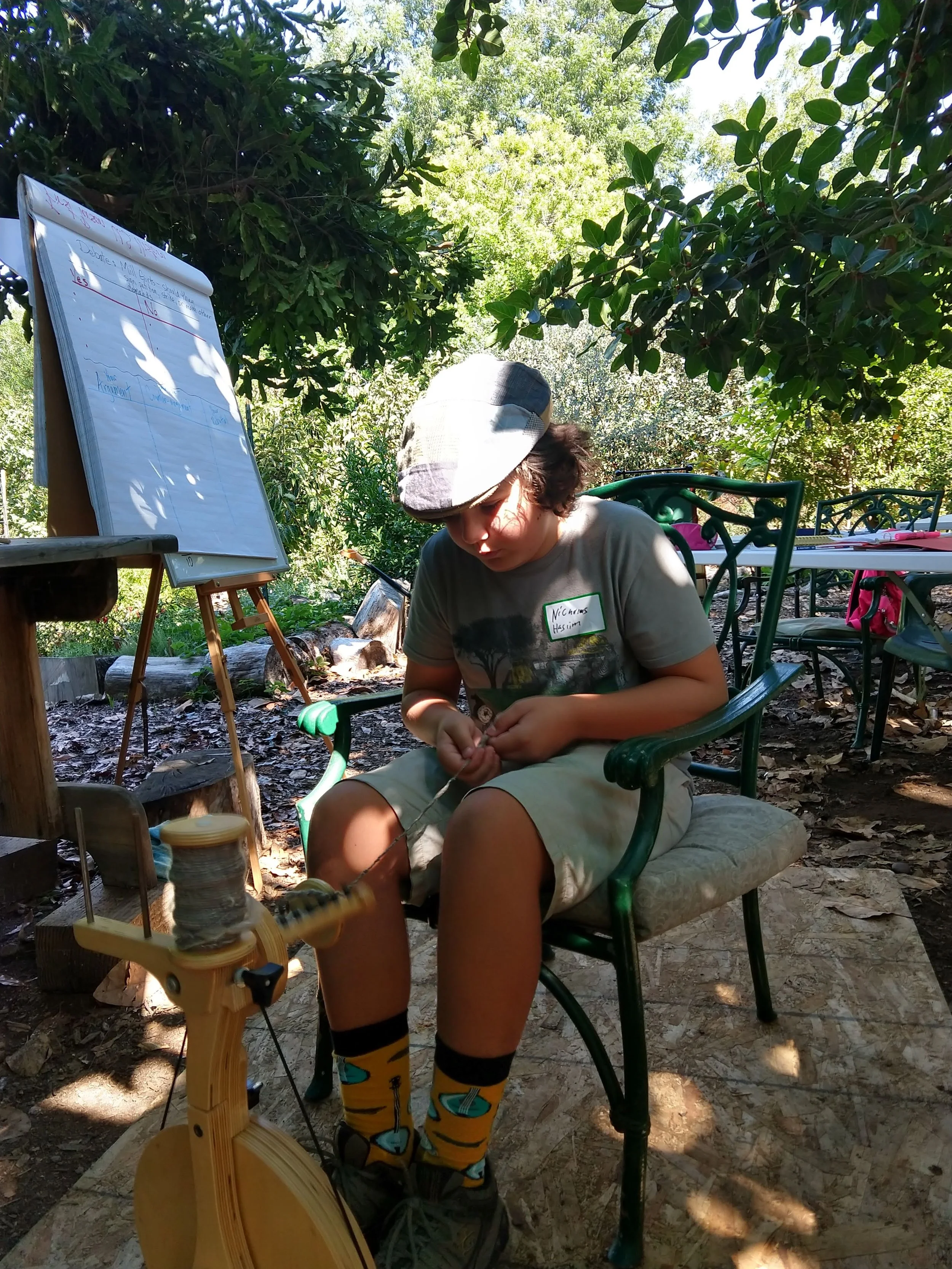
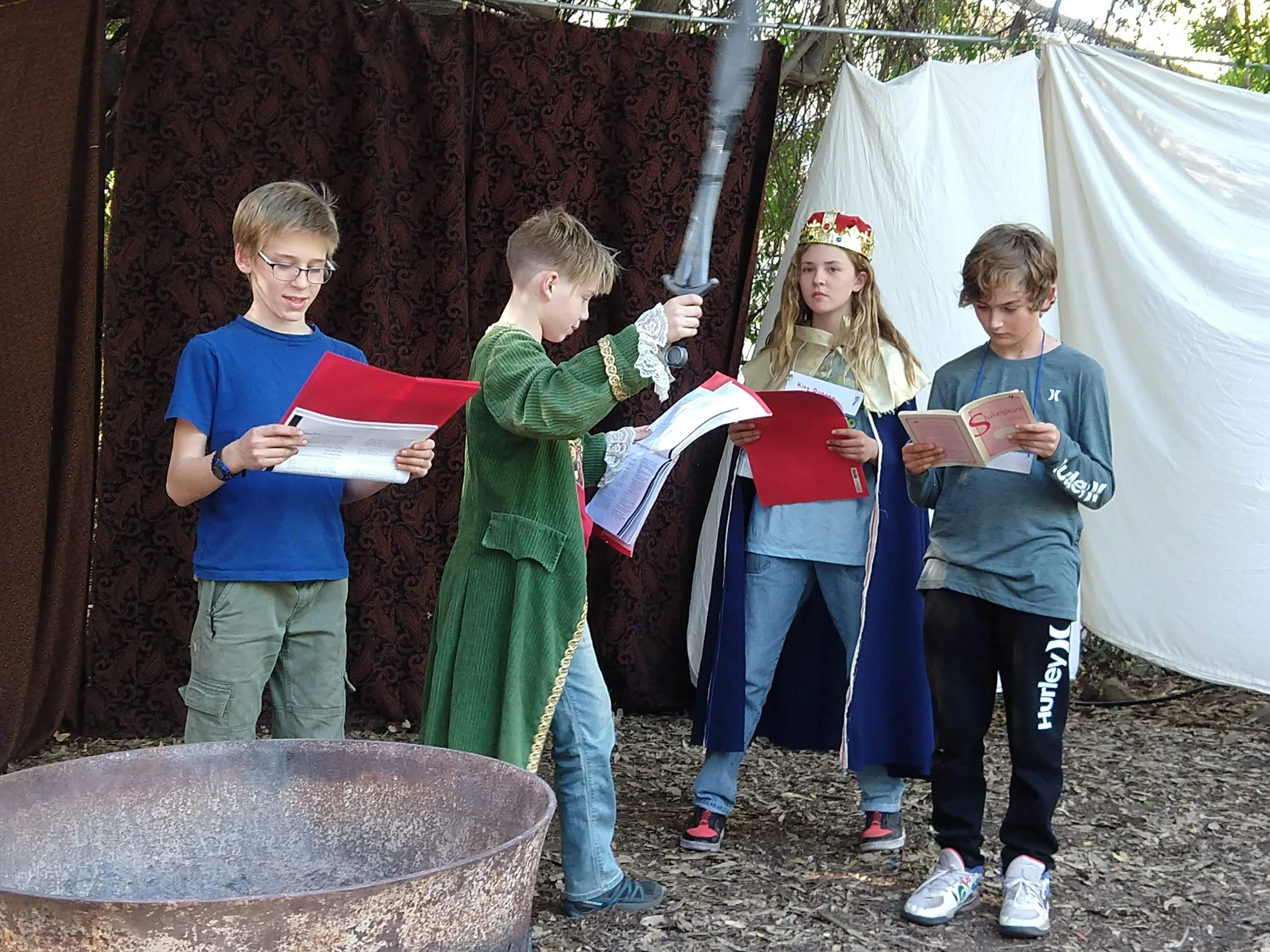
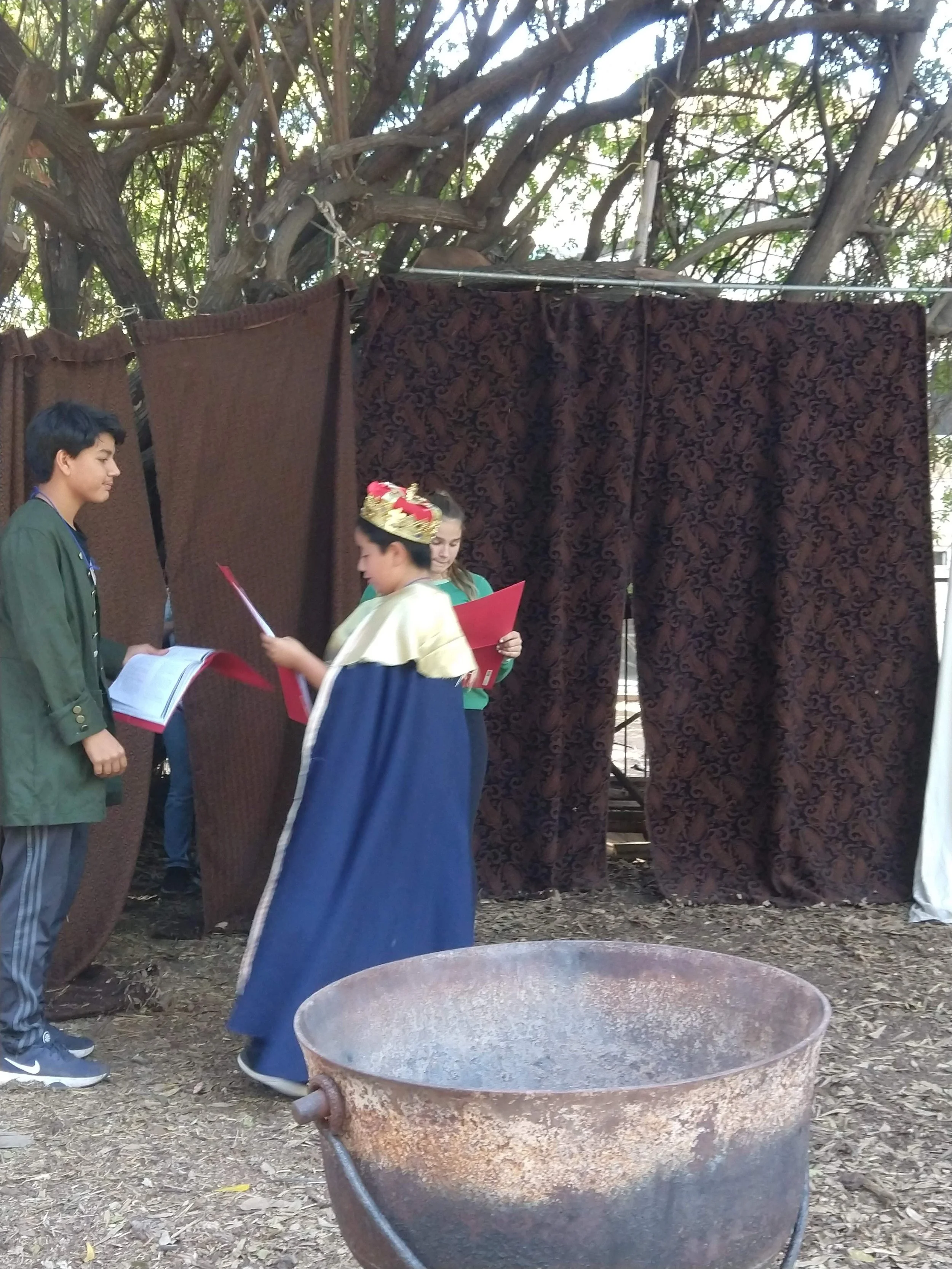
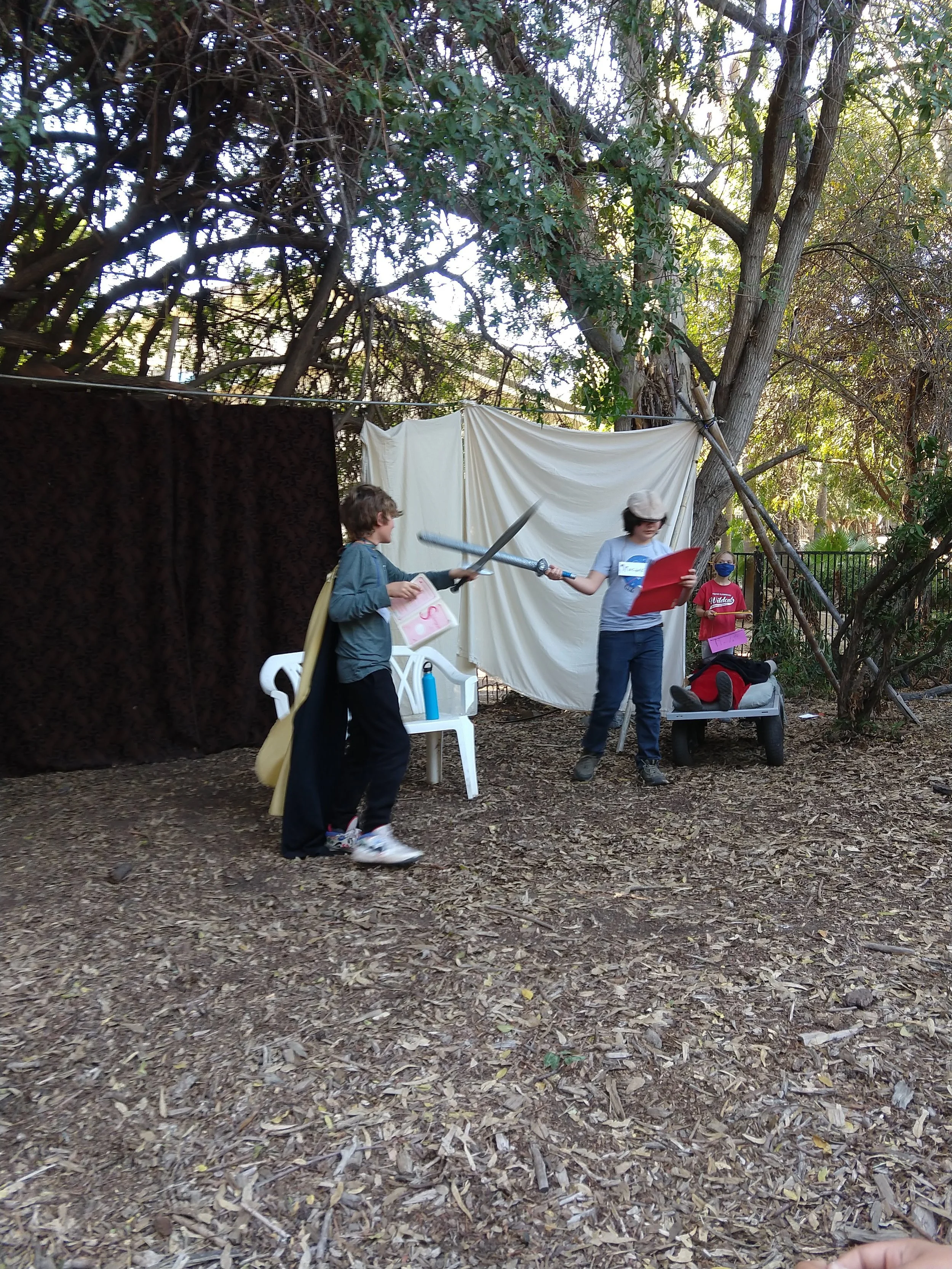

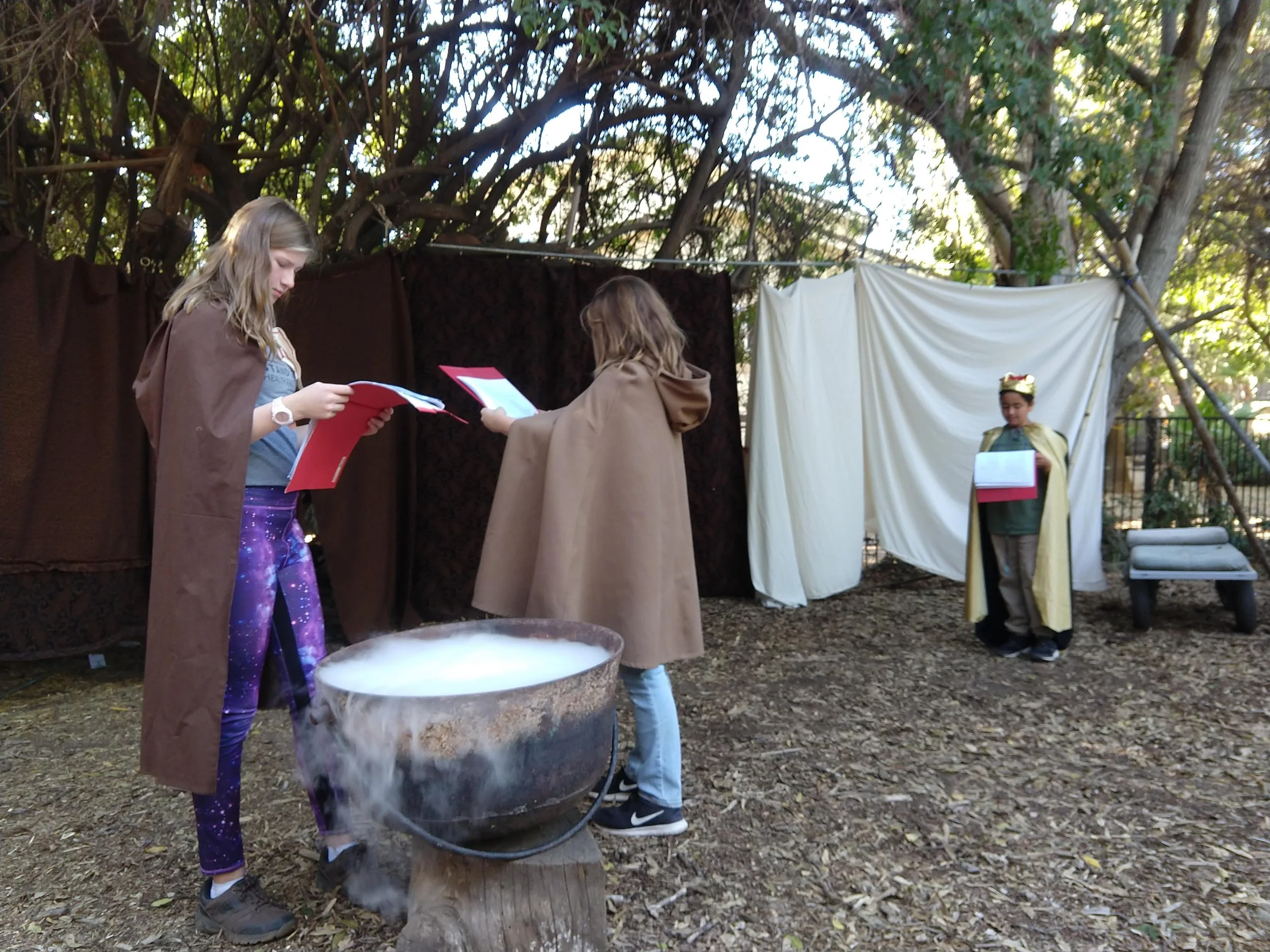

last year’s Week 1 - for reference
***Remember your gardening gloves and colored pencils— we will be using these nearly every week!***
Book Club: — See Book Club button Once you get to the book club page, click on Tom Sawyer). Scroll to Week 1 reading & discussion question assignments.
Memorize the poem you chose today. Recite it to a family member or friend. Be prepared to recite it in class next week to a small group. Remember to start by saying the title and author. Example: “Fog” by Carl Sandburg
Bingo: Create a 5 x 5 grid for a Literary Terms Bingo (We’ll add terms in class from our literary terms and definitions each week. You’re simply getting the bingo grid ready. I recommend graph paper so you can easily draw the boxes. Or lined paper with a ruler. Make the boxes big so you can have room to write the term and a key phrase or example.)
Print out and bring to class
If you forgot to print out the Analogies Set D from WordMaster page last week, do that now.
You’re earning Excellent Learning Habits Tickets by doing this homework.
Classwork Summary
Get to know you & introductions: What are you good at or into and who else shares that apptitude or interest. We have lots of musicians and artists in our midst!
Basic FS procedures — Excellent Learning Habits tickets for homework + safety procedures Including showing them a picture of worm parasites on pig feces, the eggs of which lie dormant in any soil that has had livestock on it and which can get into humans if we fail to WASH OUR HANDS before we eat or stick our fingers in our mouth. You’re welcome, moms.

Analogies: as part of our word analysis we are beginning to review 16 types of analogies. Analogies are relationships between word pairs such as synonyms, antonyms, part:whole, user:tool, increasing intensity etc. During the first week of October we’ll get our first list of 25 challenging vocabulary words to master for the national WordMasters Challenge.
Zoology- cattle: informal introduction to Dexter cattle, the original miniature cattle breed. Our steer, Willoughby Brisket will be delivered after Thanksgiving. I touched on genetics, namely the basics of dominant and recessive alleles genes in determining whether a cow is black or brown (called dun): brown is a dilute of black and is recessive. Gave an overview of how the dwarfing allele affects bone cell growth, shortening primarily the leg bones (this allele is lethal when two of them are present- the fetus naturally aborts around 7 months of gestation). This is condition is called chondrodysplasia. Discussed what it means that Willoughby is a steer: his testicles have been removed in a process called castration and that this is done to reduce aggression in large domesticated animals such as cattle and horses. (In pigs it is done to prevent boar taint smell/taste in the meat but that is not a problem in cattle , interestingly.)
Farm Work: New Farm School students paired up with FS veterans to learn how to care for the living organisms that call Farm School home. Students worked together to feed rabbits, harvest live invertebrates from the vermiculture/compost bed to feed the fish, feed those same invertebrates, feed the chickens, trim gazanias to widen the central path, shovel mulch as bedding for the chicken coop, harvest macadamia nuts.
Book Club: The Elephant Whisperer
Poetry:
Literary terms and definitions: sensory details, onomatopoeia, metaphor, simile, personification, stanza, rhyme scheme, alliteration, assonance, parallelism or parallel structure, concrete poems.
Students read and analyzed Hello, Ocean by local author Pam Munoz Ryan looking for the above literary devices. This picture book is a beautiful poem about our own stretch of the Pacific Coast. Discussed how these literary devices bring layers of meaning to the work. Compared the poem to our own experiences at the beach.
Students choose a poem to memorize for this week from a two page handout. Each week students memorize a poem and most weeks I give them a new handout with poem options for memorizing. We’ll also analyze many of these poems over the course of the year. Discussed techniques for memorizing including: reading, reciting in chunks, writing it down, quizzing self later in the day, singing it to a tune, adding actions to the words. We’ll recite this poem in class next week.
Latin and Greek Stems: Students made flash cards for common “A” Latin and Greek roots and prefixes: auto, a/an, aster. These flash cards include mnemonic devices they created to help them memorize the meaning of each stem. Students will use these flashcards to quiz themselves.
Handouts: Literary Terms Definitions, Poems for Memorizing pages 1 & 8, Stems Flash Cards Set #1 A-D & worksheet for A-D
Coming Up in the next two weeks:
Science:
Intro to chemistry for biology— everything is made of matter, elements, mixtures vs. compounds, subatomic particles, elements predominant in living organisms.
Intro to waterfowl anatomy and physiology and raising from day old ducklings— we’ll be selecting duckling breeds
Writing: Interviewing and writing a short biograph of a classmate then delivering that bio as a speech to introduce them to the rest of the class.
Poetry: metaphor and simile
Book club: plot map and discussion of Using textual evidence to support claims.