Science & Language Arts 2026-27
Semester 1: Chemistry of Life, Invertebrates, Cells
Semester 2: Genetics and Fungi or Geology depending upon parent preference
2027-28 is the study of Botany and Ecology. 2028-29 is the study Zoology. 2029-30 is the study of Human Anatomy and Physiology
-
MATH
Math 8 + HPA & Math 7 both are on Tuesdays from Sept 1-Dec 8 (14 weeks)
Hybrid Math 7 1st Tuesdays (Sept 1, Oct 6, Nov 3, Dec 1)
Sci-LA is Sept 1/2-Nov 17/18 (12 weeks). Note SCI -LA ends the week before Thanksgiving unless we need a make up day.
Real Life Farm Science & Poetry Analysis happen Sept-October (8 weeks)
Thanksgiving Break is the week of November 24.
Winter Break December 9-Monday January 4
-
DATES
14-week classes (math) are from January 5 – April 27
12-week classes (Sci-LA) are from January 5/6 – April 13/14
8-week classes (RLFS/Shakespeare US History/ Geology??) January 7- March 4 (no classes 2/15-19 for President’s week off.)
BREAKS
February Break is 2/15-19
Spring Break is two weeks: 2 weeks from March 22 through April 2.
MAKE-UP CLASSES
Sci-LA make-up day if needed is 4/20. Math make-ups if needed are double classes on 4/20 or 4/27 whichever is available: Math 8+HPA from 9 to 12:30 pm. Math 7 from 1:30 to 4:45.
-
Bring shoes you can step in manure in. Rain boots or muck boots. You don’t have to wear them the entire time but you can change into them as needed.
Overcast weather = cold weather because damp air feels colder. To stay warm on overcast days bring: layers - hoodie, beanie, scarf, gloves, thicker socks and pants, thermos with warm liquid, a beach blanket (I’ll store that here for you!)
Hot weather:
Bring bug spray.
Bring a hat and a water bottle,
bandana for dipping in cool water and placing it around your neck.
Loose fitting breathable clothes.
Rain in the forecast: on any day with rain in the La Mesa forecast, Sci-LA students must have
rain boots,
a rain coat or rain poncho,
and spare set of socks.
Sci-LA Students without this essential gear will not be allowed to be dropped off because we will be doing farm work and projects in the rain, playing in the rain. Wet kids are cold kids who are not learning and certainly aren't having fun. Tips on rain gear are here on the supplies page.
(Rain gear is not as essential for math classes as you'll just get wet at recess IF you choose to play in the rain. )
September 8 & 9, Week 2 of 12
Tip: print the book club, stems, and biology check lists for a general Sci-LA HW checklist.
YOU’LL BE ABLE TO SHOW ME BONUS WORK FOR WEEK 1 & 2 NEXT WEEK FOR EXCELLENT LEARNING HABITS TICKETS if you didn’t get a chance to do so today
Word Work: on even weeks we work on our alphabetical Latin and Greek stems. THERE IS NO PRE-MADE CHECK LIST FOR THE STEMS BUT YOU CAN MAKE YOUR OWN BY CUTTING AND PASTING FROM OUR STEMS WEBPAGE— SEE BELOW.
Week 2 - Set 1: A’s on this STEMS page Print out the week’s flash card set. Cut the flash cards out OR make your own. (Note: hand writing something makes you much more likely to remember it. If you don’t choose to make the card yourself, you should color it. In class we’ll make the front of the card together. Note: Sets 1-3 include some review for veteran Farm Schoolers.
Biology: Week 2 PDF HW biology Checklist Visit our Biology page for details.
Book Club: How We Got to Now PDF OF BOOK CLUB DISCUSSION QUESTIONS HERE Visit our book club page for details
Bonus: create an ocean box/diorama for your anemone and future invertebrate ocean clay creatures
CLASSWORK SUMMARY
Community building, class culture expectations
Word Analysis: Latin and Greek Stems —review game using last week’s homework flash cards, preview new alphabetical cards
Daily Observation / Drop Everything and Write (D.O./D.E.W.) - — another personal narrative set of writing prompts to prepare us to start writing our personal narratives next week.
Biology:
REVIEW: Bingo from HW Ace chp 3 & SONG– “All Living Things”
NEW Classification DKPCOBFGS - handout, create own memory trick
NEW: Introduction to these invertebrates
NEW: Cnidarians - (sponges, corals, anemones, jellies, starfish, urchins, sand dollars, sea cucumbers) with a focus on sea anemones. Activities: directed note taking and created a clay anemone or stinging cell.
Farm Work - learning animal husbandry and harvesting while socializing — we work in teams— we did this super fast as it was HOT.
Writing - personal narrative — responding to one of three writing prompts to brainstorm ideas about possible topic for a personal narrative essay
Book Club - discussed our written discussion questiosn & previewed chp 2 Glass of How We Got To Now: COLD. PARENTS: you are welcome partner read this book with your students! Or get an audio book.
Helpful Forms & Handouts
GENERAL FORMS: Table of Contents
POETRY & LITERARY ANALYSIS:
Textual evidence chart: PDF version here,
WRITING & Vocab
https://www.mybib.com - version MLA9 to generate the works cited page,
Theme Paragraph Template/Outline,
Use the Dirty Dozen editing check list to edit and proofread your essay.
personal challenge essay rubric from PCA
Persuasive or Argumentative Position Poster or essay Essay Rubric (grading standards) is here (from PCA)
9/9 Wednesday Sci-LA classes will start at 9 am to avoid heat stress.
9-1 pm Sci -LA
1-2 pm for 2nd Wednesday Math Support
September 1st & 2nd, Week 1 of 12
Tip: Copy and paste this then print it out to make a simple checklist.
You’ll need to refer back to the Book Club page and Biology page for additional details like word lists, or print the pdf which has word lists, but this will give you a general checklist.
Book Club: How We Got to Nowpdf of questions and word work hereVisit our book club page for details
Week 1 Reading = Intro and Chp 1 Glass
Response to reading (Discussion Questions)
Word work (stems and vocab)
Biology: Week 1pdf of quick checklist of this biology homework here. Visit our Biology page for details.
Reading Biology Foundations Workbook chp 1.2 “Science in Context: Lesson Summary” — you do NOT need to fill out the chart. You are simply reading pages 4-6 in our soft cover workbook.
Study Week 1 concepts by reading HS: Everything You Need to Ace Biology chp 3 (nicknamed “Ace”). (The middle school version is chp 28 )
Create 5x5 IS IT ALIVE? Bingo Board using these vocabulary from HS: Everything You Need to Ace Biology (ACE) chp 3 include a FREE SPACE: cells, stimuli, life functions, growth, reproduction, asexual reproduction, sexual reproduction, nutrients, autotrophs, heterotrophs, metabolism, digestion, cellular respiration, circulation, synthesis, excretion, regulation, homeostasis, adaption. (We will add a few more words to this board next week Any size paper is fine as long as you have room to write super short definitions.)
Watch Amoeba Sisters: Characteristics of Life BONUS- take notes for additional Excellent Learning Habits Tickets. If you watched this last week (when I had the wrong video linked, watch Claims, Evidence, Reason instead
Watch this 2 minute video “Diversity of Invertebrates” to pique your interest in different invertebrates. Decide which invertebrate you want to learn more about.
List three invertebrates you find interesting. Go to your local library website (https://www.sdcl.org/newchapter/) and search to see what books are available on one or two of the invertebrates you are interested in. Put a hold on some books. Plan a trip to the library for next week.
Preview for next week: prepare your brain to learn about invertebrates next week- watch Amoeba Sisters: Tour of 9 phyla
CLASSWORK SUMMARY
Community building, class overview, safety, class culture expectations
Word Analysis: Latin and Greek Stems — how to make flash cards (making a few together). Where to find this week’s stems and vocabulary list (on the book club page)
Daily Observation / Drop Everything and Write (D.O./D.E.W.) - why we do daily observation time— quiet time to reflect, listen, smell, touch, sketch, measure, observe, write: never in history has our world been so loud, so frenetic, and urbanized. This 10-15 minutes of quiet time to be fully present in the moment and observe the natural world around us or just hear our own thoughts is a rare gift I give to our students. The benefits of such reflective time in nature are well studied. Such time yields cognitive, emotional, and physical benefits, including increased self -regulation, improved cognition and attention, increased generousity, happiness & positive social interactions, decreased anxiety, stress, and incidence of mental illness. Time to be still enables us to think deeply.
Biology:
What is science and how is it done? Question, Hypothesis, Test (mimicry study of coral snake and king snake)-) Experimental Design variables and controls, applying CER (claim, evidence, reason).
What are the characteristics of life?
Team: Activity: Going to Mars: how will you identify life? & Introduction: SONG – All Living things.
Lecture & directed note taking in our Biology Foundations Workbook 1.3 “Patterns of Life” pg 7”
Farm Work - learning animal husbandry and harvesting while socializing — we work in teams.
Writing - personal narrative — responding to one of three writing prompts to brainstorm ideas about possible topic for a personal narrative essay
Book Club - preview of introduction & chp 1 Glass of How We Got To Now: humming bird effect, building prior knowledge about the Renaissance (concept of individualism arises whereas Western communities were previously more community, church, family centered.) How to find the HW for the book club and how to manage one’s time during the week to get this done. PARENTS: you are welcome partner read this book with your students! Or get an audio book.
Helpful Forms & Handouts
GENERAL FORMS: Table of Contents
POETRY & LITERARY ANALYSIS:
Textual evidence chart: PDF version here,
WRITING & Vocab
https://www.mybib.com - version MLA9 to generate the works cited page,
Theme Paragraph Template/Outline,
Use the Dirty Dozen editing check list to edit and proofread your essay.
personal challenge essay rubric from PCA
Persuasive or Argumentative Position Poster or essay Essay Rubric (grading standards) is here (from PCA)
Welcome to Science and Language Arts, 2026-27!
The results for last year’s student survey are in and here’s what students want more of this year.
More opportunities to do oral presentations
Farm Work every day
More whole class book discussions (vs smaller groups discussing the book)
More DO/DEW - Daily Observation time and Drop Everything and Write
We will do just that. We’re starting off with research then oral presentations on invertebrates. We’ll make sure we have more whole class book club discussions. We’ll fold Farm Work and DO/DEW into a steady weekly rhythm. Students appreciate farm work time because it also doubles as social time as we work in small teams to care for the plants and animals in the Farm School eco-system and because it is satisfying to get meaningful work done together. Our D.O./DEW time is quiet and individual. In a loud, tech-forward world, it is soothing and restorative to have a few moments to oneself to listen to the wind in the trees, to write and think deeply about important questions.
Parents, do you want second semester to be geology focused?
It’s been a few years since I’ve offered that and I’m willing to pivot to teach the geology standards within middle school Earth Science curriculum in spring semester OR to offer a course on Thursdays after RLFS OR do an intensive workshop in April and May for three weeks during the same time slot as Sci-LA. Mull that over and I’ll send out a poll after everyone has a few weeks of school under their belt. Or keep everything the way it is. I’m flexible and I want to help your students meet their science curriculum needs when the topic is in my wheelhouse.
Week 0 Preparatory Homework
Tip: Copy and paste this and the work on the Book Club and Biology pages then print it out to make a simple checklist
Do the WEEK O Biology Preparatory Homework(HW)- You need to follow that link to the Biology page. Most weeks this will be some reading, some science vocab work, and possibly a video which in total will take you about an hour or two for the week. However, this week it is just two videos — (No reading, no science vocab work this week— so your HW is MUCH shorter.
Do you have all your supplies? Copy and paste this list into a word document and check off ALL the supplies so you are ready to go on September 1st. Read up on appropriate Farm School clothing — visit the SUPPLIES page…. Farm School clothes protect your skin from scrapes, scratches, and are easy to work in and can get dirty. You can run, jump, climb, and work with animals and tools in them.
Do you have your books for Sci-AL? (These are also listed on the supplies page)
Fall 2026 Book Club Books:
NON-FICTION:How We Got To Now: Six Innovations That Made the Modern World by Steven Johnson
SCIENCE FICTION: Alcatraz and the Evil Librarians, by Brandon Sanderson (book 1 of the series)
Everything You Need to Ace Biology in One Big Fat Notebook: The Complete High School Study Guide (Big Fat Notebooks) ISBN-10 0761160957 $11-12.
I will provide students with a consumable copy of Miller and Levine Biology Foundations: Reading and Study Guide Workbook
Set up your three-ring binder. Do you have the following in it?
Lined paper
Two tabs (one for work/handouts, one for lined paper)
Put your name on the binder
Science and Language Arts Students in Action


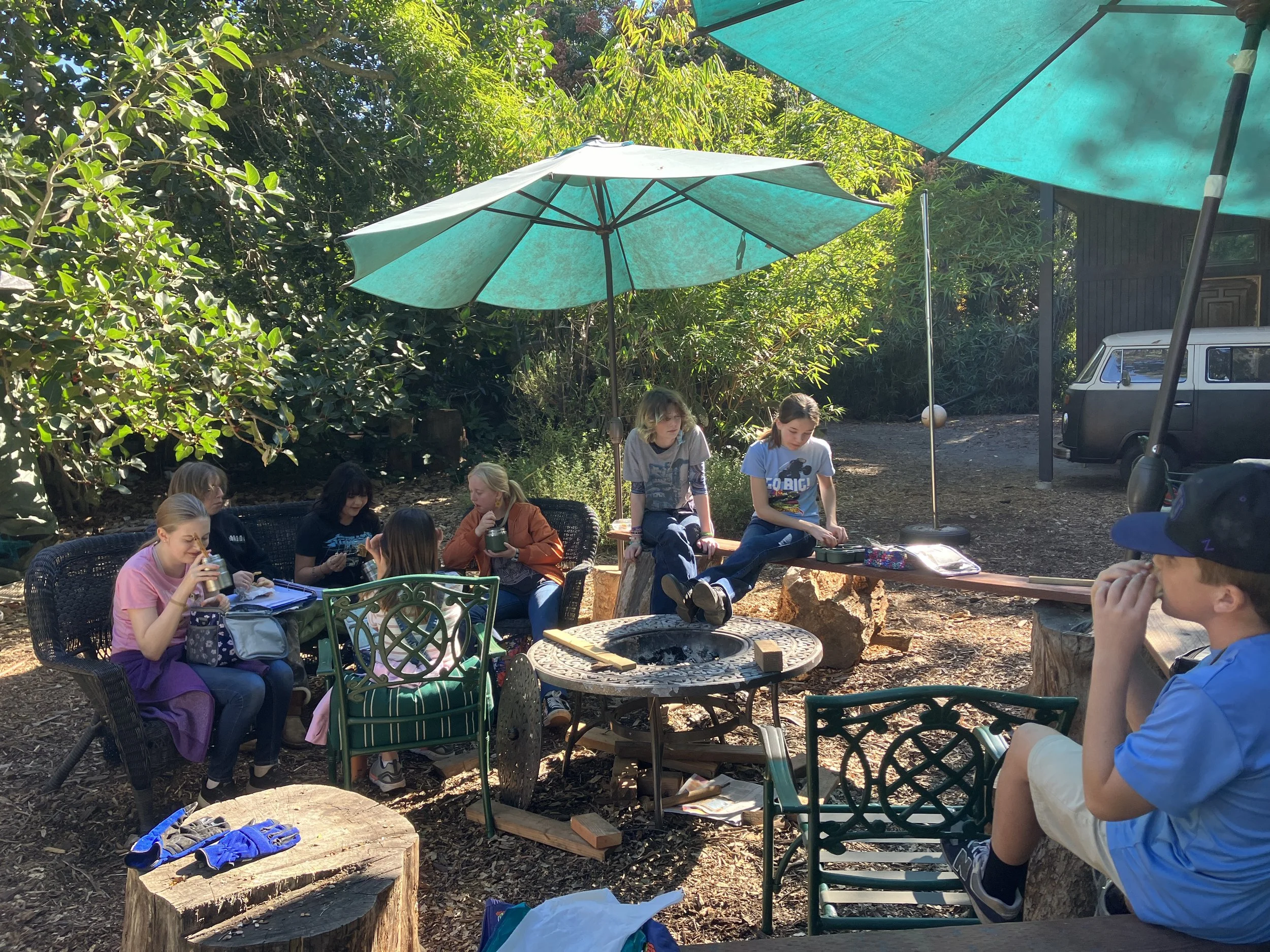
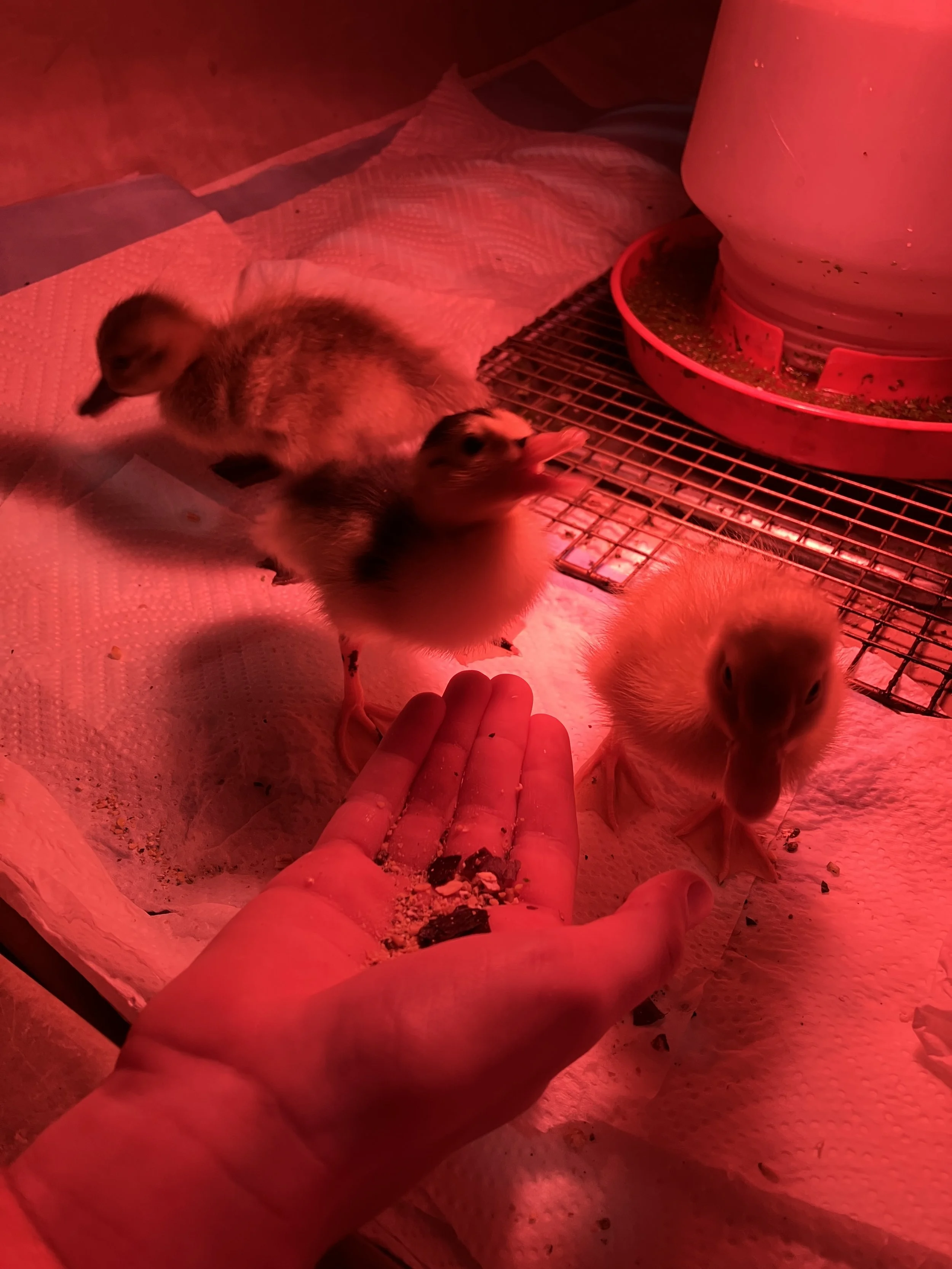


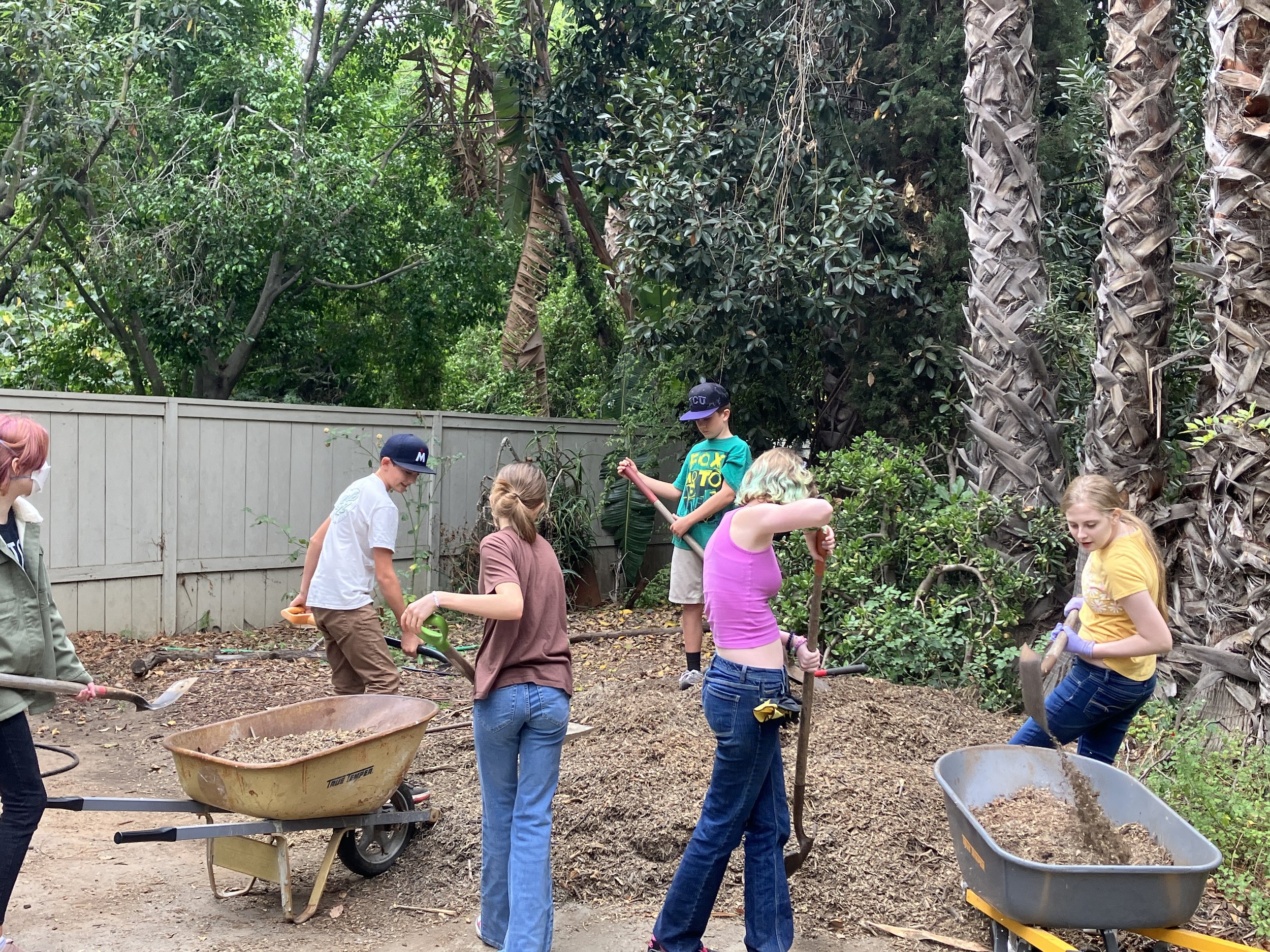


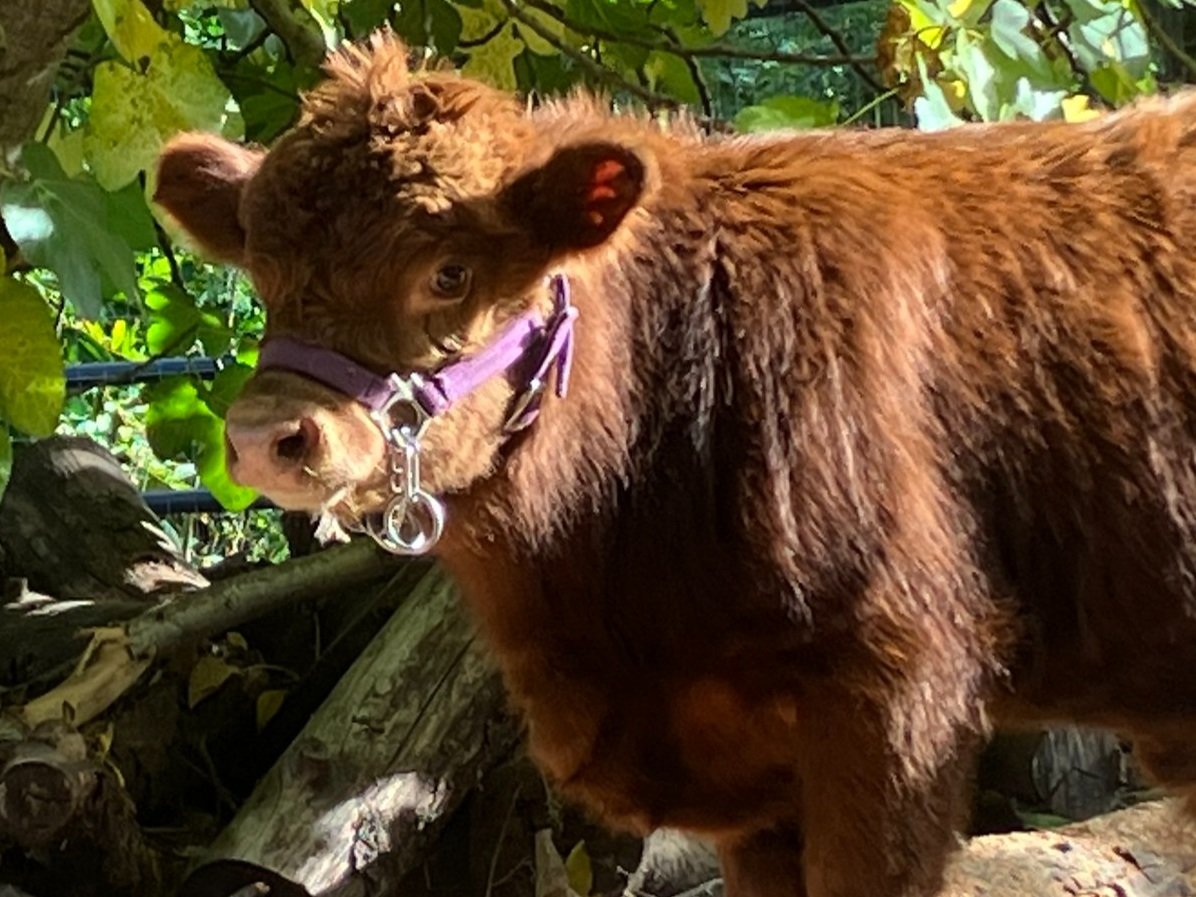
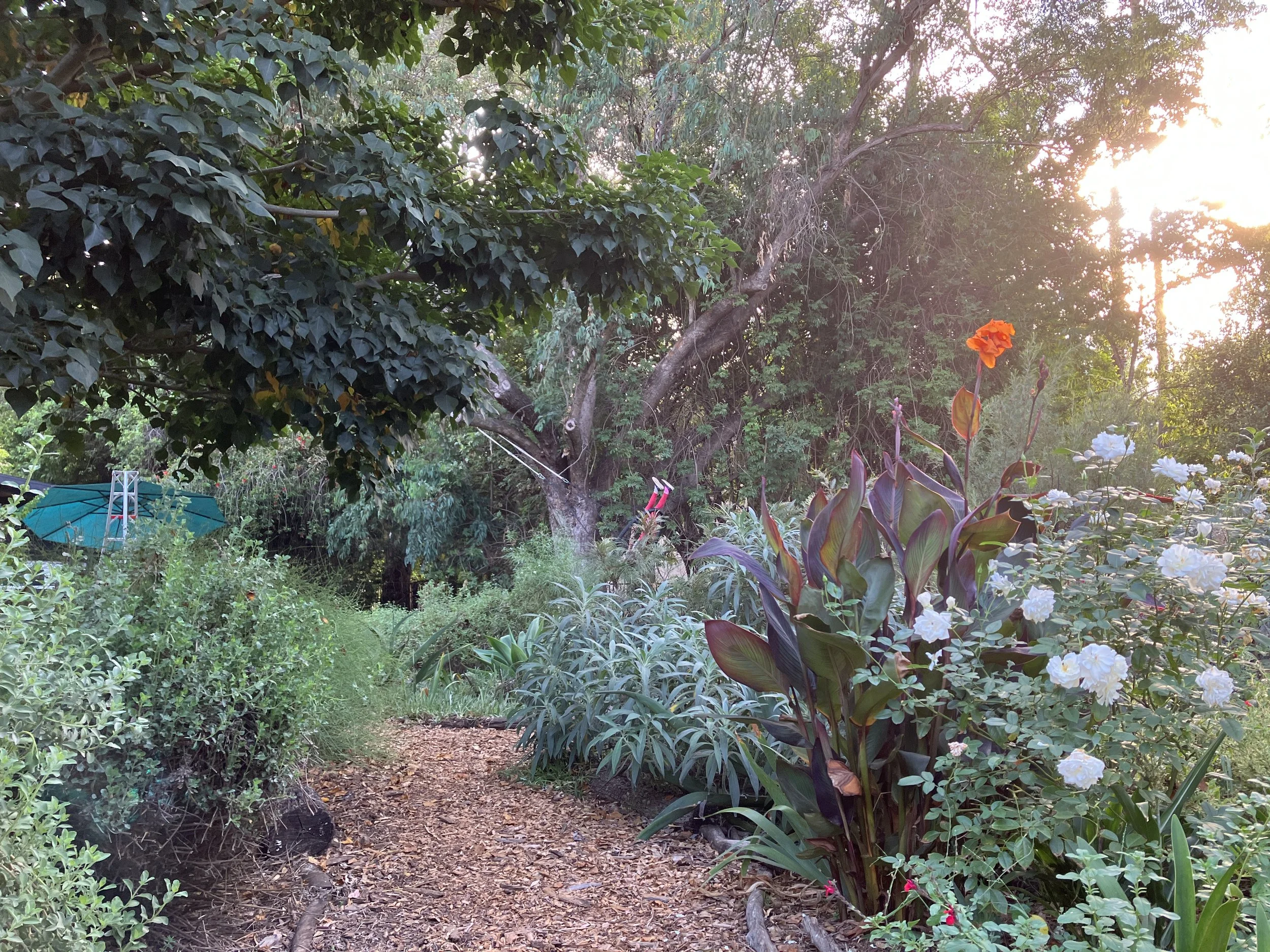

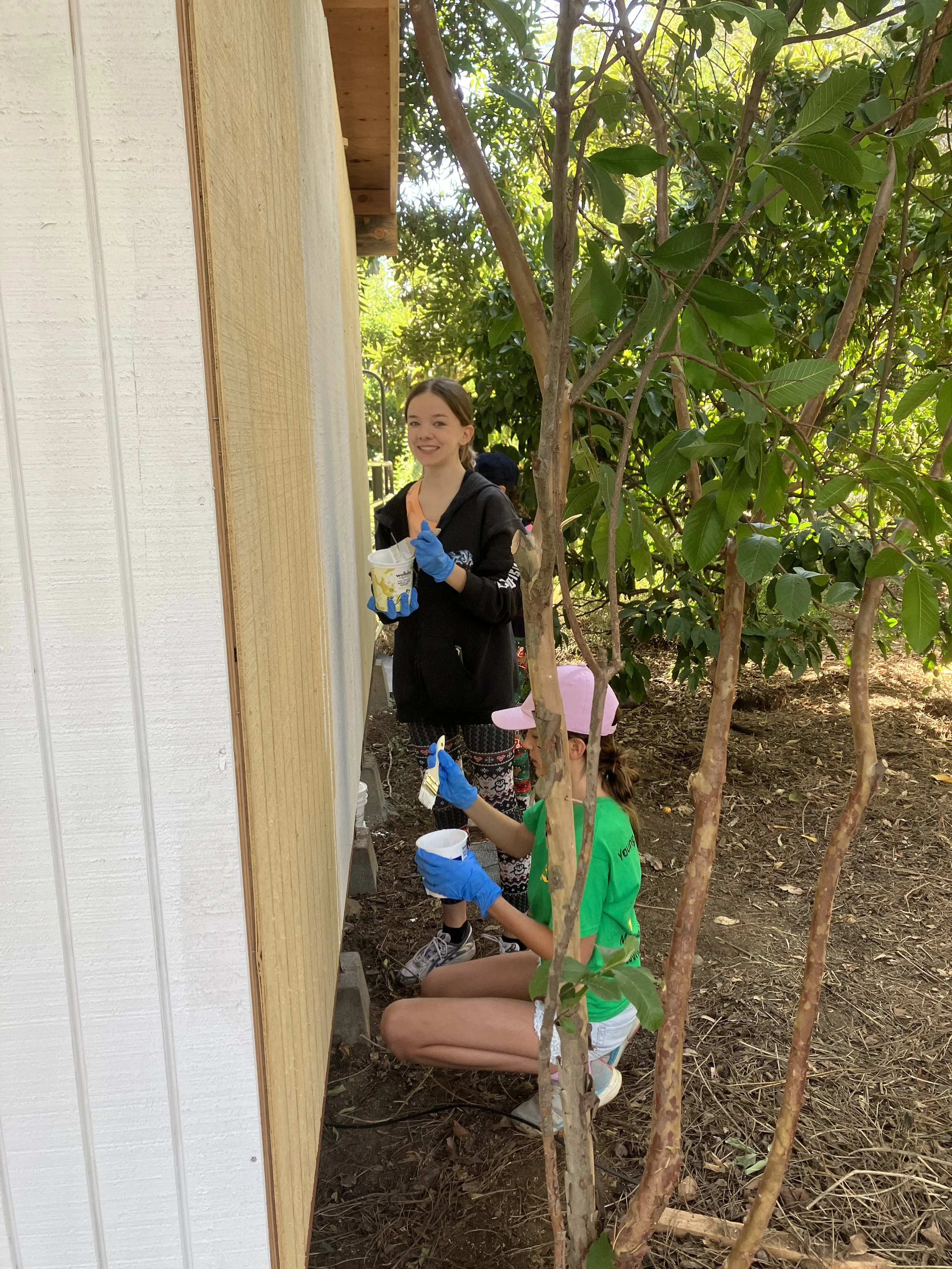
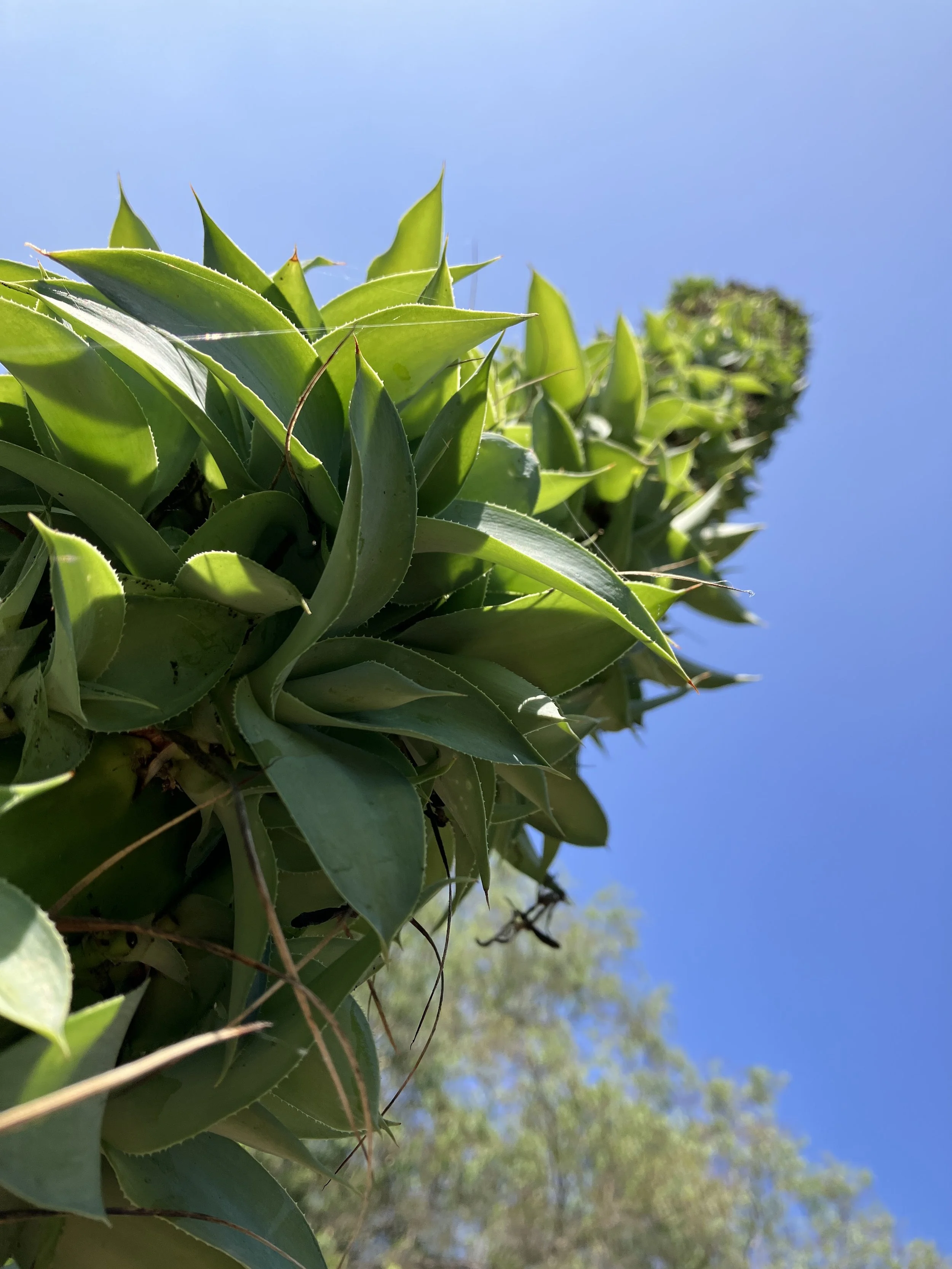
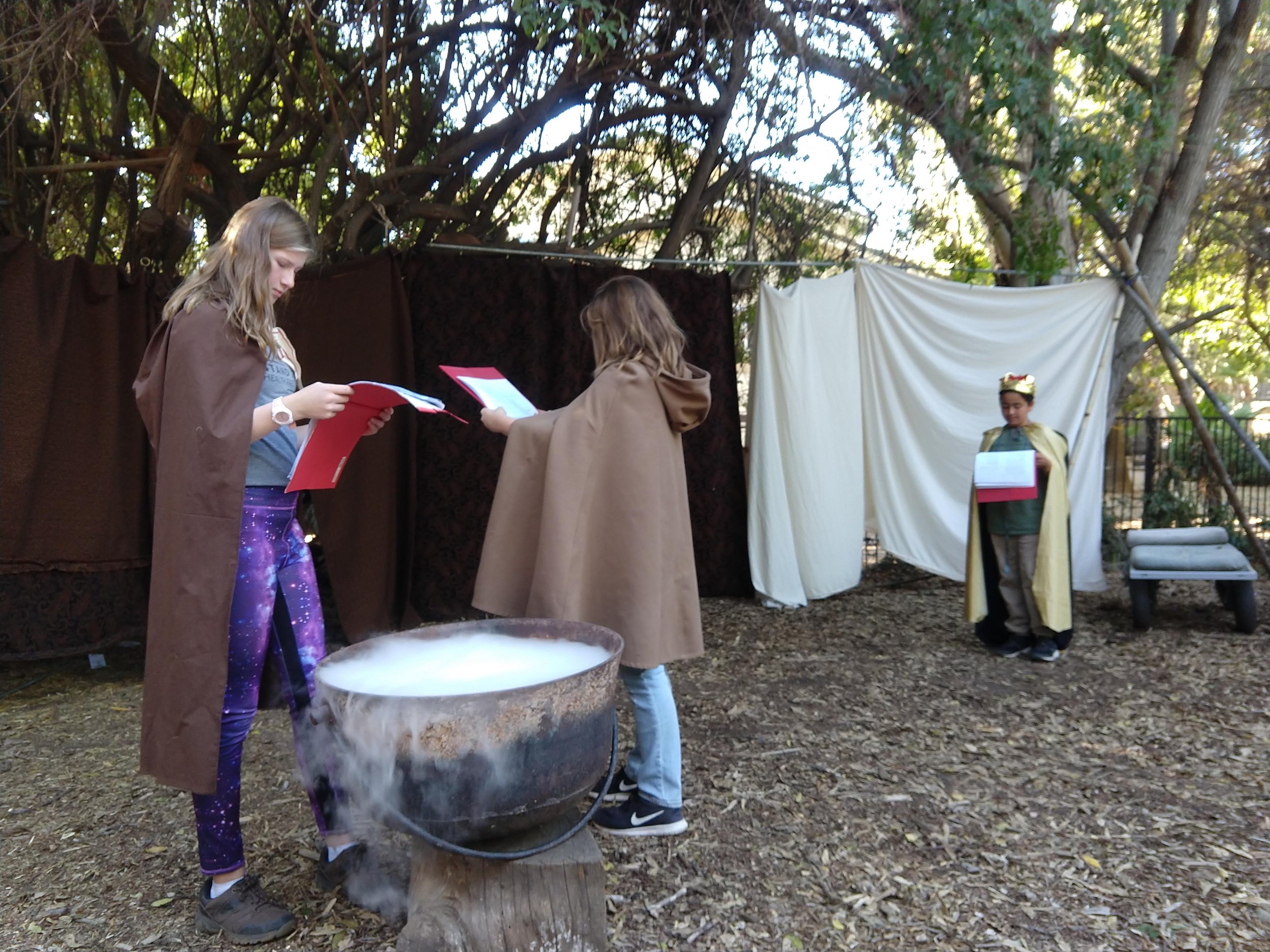


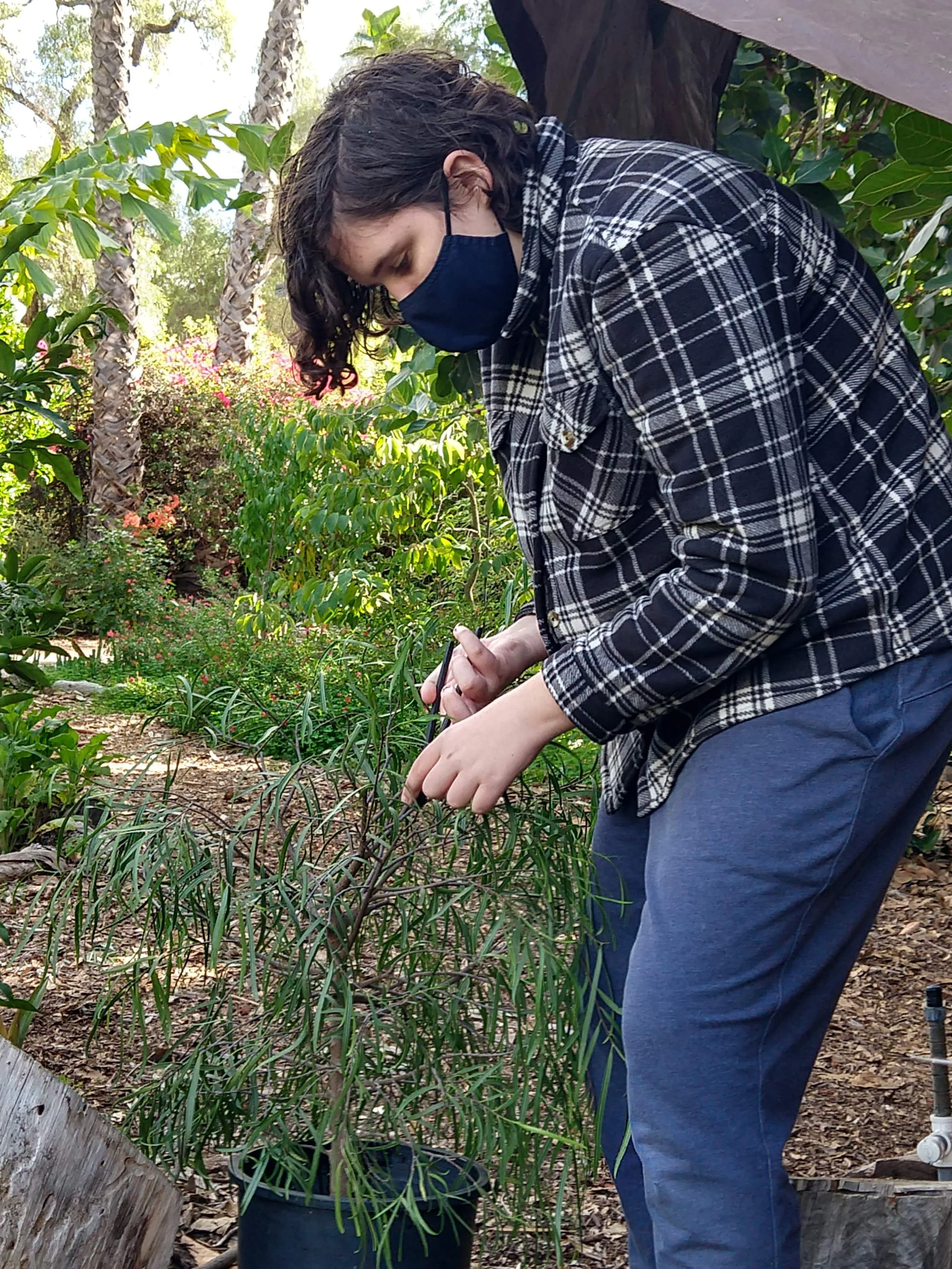
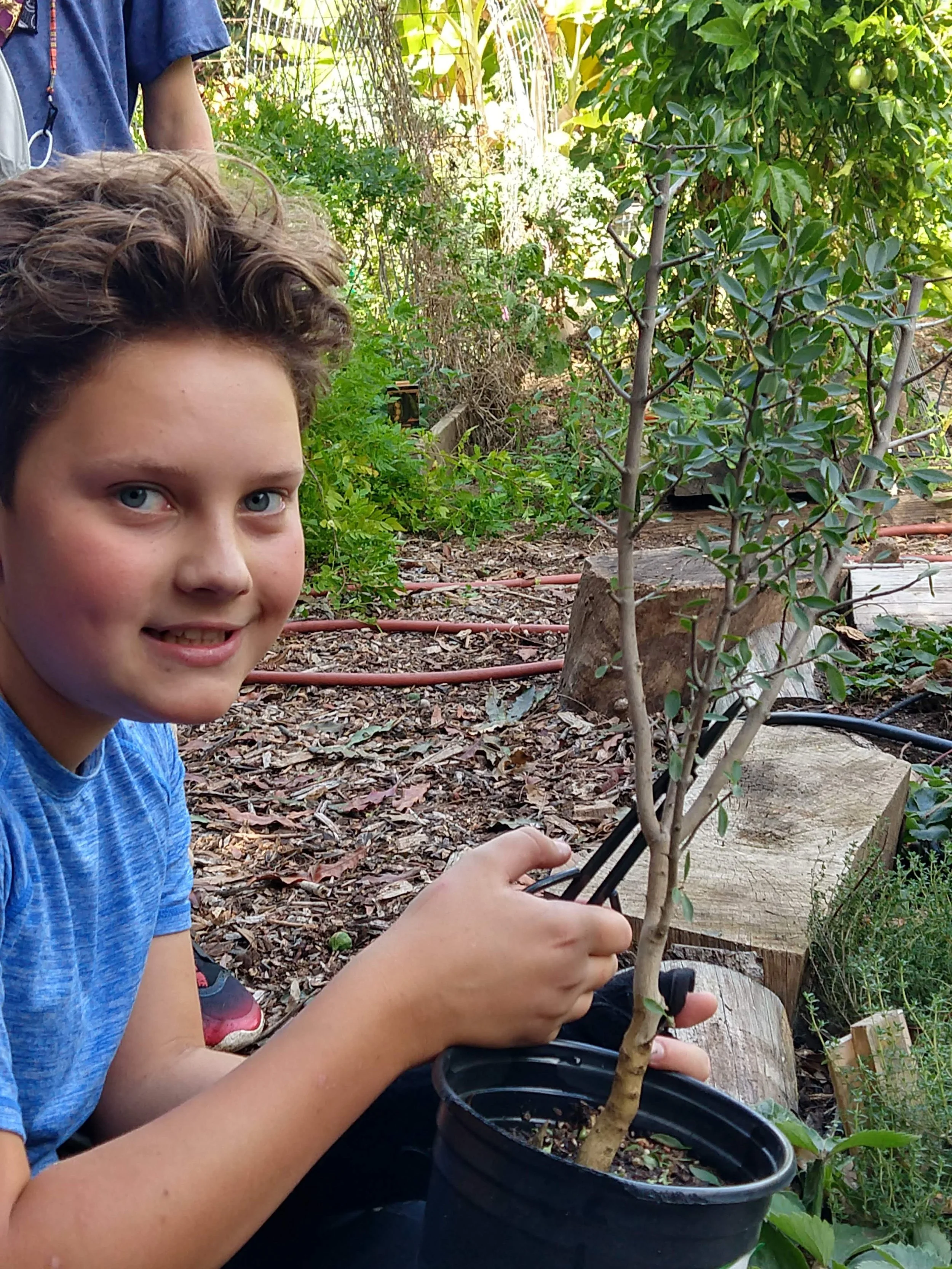
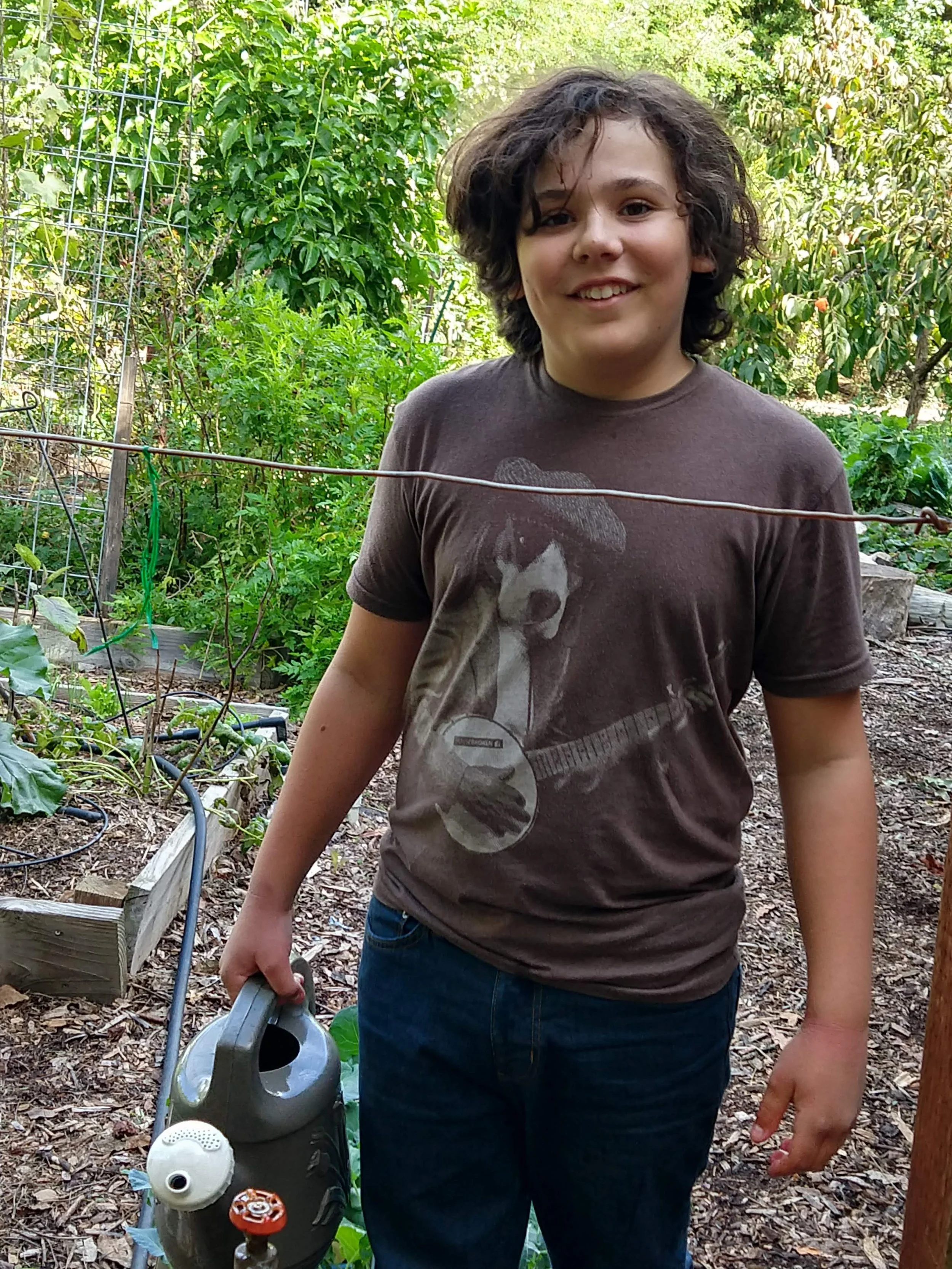


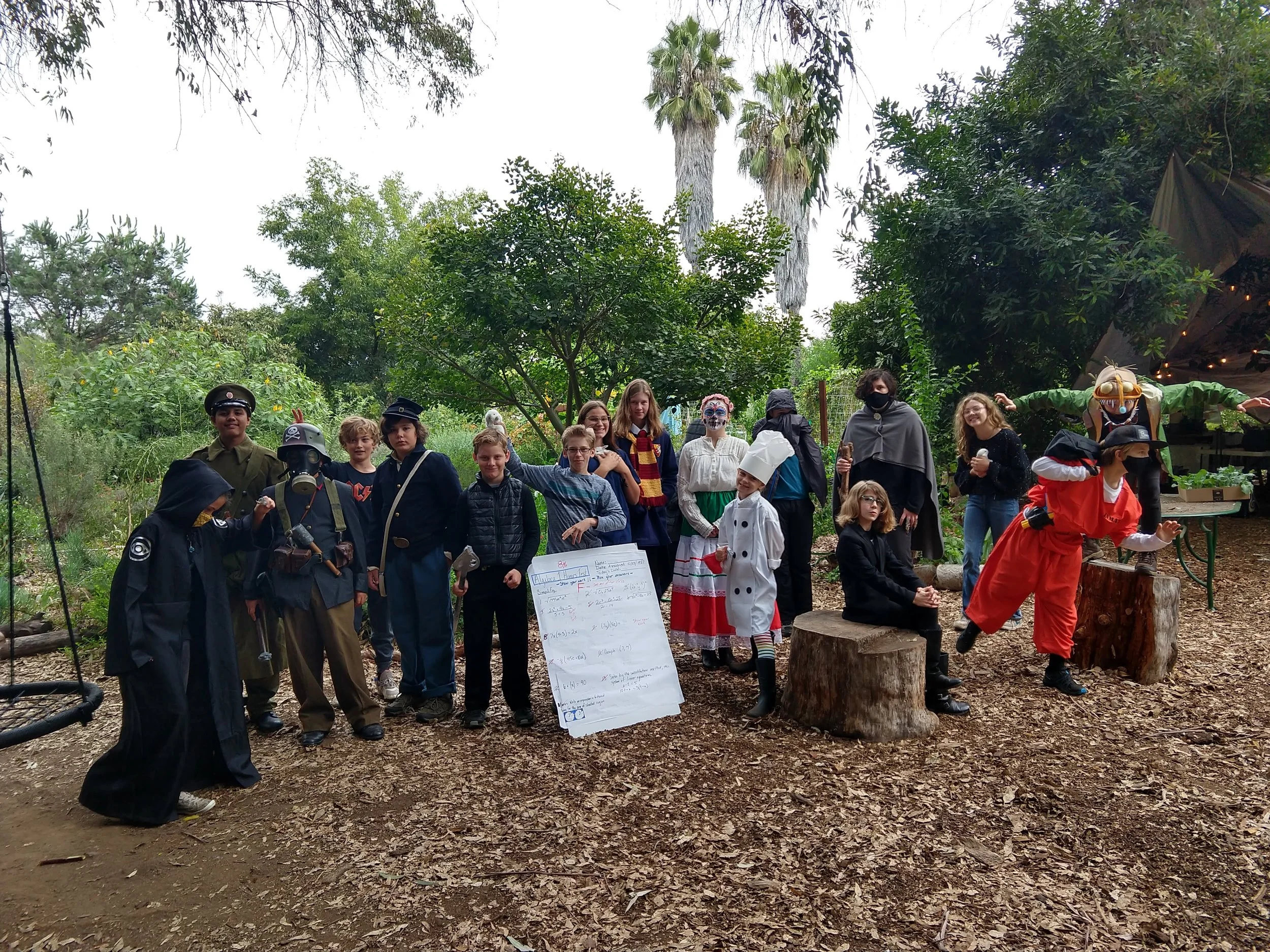
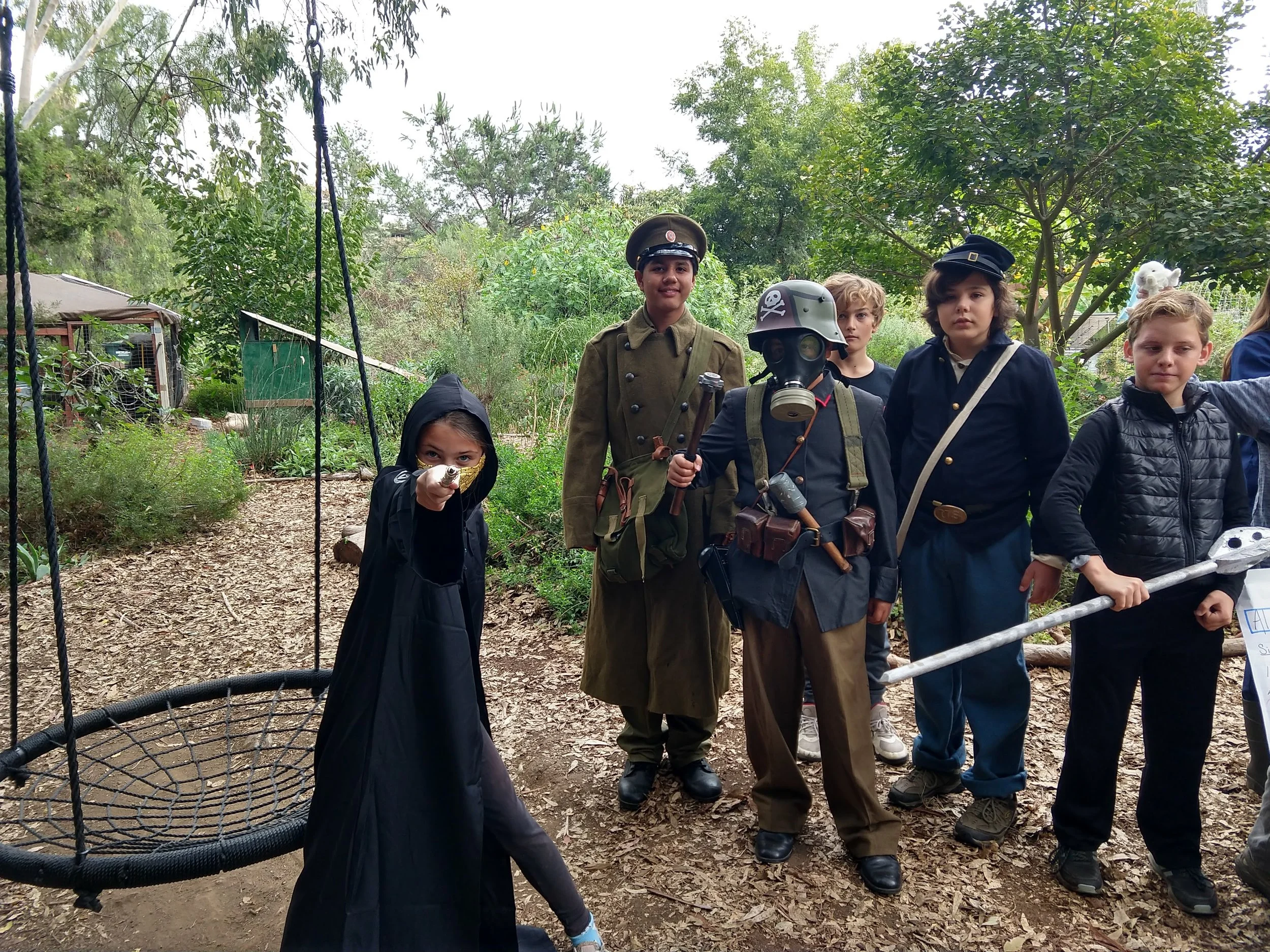
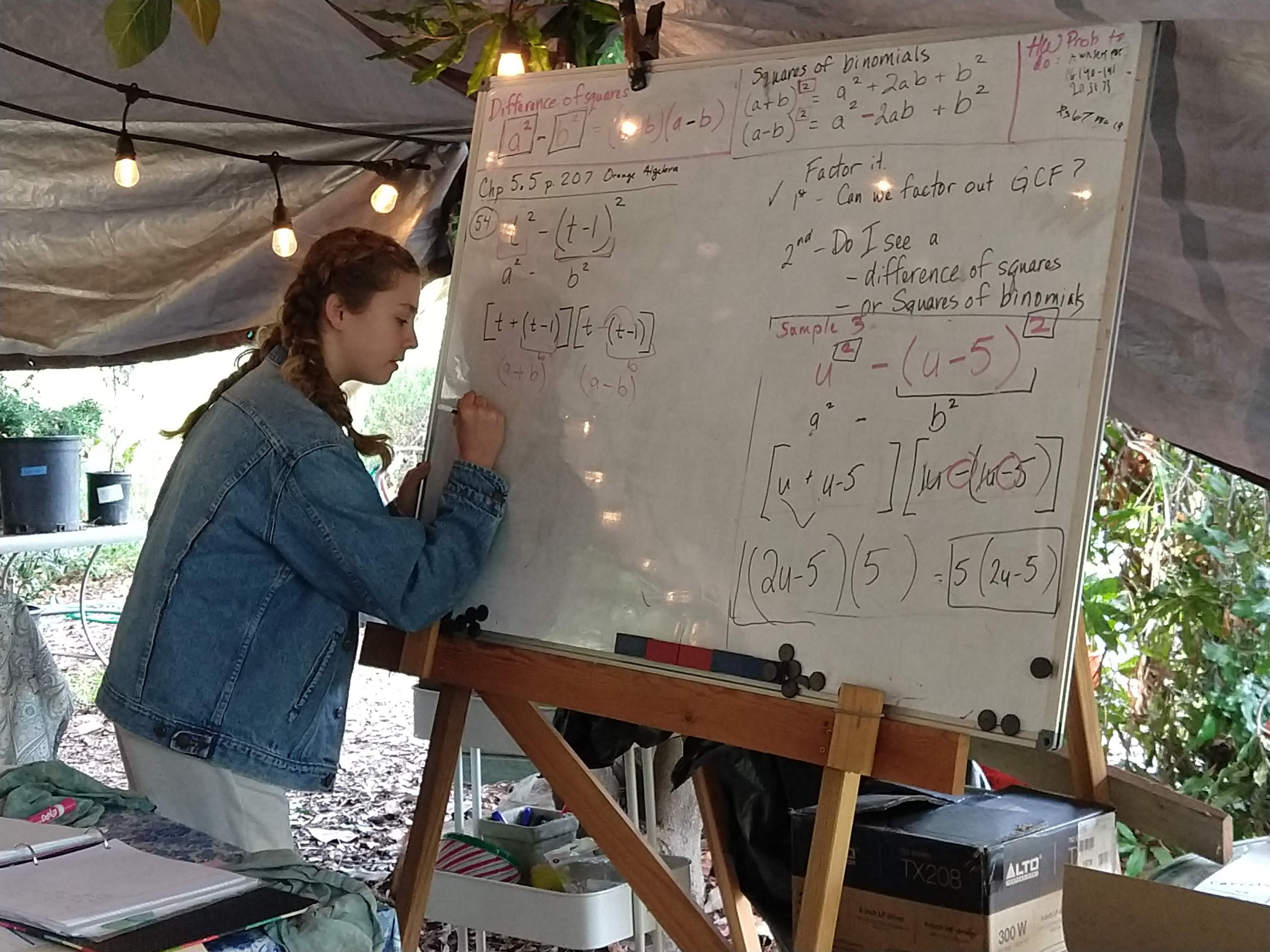
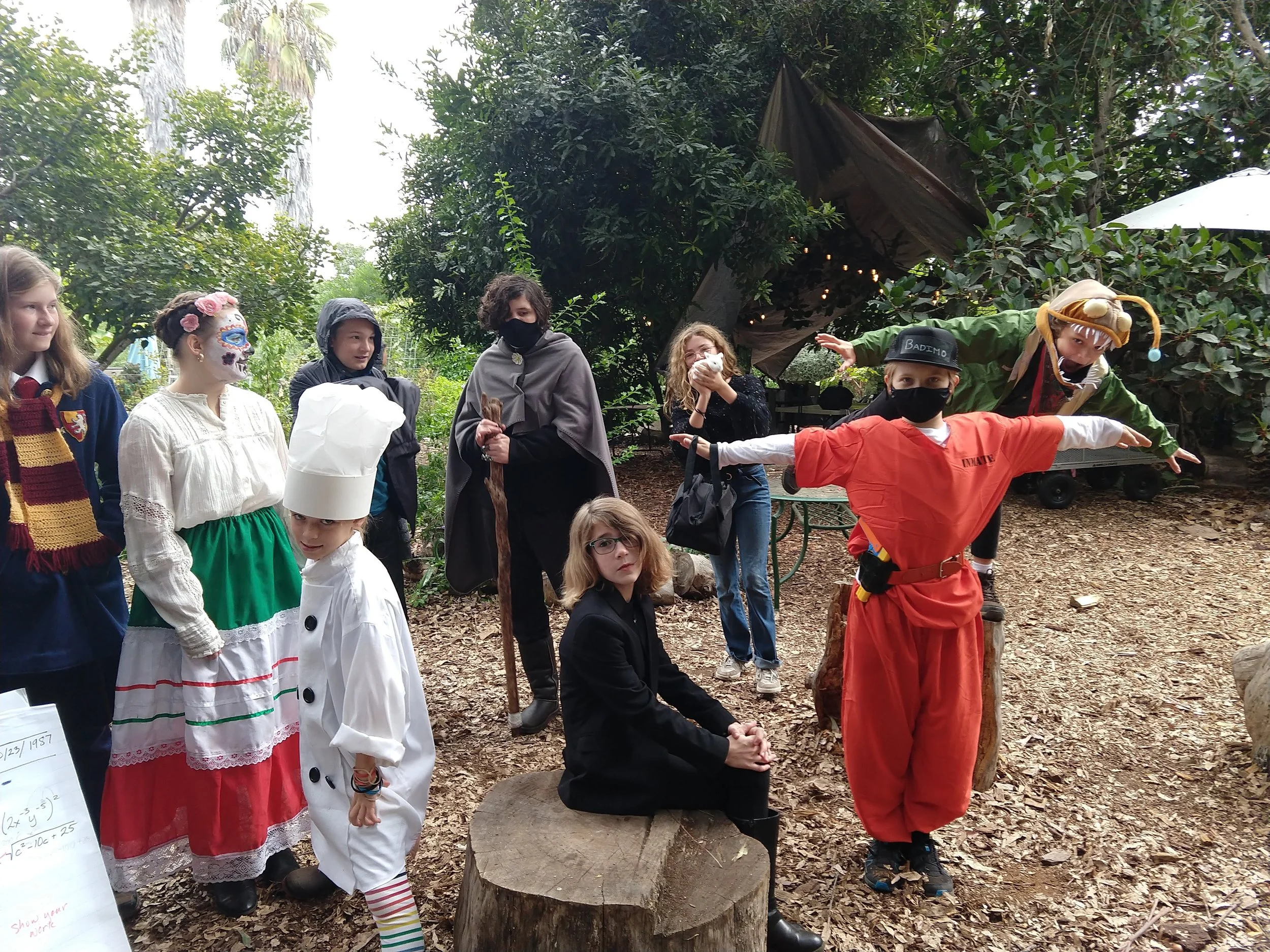
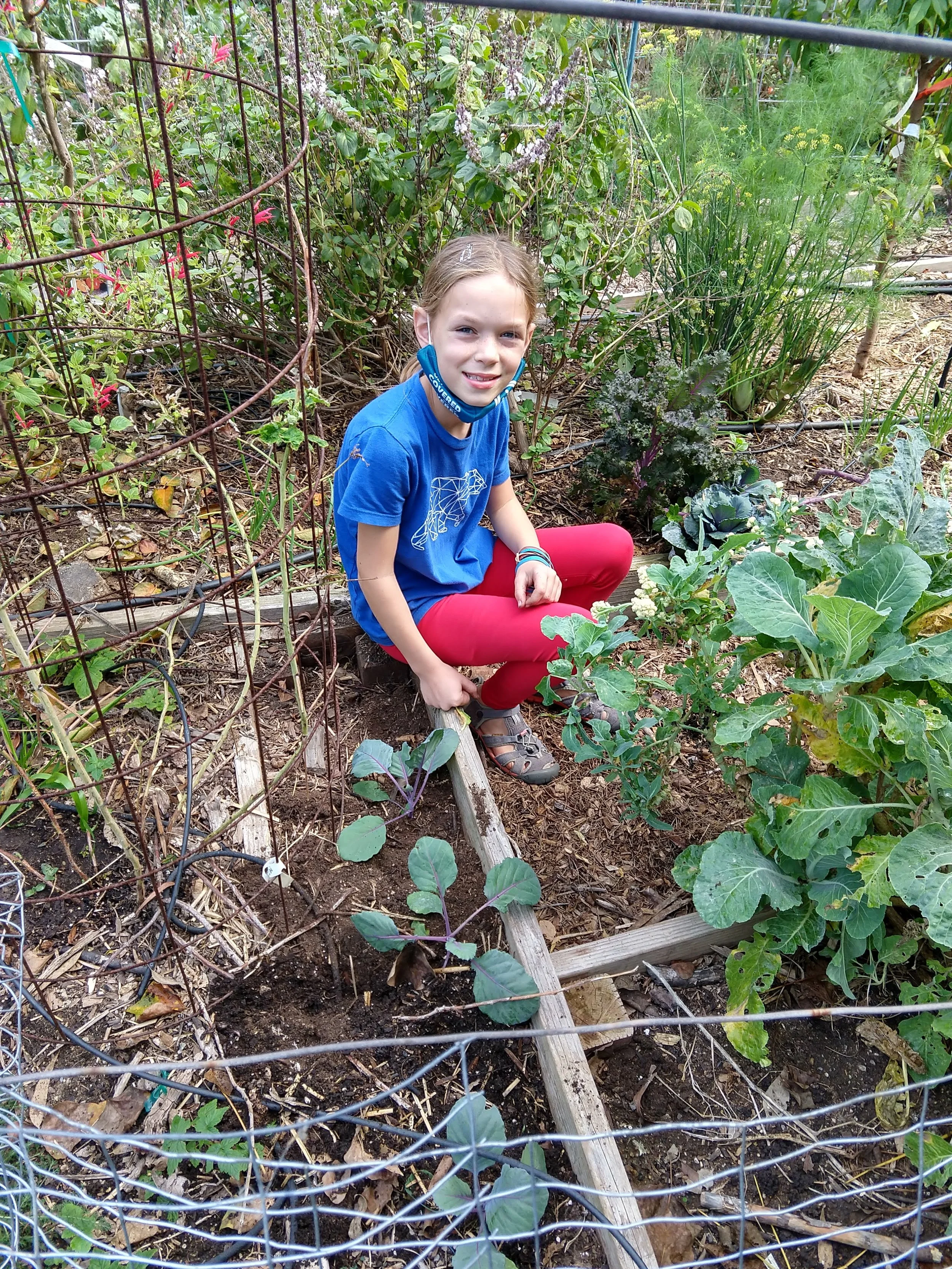

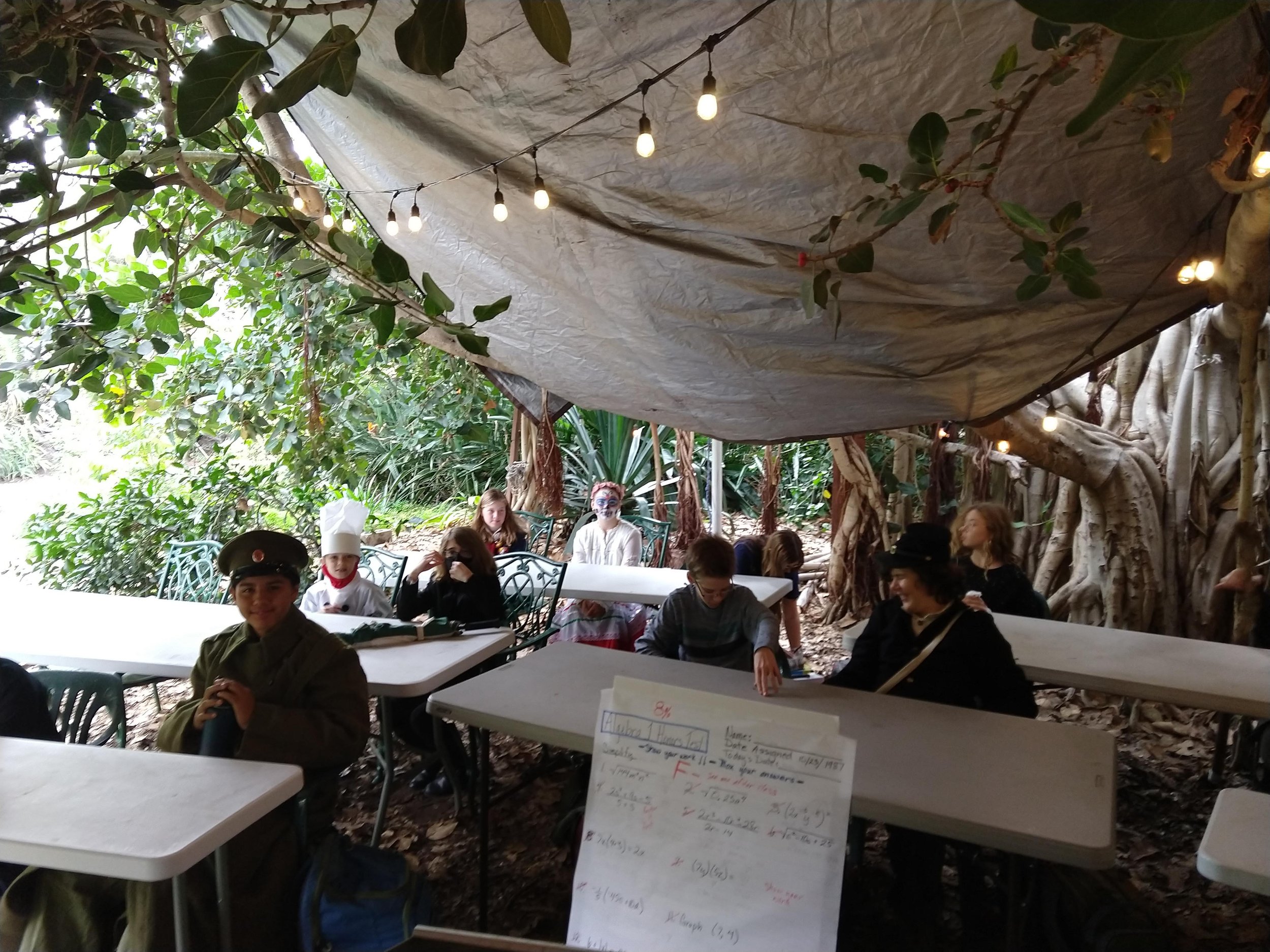
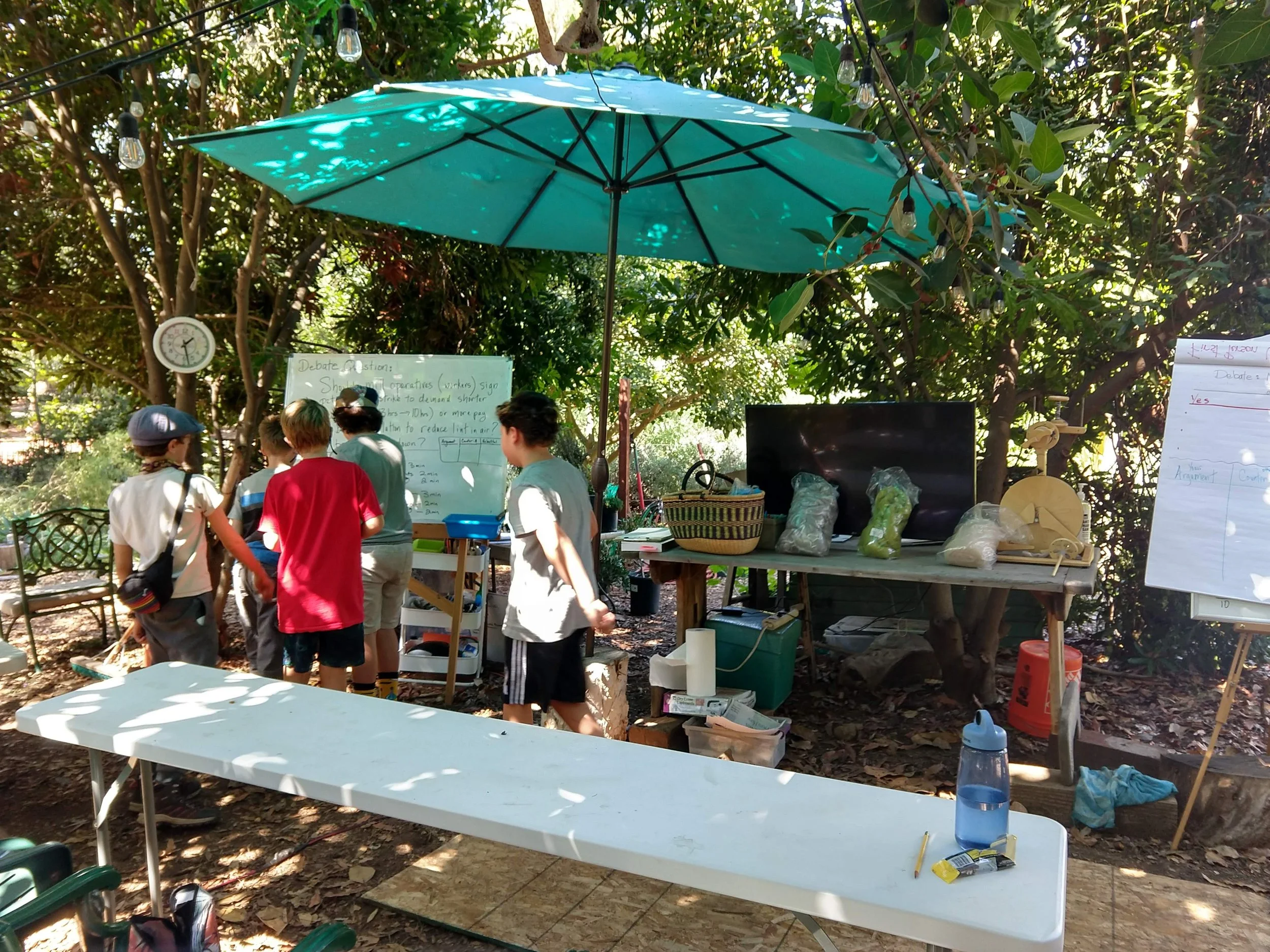
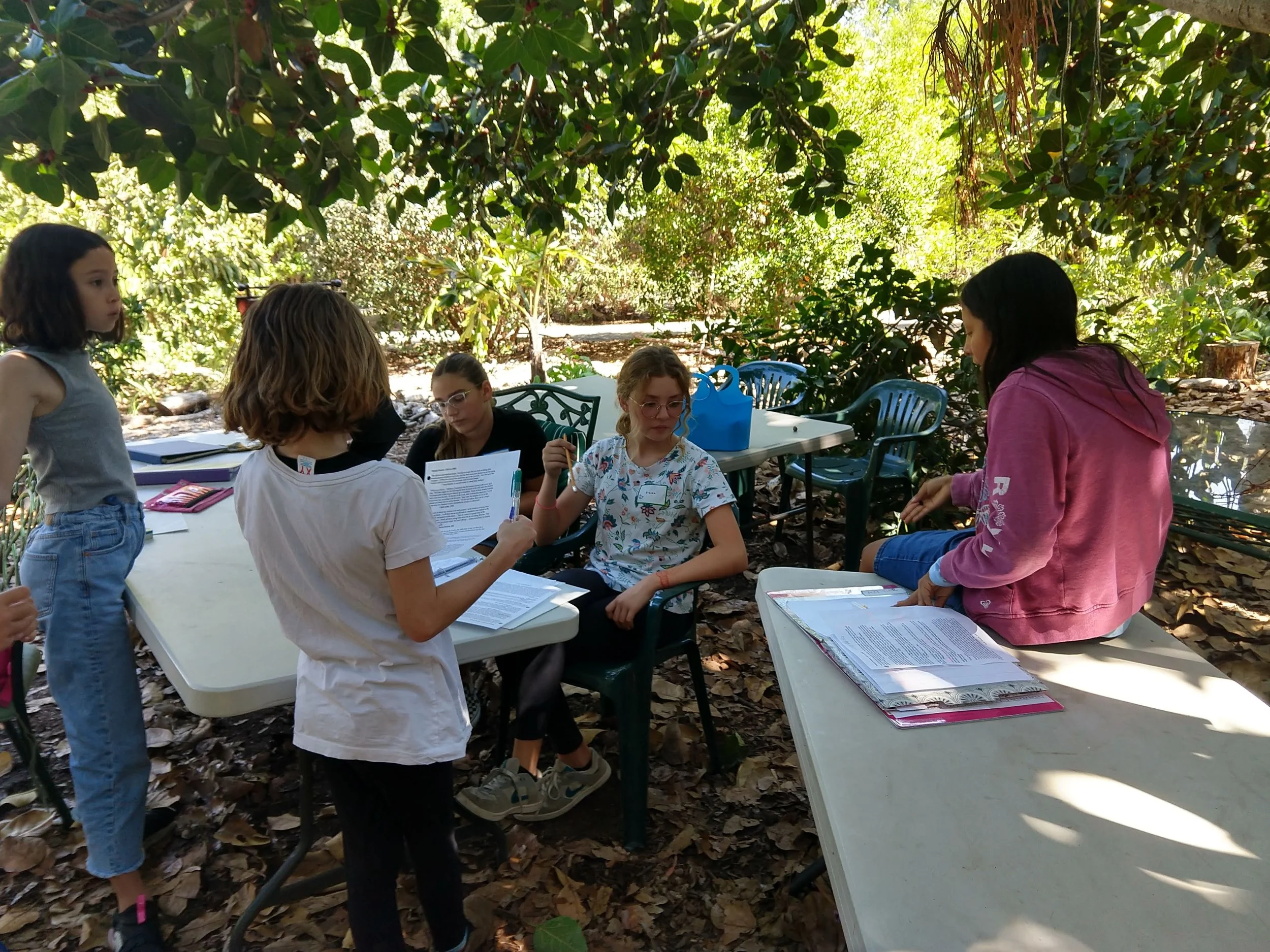
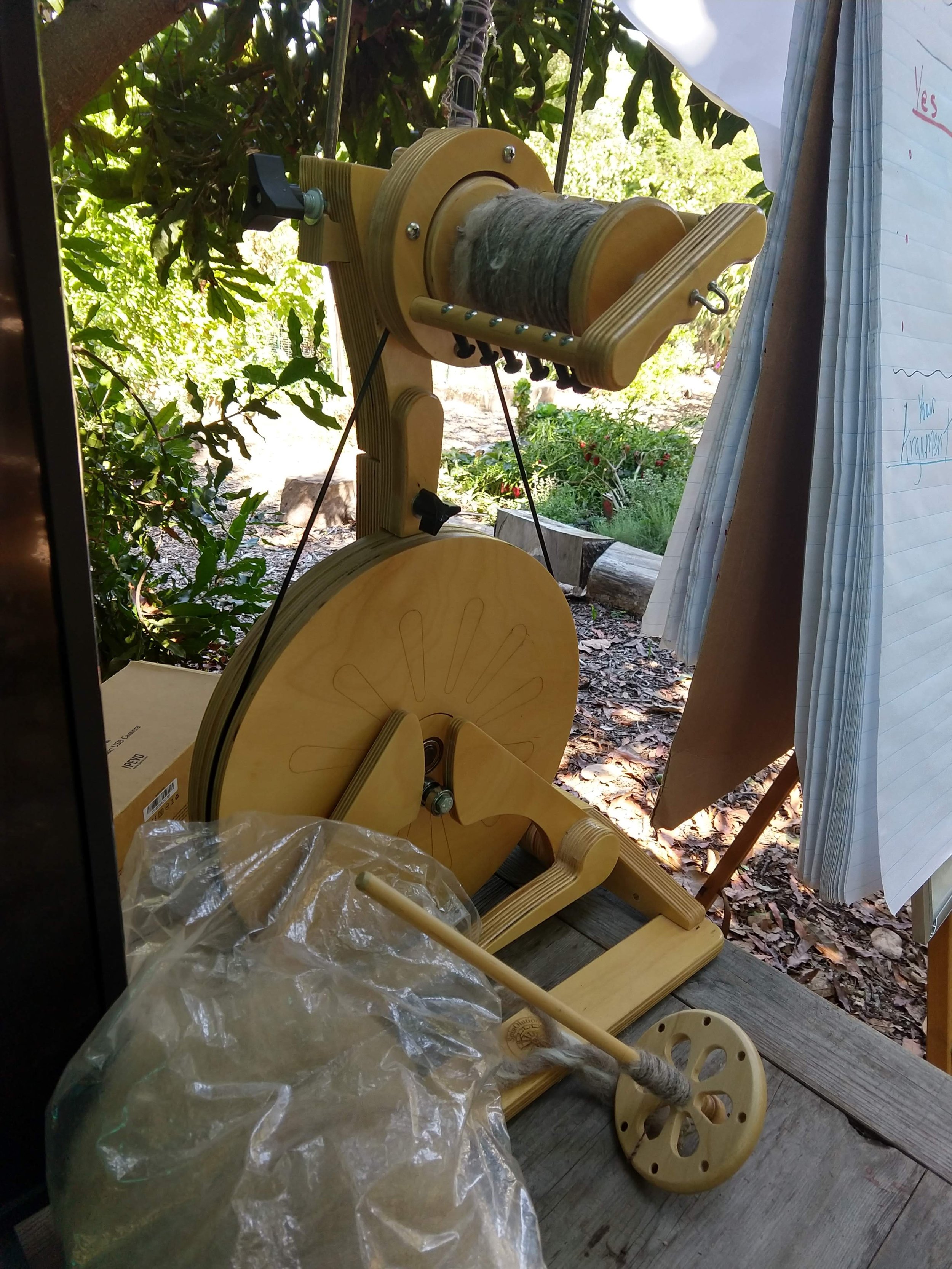
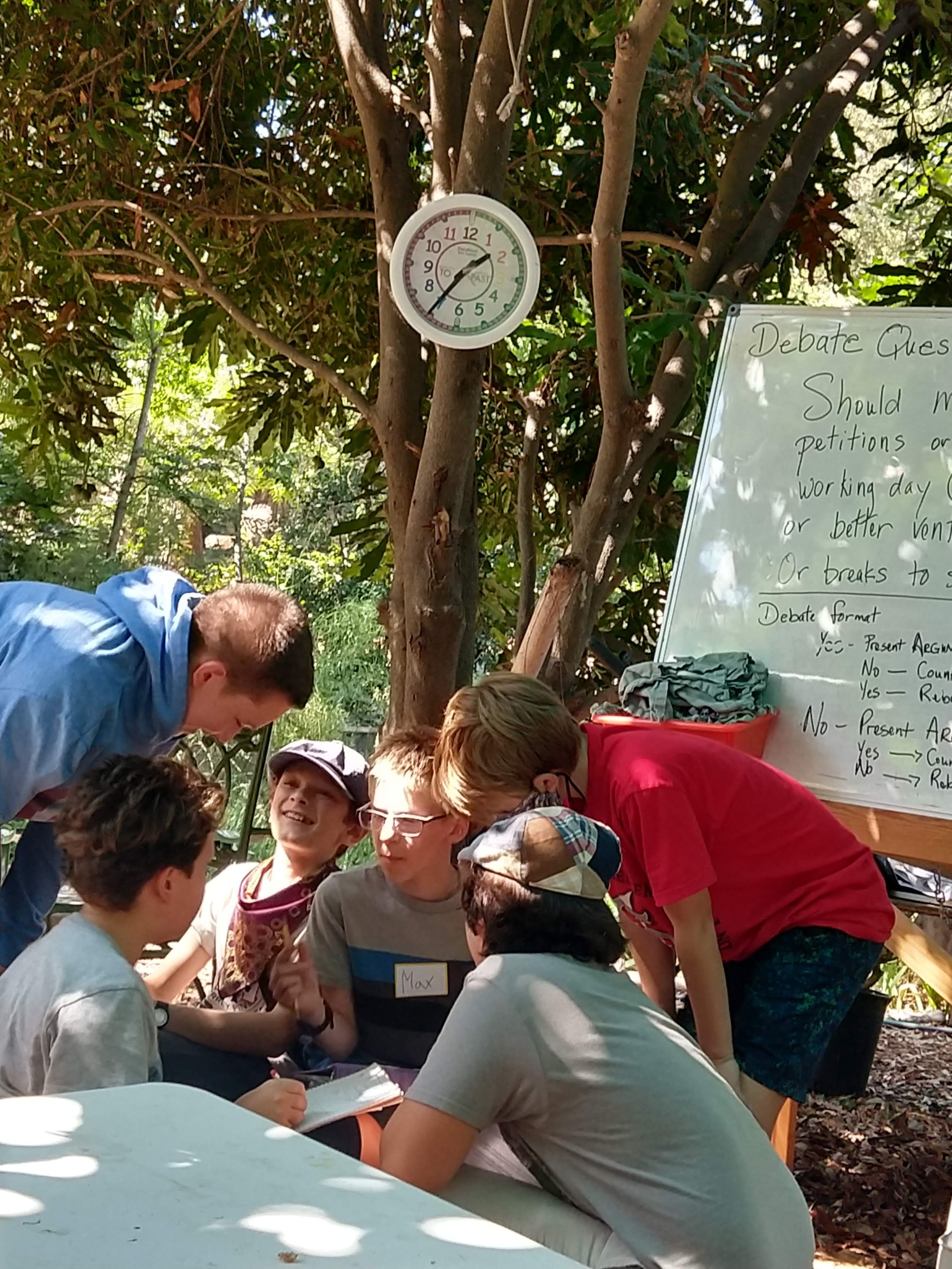

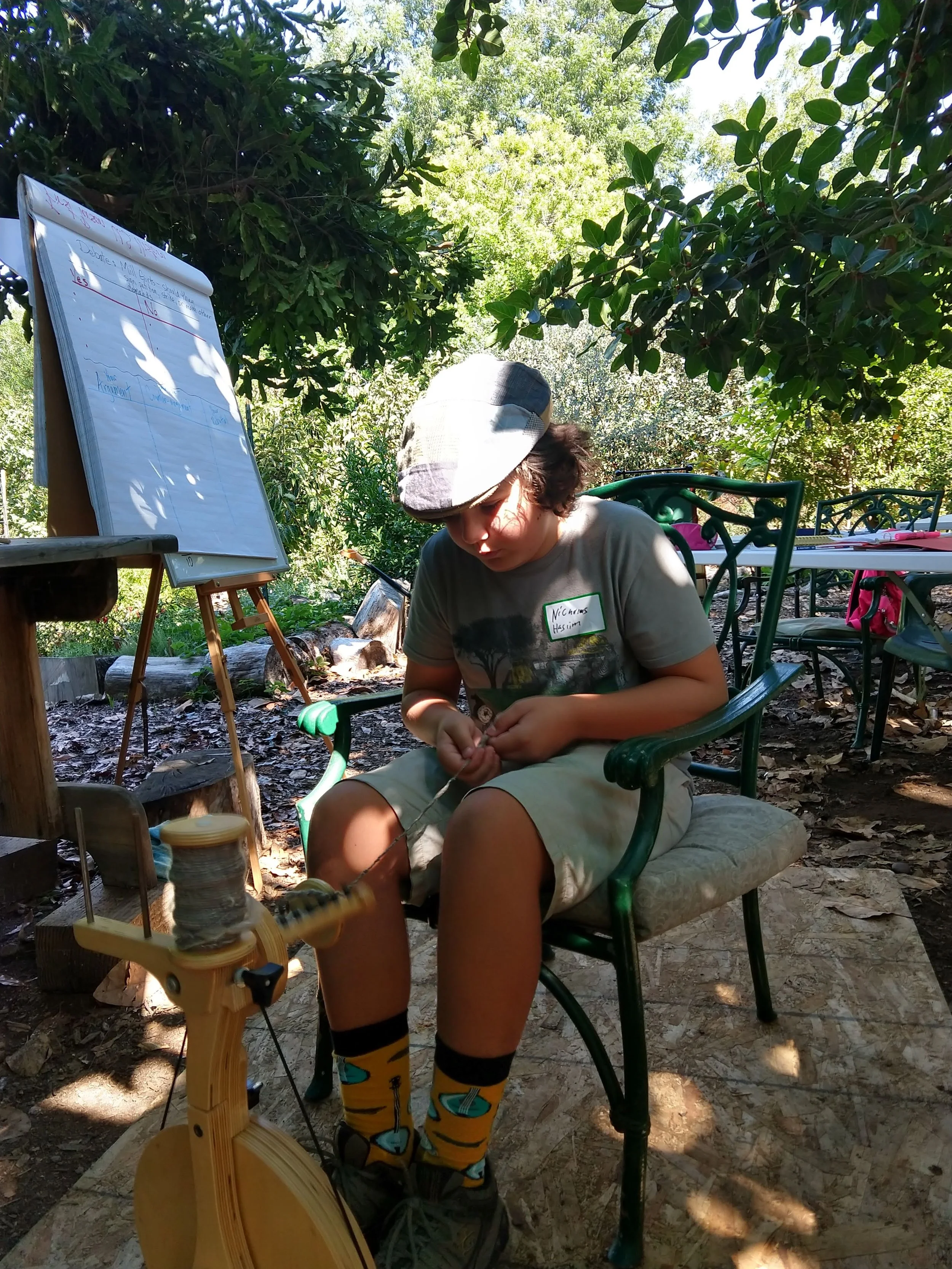
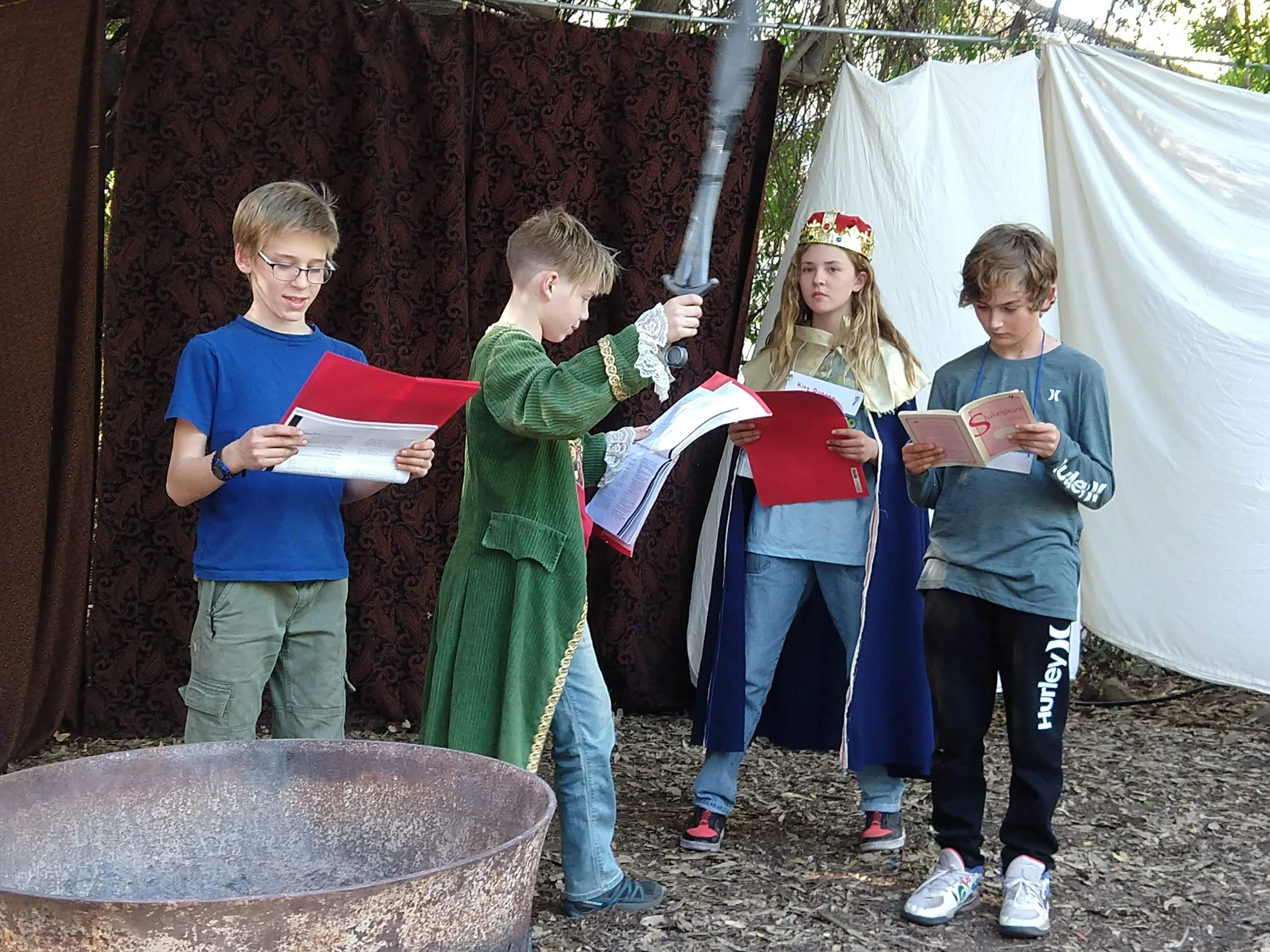
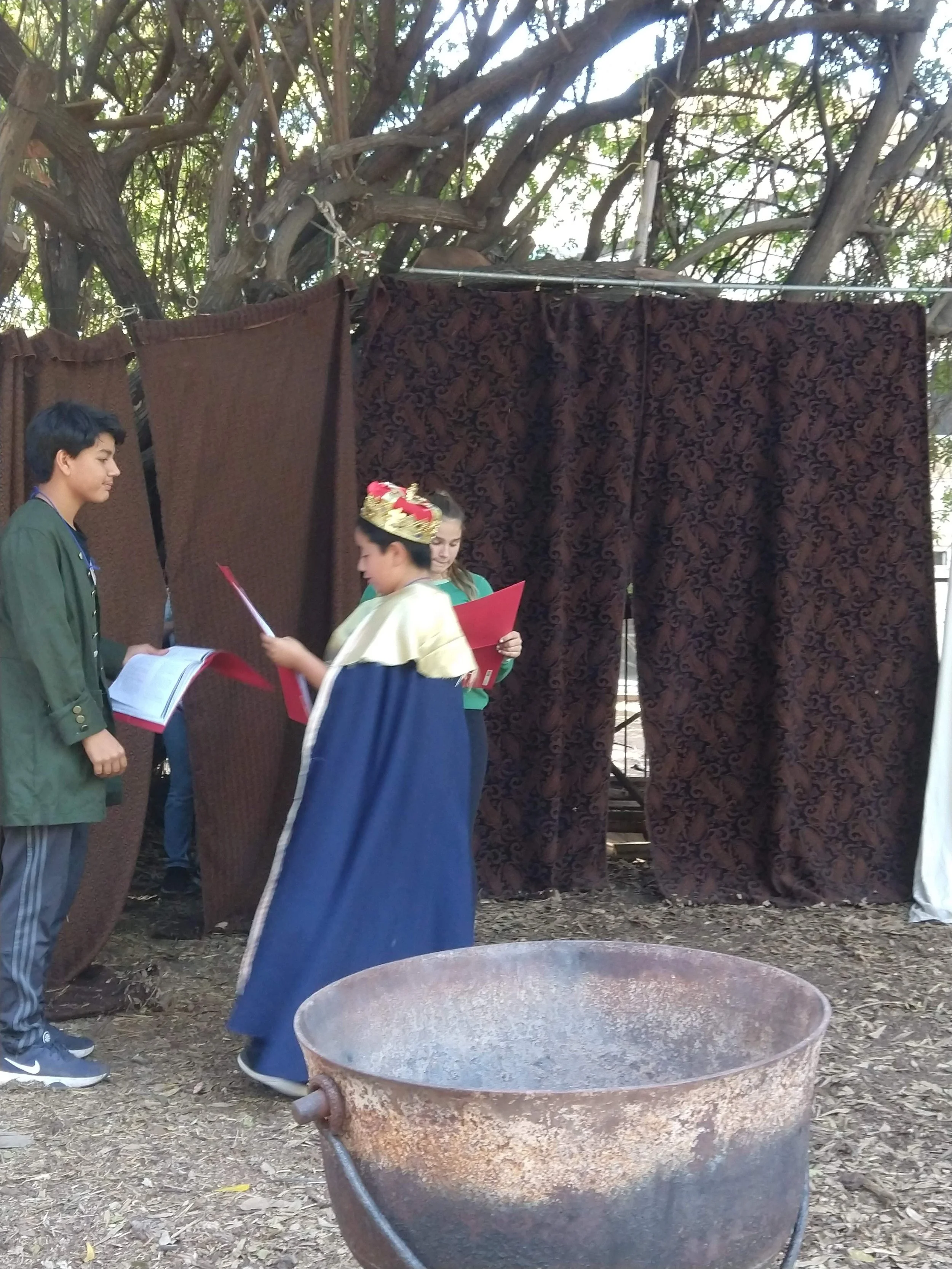
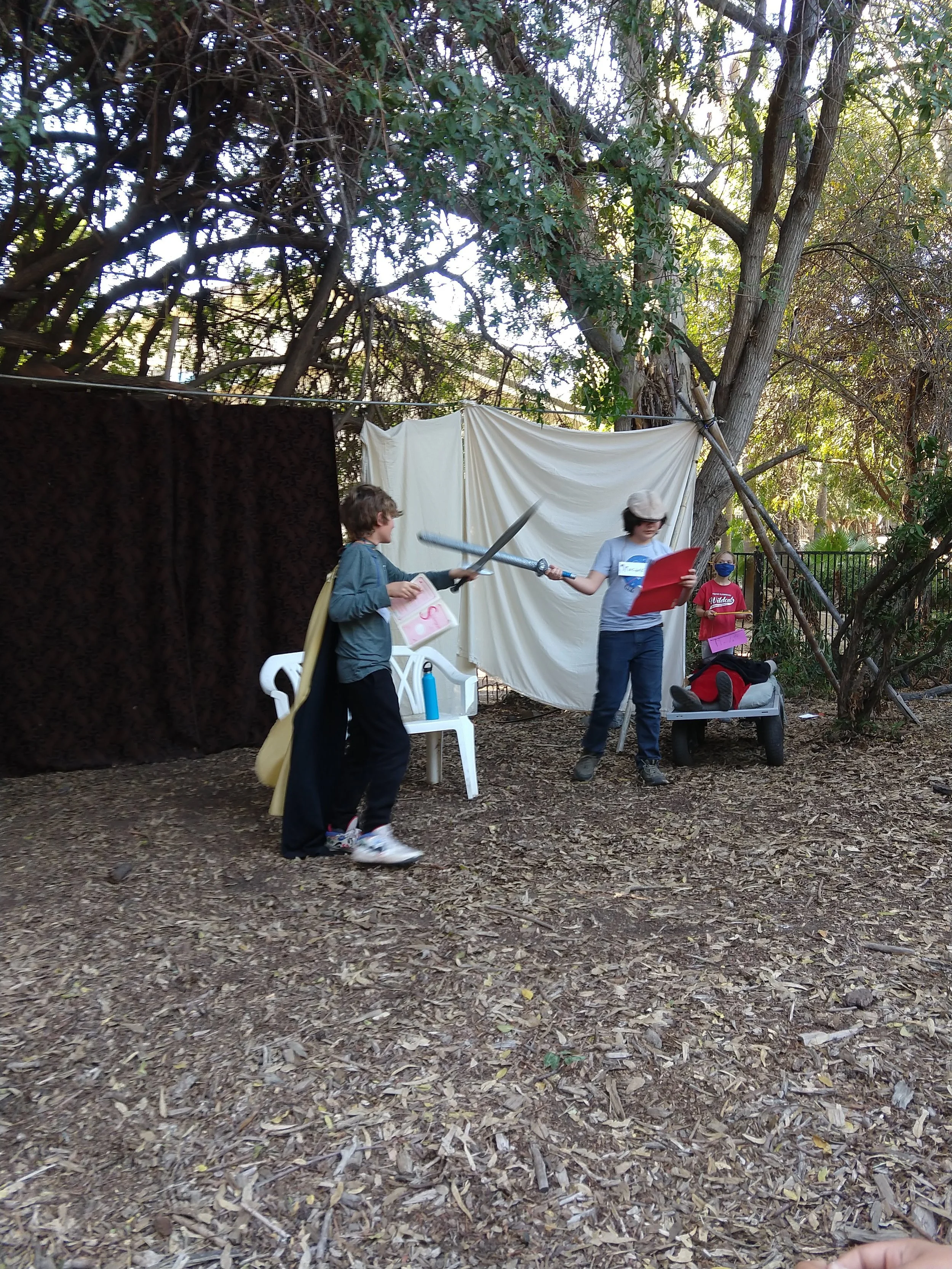
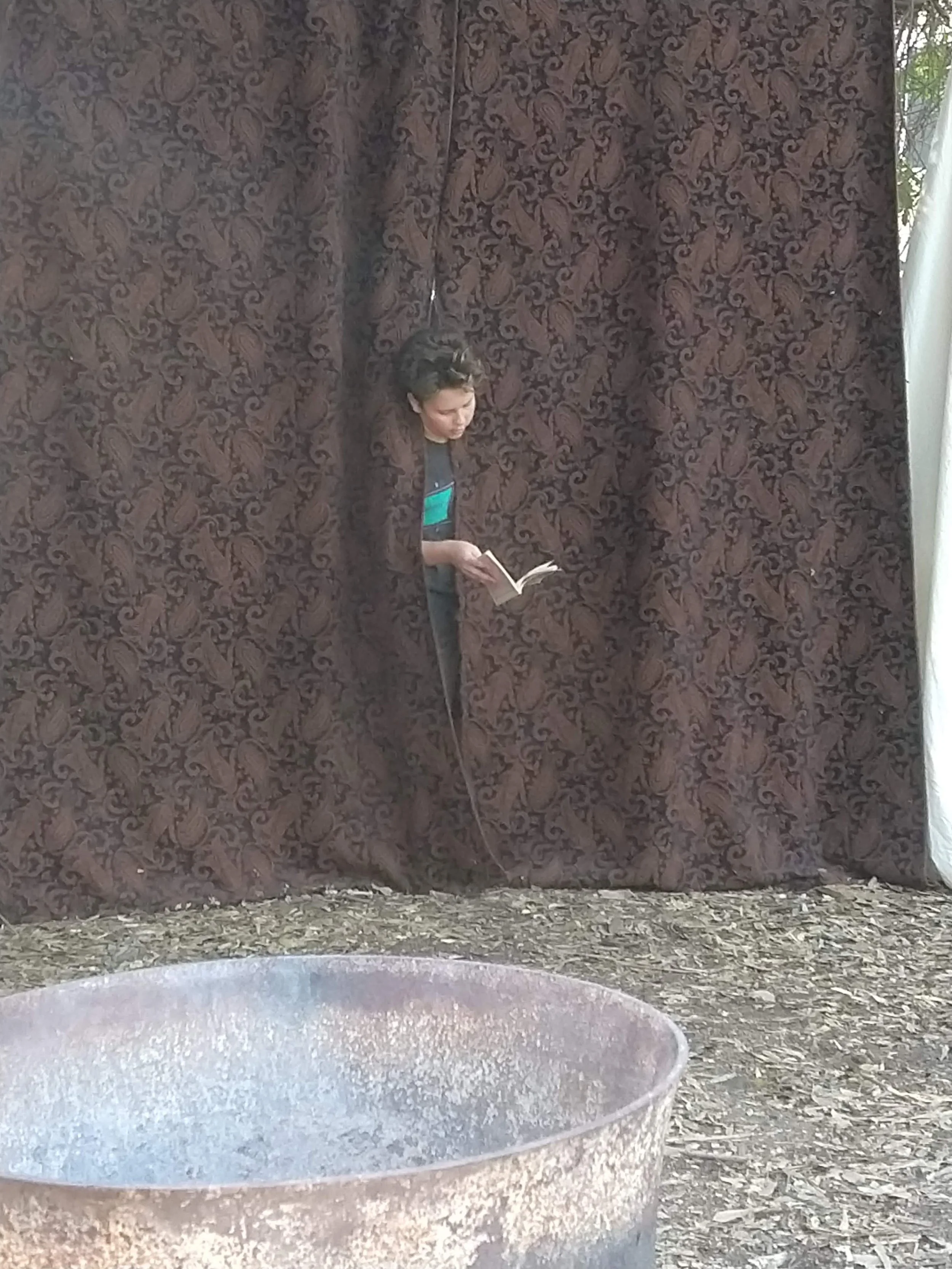

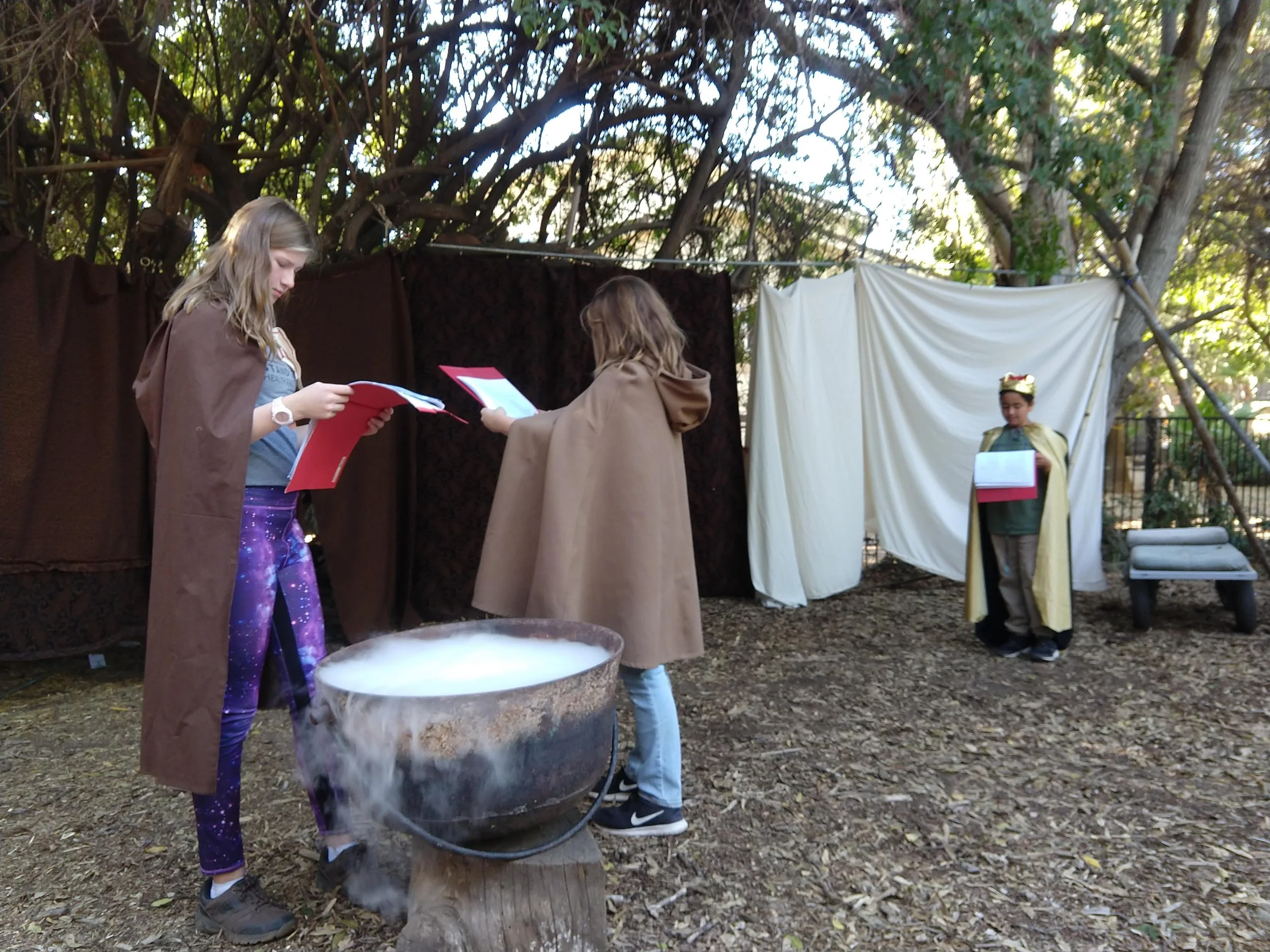

last year’s Week 1 - for reference
***Remember your gardening gloves and colored pencils— we will be using these nearly every week!***
Book Club: — See Book Club button Once you get to the book club page, click on Tom Sawyer). Scroll to Week 1 reading & discussion question assignments.
Bingo: Create a 5 x 5 grid for a Literary Terms Bingo (We’ll add terms in class from our literary terms and definitions each week. You’re simply getting the bingo grid ready. I recommend graph paper so you can easily draw the boxes. Or lined paper with a ruler. Make the boxes big so you can have room to write the term and a key phrase or example.)
Print out and bring to class
If you forgot to print out the Analogies Set D from WordMaster page last week, do that now.
You’re earning Excellent Learning Habits Tickets by doing this homework.
Classwork Summary
Get to know you & introductions: What are you good at or into and who else shares that apptitude or interest. We have lots of musicians and artists in our midst!
Basic FS procedures — Excellent Learning Habits tickets for homework + safety procedures Including showing them a picture of worm parasites on pig feces, the eggs of which lie dormant in any soil that has had livestock on it and which can get into humans if we fail to WASH OUR HANDS before we eat or stick our fingers in our mouth. You’re welcome, moms.

Biology- c
Farm Work: New Farm School students paired up with FS veterans to learn how to care for the living organisms that call Farm School home. Students worked together to feed rabbits, harvest live invertebrates from the vermiculture/compost bed to feed the fish, feed those same invertebrates, feed the chickens, trim gazanias to widen the central path, shovel mulch as bedding for the chicken coop, harvest macadamia nuts.
Book Club: The Elephant Whisperer
Students choose a poem to memorize for this week from a two page handout. Each week students memorize a poem and most weeks I give them a new handout with poem options for memorizing. We’ll also analyze many of these poems over the course of the year. Discussed techniques for memorizing including: reading, reciting in chunks, writing it down, quizzing self later in the day, singing it to a tune, adding actions to the words. We’ll recite this poem in class next week.
Latin and Greek Stems: Students made flash cards for common “A” Latin and Greek roots and prefixes: auto, a/an, aster. These flash cards include mnemonic devices they created to help them memorize the meaning of each stem. Students will use these flashcards to quiz themselves.
Handouts: Literary Terms Definitions, Poems for Memorizing pages 1 & 8, Stems Flash Cards Set #1 A-D & worksheet for A-D
Coming Up in the next two weeks:
Science:
Intro to chemistry for biology— everything is made of matter, elements, mixtures vs. compounds, subatomic particles, elements predominant in living organisms.
Intro to waterfowl anatomy and physiology and raising from day old ducklings— we’ll be selecting duckling breeds
Writing: Interviewing and writing a short biograph of a classmate then delivering that bio as a speech to introduce them to the rest of the class.
Poetry: metaphor and simile
Book club: plot map and discussion of Using textual evidence to support claims.